Citing Callais, appeals court vacates Native American redistricting win in North Dakota
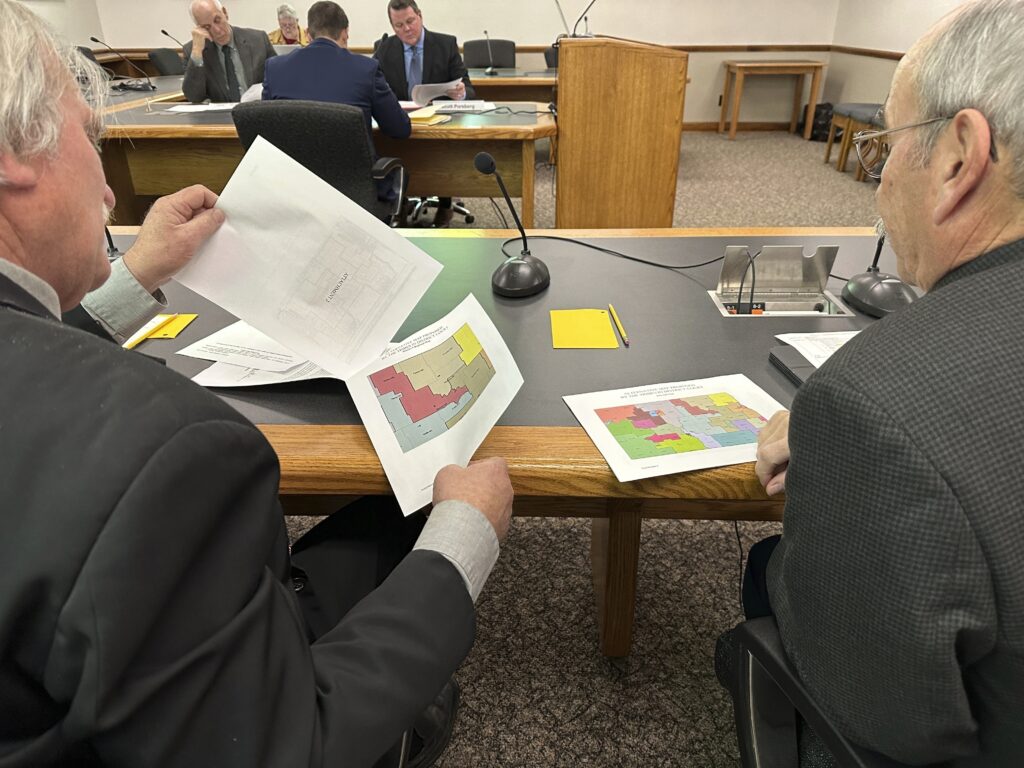
The U.S. Supreme Court’s ruling gutting the Voting Rights Act (VRA) earlier this year continues to have cascading consequences across the country. Now, the upheaval has struck a group of Native American voters fighting a years-long battle for better representation in North Dakota’s state government.
The 8th Circuit ruled Tuesday to reverse the voters’ 2023 legal victory, when a district court judge concluded that North Dakota’s state legislative map unlawfully diluted Native American voting strength in violation of Section 2 of the VRA.
The 8th Circuit’s decision emphasizes that the Supreme Court’s (SCOTUS) ruling in Louisiana v. Callais has fundamentally altered the legal landscape for voting.
Get updates straight to your inbox — for free
Join 350,000 readers who rely on our daily and weekly newsletters for the latest in voting, elections and democracy.
Though all but eliminating the VRA has, so far, made it easier for Southern states to gerrymander their electoral maps to eliminate majority-Black districts in the U.S. House, that isn’t the full extent of its effects. The Callais ruling will also affect state and local elections, and have far-reaching impacts on minority voters including Native Americans.
In the 2023 ruling, the district court judge found that there was an “obvious disparity” in how much representation Native Americans would have under North Dakota’s electoral map. Native Americans, the judge concluded, should hold three state Senate seats and six state House seats, but the map passed by the legislature would only yield one Senate seat and three House seats.
The court ordered the state to adopt a new map that remedied the violation. Under the new map, Native American voters immediately gained greater representation when the redrawn electoral districts were on the ballot in a November 2024 special election.
But North Dakota quickly appealed the ruling to the 8th Circuit. That court vacated the district court’s ruling — and not because the majority disagreed about the violation. Rather, the court concluded that only the federal government could file a lawsuit enforcing the VRA, not voters.
The group of voters then asked SCOTUS to review that ruling, requesting that the court find that voters have the right to file such a lawsuit.
Months later, the Supreme Court’s conservative majority released its catastrophic Callais ruling, scrapping the very VRA protections that North Dakota voters argued the state had violated.
And rather than address the question Native American voters asked SCOTUS to review, the conservative justices instead ordered the 8th Circuit to reconsider the entire case in light of the fact that the law at the heart of the voters’ argument had now been dismantled.
Now, the 8th Circuit has scrapped the district court’s original finding of a VRA violation.
The case will now return to the district court. Voters will be forced to proceed in the country’s new legal reality where minority voters — in this case, two Native American tribes — face an enormous uphill battle to prove the state’s map dilutes their voting power.