Louisiana Republicans rush to redraw map, target Black district not at issue in Supreme Court case
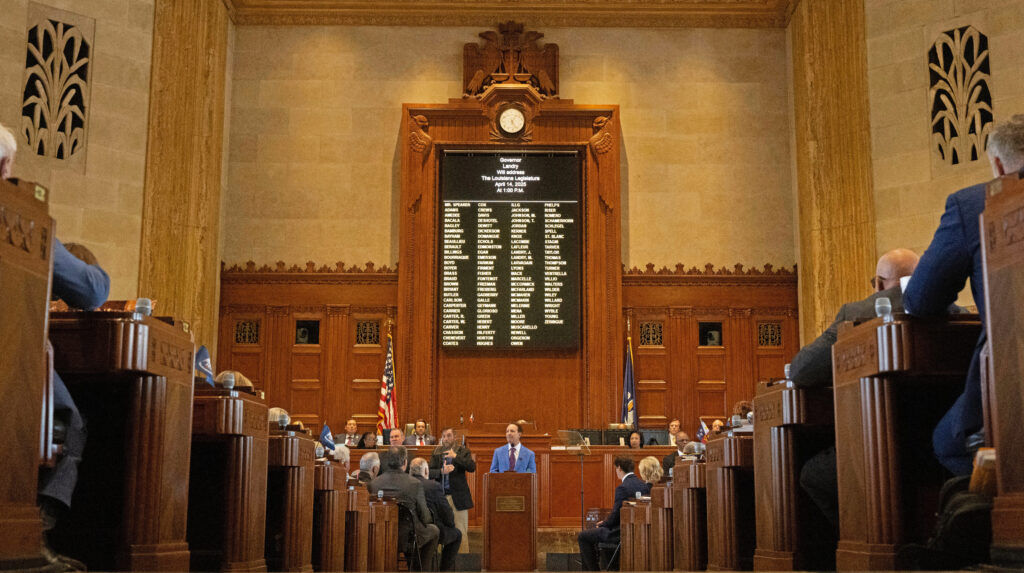
Louisiana Republicans are racing to redraw the state’s congressional map following the Supreme Court’s gutting of the Voting Rights Act. New details suggest lawmakers could vote as early as next week on a gerrymander that targets one of the state’s two majority-Black districts not even at issue in the original Supreme Court case.
A key legislative committee will hold a public hearing Friday and is expected to vote early next week on a new map, according to comments from state Sen. Caleb Kleinpeter (R), the chair of the Senate and Governmental Affairs Committee, as reported by the Louisiana Illuminator.
While lawmakers were widely expected to move quickly after the Supreme Court’s ruling, the timeline — and the apparent target — mark a notable shift.
Get updates straight to your inbox — for free
Join 350,000 readers who rely on our daily and weekly newsletters for the latest in voting, elections and democracy.
According to Kleinpeter’s comments, GOP lawmakers are poised to pursue a map that reduces the state’s two majority-Black congressional districts down to one, preserving a Baton Rouge-based district while eliminating a New Orleans-based seat.
That proposed gerrymander would leave Louisiana — a state where roughly one-third of residents are Black — with just a single district where Black voters have a meaningful opportunity to elect their preferred candidate.
The proposal would likely produce a 5–1 Republican map, falling short of a more aggressive 6–0 configuration some on the right were hoping for, but still eliminating one of the state’s majority-Black districts.
Notably, the proposal described by Kleinpeter would not eliminate the district at the center of the Supreme Court case — a Baton Rouge-to-Shreveport district held by Rep. Cleo Fields (D) — but instead target a New Orleans-based one held by Rep. Troy Carter (D).
That shift underscores how expansively Republican lawmakers are interpreting the Court’s ruling — using it not just to revisit the map challenged in the case, but to dismantle a separate majority-Black district that was never at issue.
No formal map has been introduced publicly.
The move also comes as the state’s congressional elections are already in flux.
Last week, Gov. Jeff Landry (R) suspended Louisiana’s U.S. House primaries after the Supreme Court struck down the state’s existing map — even though absentee voting had already begun and early voting was underway. State officials have said votes cast in those races will not be counted as the state prepares to move forward under a new timeline.
Several lawsuits have been filed to prevent the state from nullifying an ongoing election.