Supreme Court clears path for Louisiana to gerrymander mid-election
 Prefer us on Google
to see more of our voting rights news coverage when you search.
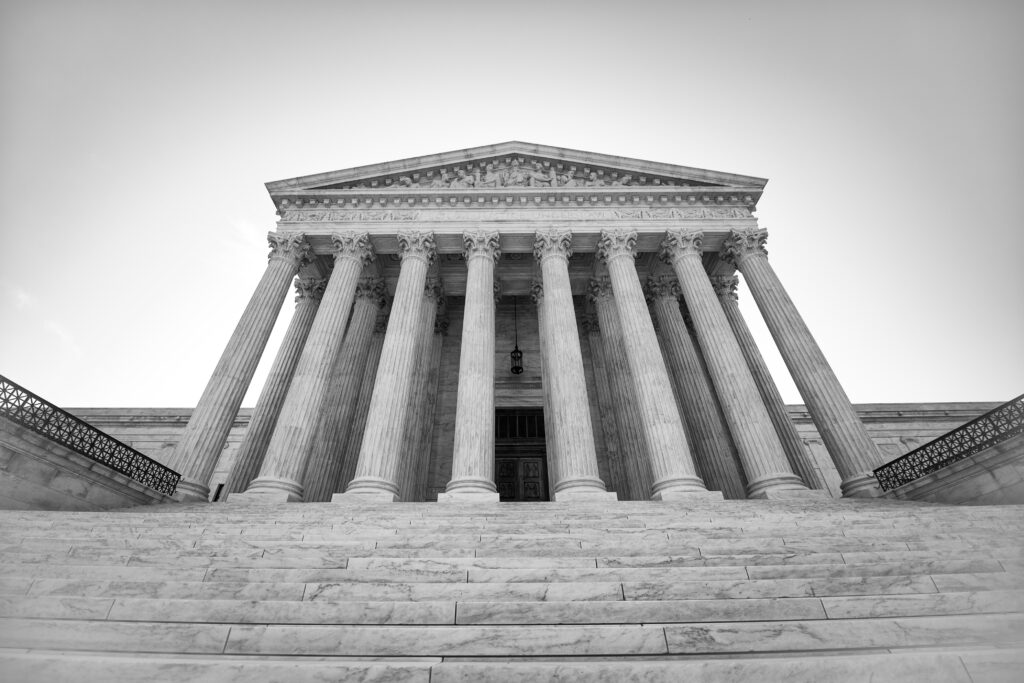
The Supreme Court Monday fast-tracked certification of its decision in Louisiana v. Callais, clearing the way for Louisiana to move forward with redrawing its congressional map even as an election is already underway.
The decision hands another win to the GOP just days after the court gutted the Voting Rights Act, and will allow the state’s Republican leadership to dilute the voting power of Black Louisianans in time for the 2026 midterm elections.
Under typical procedure, the Court waits more than a month before formally issuing its judgment to allow time for rehearing requests. But in this case, the justices granted a request to issue the ruling “forthwith,” accelerating the timeline for lower courts and state officials to act.
The decision comes amid rapidly unfolding developments in Louisiana, where state officials have already suspended congressional primary elections following the court’s ruling and are moving to adopt a new gerrymandered map.
Get updates straight to your inbox — for free
Join 350,000 readers who rely on our daily and weekly newsletters for the latest in voting, elections and democracy.
In a dissent, Justice Ketanji Brown Jackson warned that the court’s actions are deepening election turmoil in the state.
“The Court’s decision in these cases has spawned chaos in the State of Louisiana,” Jackson wrote, noting that ballots had already been sent to voters and some had been returned before the ruling was issued.
Jackson argued that by speeding up the formal issuance of its judgment, the court is effectively endorsing Louisiana’s effort to halt an ongoing election and redraw district lines midstream.
The court’s move breaks from its usual practice and sidesteps concerns about changing rules close too close to elections — a principle known as Purcell the justices have invoked in other recent cases to block lower court interventions.
Instead, the ruling appears designed to ensure that Louisiana can quickly adopt a new congressional map for the 2026 elections after the justices struck down the state’s existing districts as unconstitutional.
“The need for prompt action by this Court is clear,” Alito wrote, noting that early voting had already begun and the current map had been invalidated.
The order marks the latest escalation in a rapidly intensifying redistricting battle following the court’s decision in Callais, which significantly weakened protections under the Voting Rights Act.
With the Supreme Court’s judgment now issued, the case returns to a lower court, where judges are expected to quickly determine how Louisiana must proceed with a new map.
In Louisiana, lawmakers are already moving to redraw the state’s congressional map, with plans to vote as early as next week on a proposal that could eliminate one of the state’s two majority-Black districts.
The push to accelerate the timeline did not come from state officials alone. The “non-African American” plaintiffs who challenged Louisiana’s map also asked the Supreme Court to expedite its judgment so the court’s newly announced standard could be applied immediately to the state’s congressional districts.
Black voters who intervened in the case urged the justices to take the opposite approach — asking the court to delay its ruling until after the 2026 midterms, warning that changing the rules in the middle of an election would upend the voting process and risk disenfranchising voters.
Together, the developments signal that the court’s ruling is not only reshaping voting rights law but also accelerating political efforts to redraw maps on compressed timelines — even as elections are already in progress.
This story has been updated.