Judges Let Trump Federalize Oregon National Guard, But Block on Deployment Remains
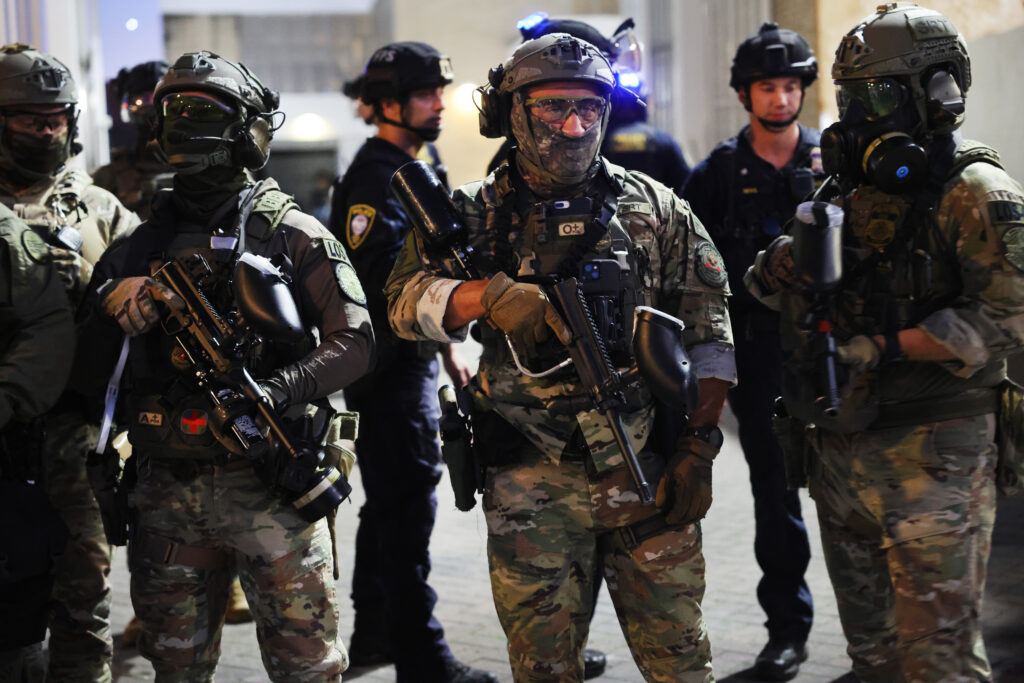
A three-judge panel for the Ninth Circuit Court of Appeals Wednesday unanimously lifted a lower court order that blocked President Donald Trump’s attempt to federalize 200 Oregon National Guard troops for deployment in Portland.
For now, the Ninth Circuit’s decision to lift U.S. District Judge Karin Immergut’s order from over the weekend is unlikely to allow the Trump administration to deploy soldiers to Portland.
Immergut issued a second order earlier this week flatly barring the government from sending federalized Guard troops to the state.
Get updates straight to your inbox — for free
Join over 350,000 readers who rely on our daily and weekly newsletters for the latest in voting, elections and democracy.
In its four-page order, the panel noted that since the Trump administration did not appeal Immergut’s second order, it remains in effect.
“Thus, the effect of granting an administrative stay preserves the status quo in which National Guard members have been federalized but not deployed,” the panel wrote. “Defendants have not appealed or challenged the second temporary restraining order, and it is not before us.”
The panel was composed of two judges appointed by Trump and a third appointed by former President Bill Clinton.
The panel is set to hear formal arguments Thursday on the Trump administration’s appeal of Immergut’s first order. The hearing could include arguments against Immergut’s second ruling if the Trump administration appeals that, too.
Late last month, Trump claimed to deploy troops to Portland, asserting that “domestic terrorists” had an Immigration and Customs Enforcement (ICE) facility in the “War ravaged” city “under siege.” He also authorized troops to use “Full Force, if necessary.”
Local and state law enforcement officials through court declarations refuted Trump’s account of conditions in Portland.
In response to Trump’s social media posts, Secretary of Defense Pete Hegseth issued a memo federalizing the Oregon Guard for at least 60 days to protect federal personnel and property in Portland.
The state quickly sued, arguing that Trump’s assertions were false and that the federalization undermined its sovereignty.
In her first order, Immergut, who Trump appointed in his first term, found that Trump did not have the authority to call up Oregon troops based on false claims.
The Trump administration responded to Immergut’s initial order by redirecting California Guard troops who were federalized earlier this year to Portland. California joined Oregon’s lawsuit and both states asked Immergut for a second order halting outside troops being deployed to Oregon.
The judge granted the second order and warned Department of Justice attorneys that the government’s attempt to use California troops in Oregon was “in direct contravention” of her earlier decision.
Immergut’s second order headed off the severe state sovereignty issues stemming from the president using one state’s militia against a nonconsenting state, but it was only temporary.
Hegseth issued a memo over the weekend federalizing hundreds of Texas National Guard troops for deployment in Chicago over the repeated objections of Illinois Gov. JB Pritzker (D). Hundreds of Illinois Guard troops were also called up in Hegseth’s memo.
Chicago and Illinois filed their own lawsuit, and a federal judge is set to hear arguments Thursday on their request for a temporary injunction halting the Windy City deployment.
This story has been updated with additional details throughout.