In bad news for Trump, judge who blocked his last anti-voting order will hear challenge to new one
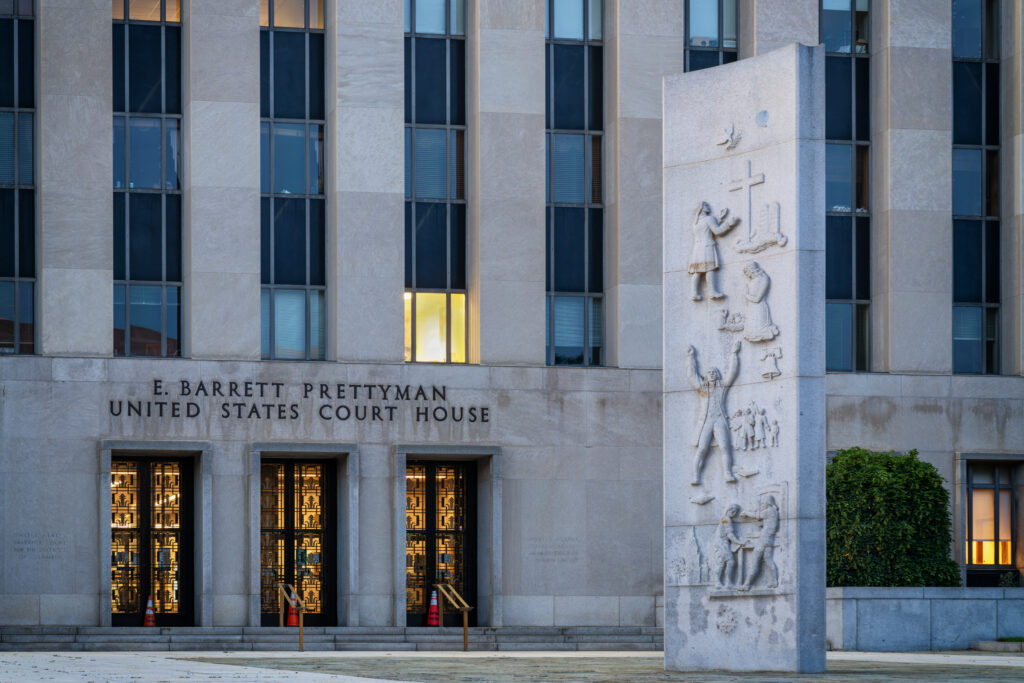
Democrats’ lawsuit to block President Donald Trump’s new anti-voting executive order has been assigned to the federal judge who quickly blocked his last executive order on elections — finding that the president holds no power whatsoever to dictate election policy.
The Framers “assigned no role at all to the President” in running elections, wrote District Judge Colleen Kollar-Kotelly in a 110-page opinion in January that permanently enjoined most of Executive Order No. 14,248, which attempted to impose documentary proof of citizenship requirements and limits on mail voting. “Put simply, our Constitution does not allow the President to impose unilateral changes to federal election procedures.”
The assignment is a coincidence — lawsuits are effectively assigned to federal judges on a given district court at random. But it makes it that much more likely that the new executive order will meet the same fate as the last.
Get updates straight to your inbox — for free
Join 350,000 readers who rely on our daily and weekly newsletters for the latest in voting, elections and democracy.
Trump’s latest executive order attempts to restrict mail-in voting to just voters on a list of verified U.S. citizens, to be compiled by the Department of Homeland Security. A coalition of Democratic organizations led by the Democratic Senatorial Campaign Committee immediately sued in the U.S. District Court for the District of Columbia, calling it as unconstitutional as the last one.*
After Trump issued his previous order last March, Judge Kollar-Kotelly, an appointee of President Bill Clinton, quickly issued a preliminary injunction halting its implementation a month later. In that 120-page opinion, the judge agreed with plaintiffs challenging the order that “[o]ur Constitution entrusts Congress and the States — not the President — with the authority to regulate federal elections.”
In a subsequent 81-page ruling, Kollar-Kotelly expounded at length on the Framers’ decision to grant states “initial authority to regulate elections,” and Congress with “supervisory authority over those regulations” with the Constitution’s Elections Clause. “The President does not feature at all,” Kollar-Kottelly wrote, citing Federalist No. 59. “In fact, Executive regulatory authority over federal elections does not appear to have crossed the Framers’ minds.”
Earlier this week, the Department of Justice notified the court that it intends to appeal Kollar-Kotelly’s January ruling to the Court of Appeals for the District of Columbia.
As with the 2025 order, Trump’s latest attempt to dictate how elections are administered will face multiple legal challenges. A collection of civil rights groups filed a lawsuit Thursday morning in Massachusetts, which has been assigned to District Judge Indira Talwani, who was appointed by President Barack Obama. Last year, a different federal judge in Massachusetts ruled that Trump’s 2025 executive order was unconstitutional. The DOJ appealed that ruling to the 1st Circuit Court of Appeals.
*Democratic plaintiffs in this case are represented by the Elias Law Group (ELG). ELG Chair Marc Elias is the founder of Democracy Docket.