Judge denies North Carolina students’ plea for early voting site at nation’s largest Black college
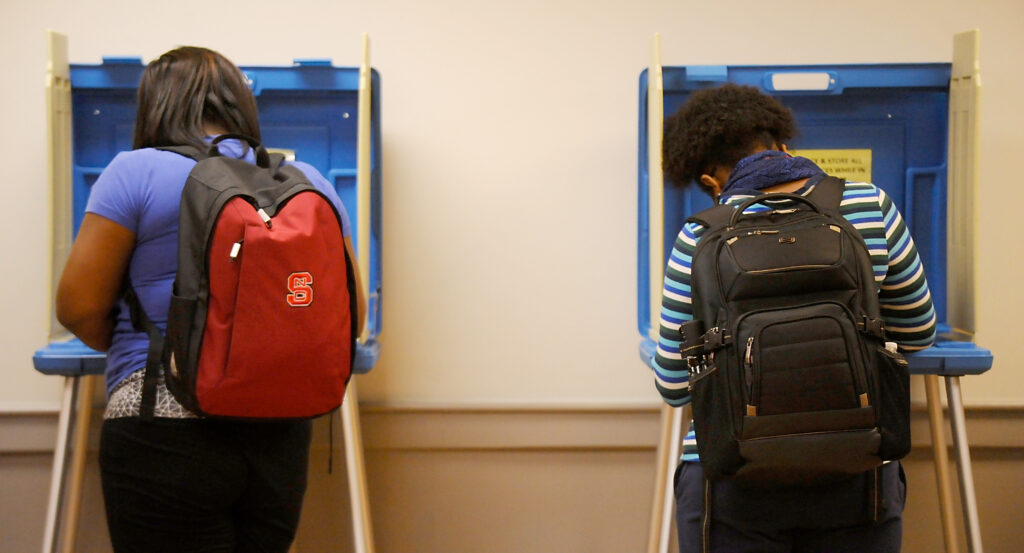
A federal judge declined to overrule Republican officials and open early voting sites on three college campuses across North Carolina, including at the United States’ largest historically Black college.
The Sunday ruling from Judge William Osteen Jr., an appointee of former President George W. Bush, deals a blow to North Carolina students’ attempt to restore the sites through a lawsuit ahead of the state’s upcoming primary election.
Get updates straight to your inbox — for free
Join 350,000 readers who rely on our daily and weekly newsletters for the latest in voting, elections and democracy.
Despite the decision, the lawsuit is ongoing, and the students can appeal Osteen’s denial of their request for an injunction or temporary restraining order to open the sites. They can also seek court approval of the sites before early voting begins in the state’s general election.
The battle over the early voting sites began in January, when Republican members on the North Carolina State Board of Elections (NCSBE) denied early voting sites at Western Carolina University (WCU); the University of North Carolina–Greensboro (UNC-G); and North Carolina A&T State University (NC A&T), the largest historically Black college or university (HCBU) in the country.
The College Democrats of North Carolina and four students* sued, alleging that the NCSBE’s rejection of the sites at the three campuses violated the U.S. Constitution.
In their lawsuit, the College Democrats and students argued that the denial placed undue burdens on the right to vote by forcing students, who often do not have reliable transportation, to travel long distances off campus in order to cast their ballot.
The elimination of on-campus sites also violates the 26th Amendment by targeting student voters, particularly young Black voters, the lawsuit argued.
Together, the three campuses serve over 40,000 students, including thousands of Black students. NC A&T has a current enrollment of over 15,000 students.
Prior to the board’s decision, an early voting site had operated at WCU since 2016. UNC-G also had a site for presidential elections, but never for midterm elections. For years, early voting sites have been regularly offered on other campuses across the state, such as Duke University, during both midterms and presidential elections.
Early voting for the state’s March 3 primary begins Thursday, Feb. 12. It includes nominations for the U.S. House and Senate as well as the state legislature and local offices.
*The Elias Law Group (ELG) is representing the plaintiffs in the case. ELG Firm Chair Marc Elias is the founder of Democracy Docket.