North Carolina cut voting sites at nation’s largest HBCU. Students are suing
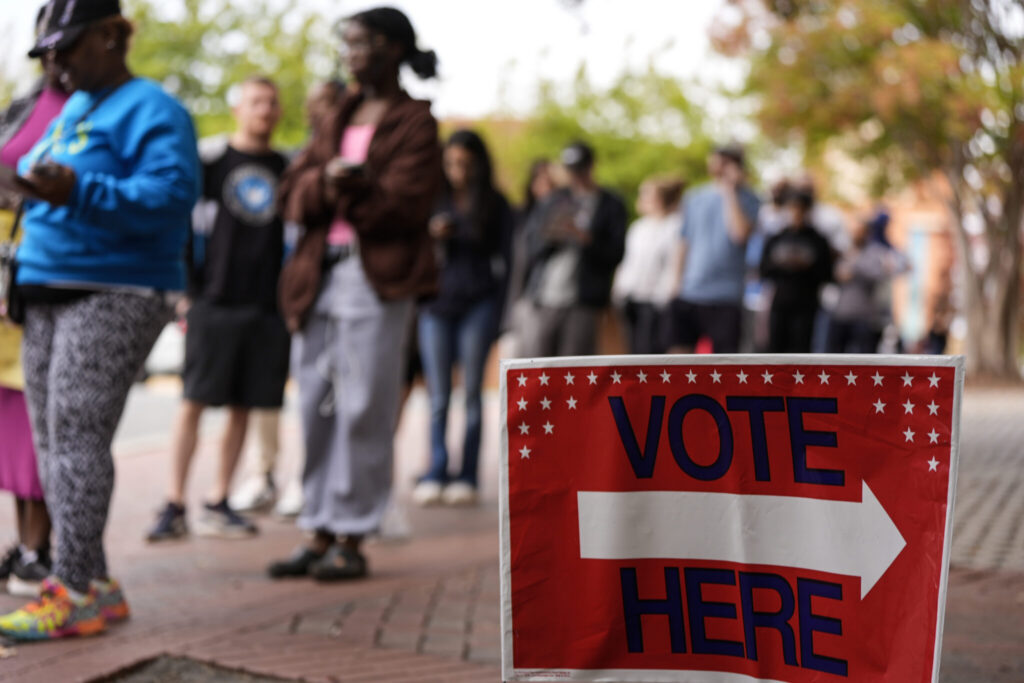
A group of North Carolina students sued Republican state officials Tuesday to restore early voting sites on three college campuses across the state, including at the United States’ largest historically Black college.
The lawsuit comes just over two weeks after the North Carolina State Board of Elections (NCSBE) rejected the early voting sites in a 3-2 vote along party lines.
It was the latest in a string of recent moves by the state election board, which came under GOP control last year, to restrict voting in the Tar Heel State. And it came just weeks before the state’s 2026 primary election in March.
Get updates straight to your inbox — for free
Join 350,000 readers who rely on our daily and weekly newsletters for the latest in voting, elections and democracy.
In the lawsuit, the students* allege that the board’s removal of voting sites at Western Carolina University (WCU), the University of North Carolina–Greensboro (UNC-G), and North Carolina A&T State University (NC A&T), the largest HBCU in the country, violated the U.S. Constitution in multiple ways.
They argue that the removal unduly burdens the right to vote in violation of the First and Fourteenth Amendments by forcing students, who often do not have reliable transportation, to travel long distances off campus in order to cast their ballot.
As an example, the students note that the voting site nearest to WCU’s campus is almost two miles away in an area with virtually no public transportation.
“As a result, students who do not have access to private transportation must now walk that distance—which includes walking along a highway that lacks any pedestrian infrastructure—to exercise their right to vote,” the lawsuit reads.
The lawsuit asserts that these long distances, which were produced solely by the board’s vote, also hamper students’ right to vote by limiting access to same-day registration, which is only available during early voting.
Voting experts have warned that a lack of easy access to polling locations because of long travel distances and unreliable transportation access is a significant barrier to voter participation.
The elimination of on-campus sites also violates the 26th Amendment by targeting student voters, particularly young Black voters, the lawsuit argues.
Taken together, the three campuses serve over 40,000 students, including thousands of Black students. NC A&T has a current enrollment of over 15,000 students.
“For many of these students, voting in college is their first opportunity to exercise the franchise — a milestone in their civic engagement and a connection to the generations of Black North Carolinians who fought for the right to vote,” the lawsuit reads.
The students, who also sued the Jackson County Board of Elections and many of its members, are seeking a court order to block the elimination of the on-campus early voting sites for the upcoming 2026 primary.
Since Republicans took control of the NCSBE in May, it has taken several steps to restrict voting in the state.
The board has worked closely with the U.S. Department of Justice on a legal settlement requiring voters to provide more personal information or risk being disenfranchised. It has also pushed for unprecedented access to voters’ full social security numbers. And its executive director has unveiled sweeping legislation that would further cut back voting access in the state.
*The Elias Law Group (ELG) is representing the plaintiffs in the case. ELG Firm Chair Marc Elias is the founder of Democracy Docket.