North Carolina Counties Propose Cuts to Voting Access
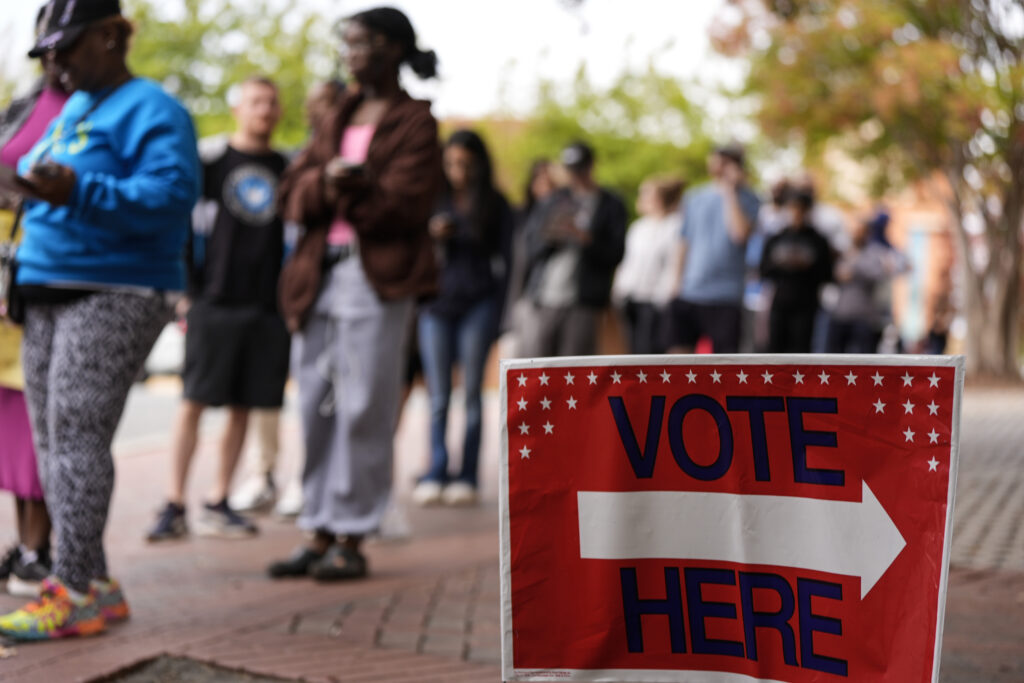
Republicans on county election boards are advancing proposals to the North Carolina State Board of Elections (NCSBE) that would make it harder to vote — especially for student, minority and working-class voters.
At least six counties have submitted “nonunanimous” plans to the NCSBE, targeting on-campus early voting sites and Sunday voting.
The anti-voting proposals come amid a broader yearlong effort by Republican officials, who seized control of the board earlier this year, to narrow voting access.
Get updates straight to your inbox — for free
Join 350,000 readers who rely on our daily and weekly newsletters for the latest in voting, elections and democracy.
In counties including Guilford, Jackson, Harnett, Craven, Cumberland and Pitt, Republican board members have pushed through early voting plans over Democratic opposition, triggering a formal review by the State Board of Elections. Under North Carolina law, when county boards cannot agree unanimously, the state board can adopt the majority plan, the minority plan or impose its own version.
Several of the disputed GOP plans would eliminate or refuse to include early voting sites on college campuses — locations that have operated for years and consistently drawn younger voters who tend to lean more Democratic. Other plans would cut Sunday voting entirely, a potential voting lifeline for working-class voters who may be unable to take Election Day off.
In Guilford County, the board voted 3–2 along party lines to remove early voting sites at UNC Greensboro and North Carolina A&T State University, both of which were used during the 2024 primaries. At a November meeting, board chair Eugene Lester III justified the decision by arguing that voting is a privilege, not a right.
“As citizens in this great country, we have certain rights and privileges,” Lester said. “Rights are those things that we get automatically, like the right to be presumed innocent in a criminal trial. There’s nothing we have to do other than to be born here and enjoy the Constitution to get that right. Then there are privileges. Voting is a privilege.”
Democratic members and local advocates warned that the decision would disproportionately affect students and low-income residents.
A similar dynamic has played out in Jackson County, where the board voted 3–2 to eliminate the early voting site at Western Carolina University (WCU).
“WCU’s campus is already in an extremely rural area that is difficult to traverse without a vehicle,” Evie Grey, a Western Carolina University student and vice president of the university’s Student Democracy Coalition, said in a letter. “Students who do not have a car already struggle to consistently go to the store. Not having an on-campus voting site could completely remove not only students’ access to vote, but also faculty and staff who don’t have time to vote off campus between work.”
Republican board members tried to argue the campus site was inaccessible to nonstudents and cited cost concerns, while Democrats countered that removing it would effectively strand young voters without reliable transportation.
Beyond campuses, Sunday voting has emerged as another flashpoint.
Republican majorities in several counties voted to eliminate Sunday early voting after offering it during the March 2024 primary.
Black churches and community groups maintain a deep tradition of providing transportation to voters on Sundays, making its removal particularly consequential for Black and elderly voters.
These county-level disputes are unfolding against the backdrop of a series of extreme moves by the GOP-controlled NCSBE this year.
Since taking control, the state board has initiated a partnership with the U.S. Department of Homeland Security to compare voter rolls against a flawed federal immigration database, twice demanded that the DMV turn over full Social Security numbers for voters and launched a so-called “registration repair” effort that could purge nearly 100,000 voters from the rolls.
Taken together, the proposals to eliminate campus and early voting opportunities reflect a broader strategy to raise barriers to participation for voters who tend to lean Democratic.
With the Dec. 19 deadline for counties to submit proposals fast approaching, the GOP-controlled State Board of Elections must then decide whether to uphold the county Republican majorities’ plans before early voting begins in February.