Is DOJ laying the groundwork to expand the powers of its 1,000 election monitors?
 Prefer us on Google
to see more of our voting rights news coverage when you search.
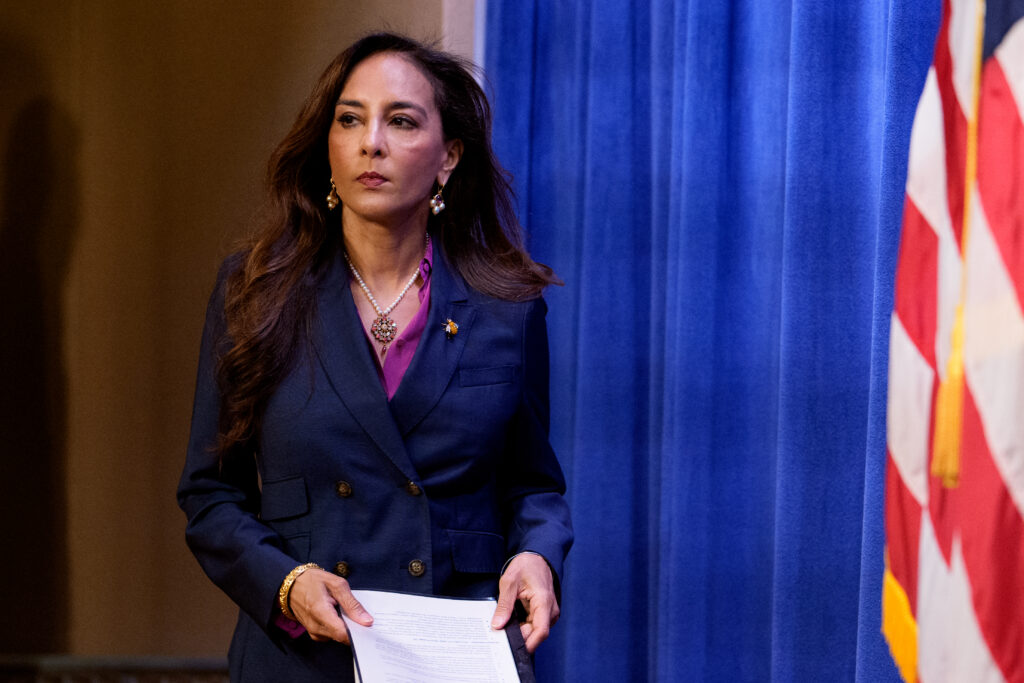
Does Assistant Attorney General Harmeet Dhillon know the difference between federal election monitors and observers? As head of the Department of Justice’s (DOJ) Civil Rights Division, which oversees the federal elections monitoring program, she definitely should.
But in a recent interview, Dhillon claimed she plans to deploy at least 1,000 federal “observers” across the country this November to watch election procedures in jurisdictions not yet disclosed by the federal government.
In fact, Dhillon has the authority to deploy only monitors, not observers. Her comments could be a troubling sign that the DOJ may intend to assert expansive powers — far beyond the scope of the department’s traditional monitoring program — for the 1,000 monitors it plans to deploy.
“Federal election monitors from the department are — observers, I should say — are similar to other types of observers you see, so they’re not going to be interfering in any way or running the election,” Dhillon said.
Get updates straight to your inbox — for free
Join 350,000 readers who rely on our daily and weekly newsletters for the latest in voting, elections and democracy.
Dhillon went on to refer to “observers” rather than monitors for the rest of the interview. She also framed the upcoming federal poll-watching push as the “biggest DOJ election observer effort in history.”
The difference is important, and her switch seemed deliberate. Under federal law, monitors and observers are two distinct types of poll watchers the federal government can deploy — and observers have a lot more power.
Stemming from the Voting Rights Act (VRA), observers have explicit legal authority to enter polling places and closely watch election workers, voters and voting systems at all stages of the election process.
Monitors, on the other hand, have no legal authority to enter election sites or watch any specific aspect of the voting process. They are subject to state poll access laws, and several states have already refused to permit them access to polling locations for primary elections this year.
Given the clear legal distinction between monitors and observers, Dhillon’s correction is puzzling, especially considering that she herself does not have the authority to deploy observers.
That’s a responsibility the VRA strictly gives to the attorney general — though the conservative legal movement’s decades-long campaign against the act’s observer system has severely weakened that power.
As a result of that campaign, observers currently can only be deployed by court order or as required by a legal settlement. There are also only three places in the country where observers are allowed: Union County, New Jersey, Pawtucket, Rhode Island and St. Landry Parish, Louisiana.
Dhillon’s discrepancy is especially striking considering her background. For years, she’s urged people to become poll watchers and has a thorough comprehension of what watchers can and cannot do.
Other DOJ leaders appear to know the difference between monitors and observers.
At a press conference Tuesday, acting Deputy Attorney General Trent McCotter noted that Dhillon is “sending hundreds of election monitors across the country.”