Arizona early voting starts today amid fights over election rules
 Prefer us on Google
to see more of our voting rights news coverage when you search.
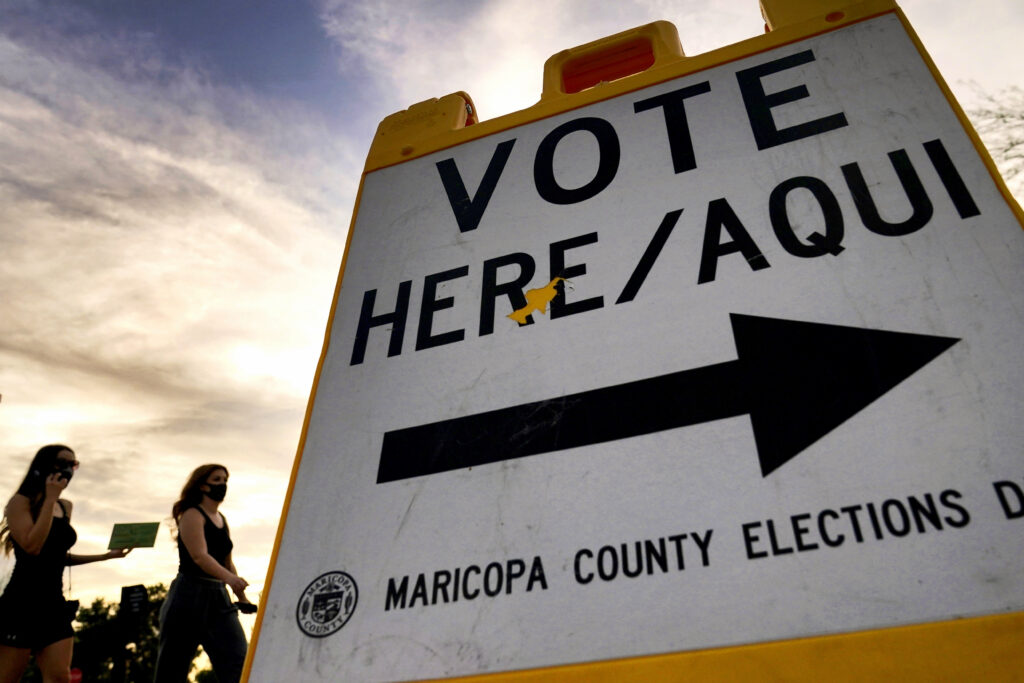
Voting in Arizona’s high-stakes 2026 midterms began Wednesday, when election officials started mailing early ballots and opening in-person early voting across the state.
And few states are entering this year’s elections with more unresolved fights over who should run them, how ballots should be cast and whether local officials will carry out their duties once the votes are counted.
Arizona remains one of the country’s central battlegrounds over election administration.
Get updates straight to your inbox — for free
Join 350,000 readers who rely on our daily and weekly newsletters for the latest in voting, elections and democracy.
The state’s three most powerful statewide offices — governor, secretary of state and attorney general — are all on the ballot. Several Republican nominees have disturbing histories tied to efforts to challenge or undermine confidence in the 2020 election. And in Maricopa County, home to more voters than any other county in the state, election administration is now split between two offices that spent more than a year fighting in court over who controls key parts of the process.
Voters are also considering Proposition 144, a sweeping constitutional amendment that would impose strict new identification requirements in future elections and reshape the rules governing early and mail voting.
Then there is what happens after Election Day.
Arizona has already lived through one of the country’s most serious county certification standoffs. In 2022, Republican supervisors in Cochise County refused to certify election results on time before a judge ordered them to act. This year, county boards again face firm deadlines to canvass their results before the statewide canvass later in November.
Beginning Oct. 7, Arizona voters can cast ballots early in person and counties will begin mailing early ballots. Here’s what Democracy Docket is watching.
Arizona mail ballots have to arrive by Election Day
Arizona voters should also be aware that the state’s mail-ballot rules differ sharply from states such as California.
Arizona is an in-hand state.
That means a ballot must actually reach an election official by 7 p.m. on Election Day to count.
A ballot mailed on Nov. 3 but delivered afterward will be rejected, even if the envelope receives an Election Day postmark.
That distinction became especially relevant this year after the U.S. Supreme Court ruled that federal law does not prohibit states from counting ballots received after Election Day when state law allows it.
Arizona does not.
Secretary of State Adrian Fontes (D) has urged voters returning ballots by mail to send them well before Election Day and use an official drop box or voting location instead if the deadline is approaching.
That makes early voting especially consequential in Arizona.
Arizona’s biggest post-election vulnerability may be the county canvass
The most consequential election fight may not begin until after voters are finished casting ballots.
Arizona’s county boards of supervisors are responsible for canvassing — formally reviewing and certifying — their county election results.
It is generally a routine administrative duty.
But Arizona has already seen what happens when local officials refuse to perform it.
After the 2022 midterms, Republican supervisors in Cochise County delayed certification beyond the legal deadline while citing concerns about voting machines.
The board’s Democratic member supported certification, but Republican Supervisors Peggy Judd and Tom Crosby initially refused to approve the canvass.
Then-Secretary of State Katie Hobbs (D) sued.
A judge ordered the county to meet and certify the results that day. Crosby did not attend the meeting, while Judd joined the Democratic supervisor in approving the canvass.
The episode established a stark lesson: county supervisors do not have unlimited discretion to withhold certification because they distrust the election.
But it also showed how quickly a normally obscure administrative step can turn into an emergency court fight.
That history looms over the 2026 election.
For the Nov. 3 general election, county boards can begin canvassing Nov. 9 and must complete the process by Nov. 19. Arizona’s official statewide canvass is scheduled for Nov. 23.
At the statewide canvass, the secretary of state formally certifies results for federal, statewide and legislative races in a public meeting attended by the governor and attorney general. If statewide ballot measures are on the ballot, the chief justice of the Arizona Supreme Court also attends.
Those dates leave little room for a prolonged county standoff.
A refusal would not necessarily allow a county to erase its voters or permanently stop certification. Courts can compel officials to carry out mandatory duties, as happened in Cochise County.
But a delay could still force emergency litigation, create uncertainty in close races and provide fertile ground for misinformation before statewide results become official.
In a state where distrust of election administration has already become a defining political issue, that may be the more immediate danger.
Election denial is on the ballot again
Arizona voters will also be choosing who controls some of the offices with the most power over future elections.
The state’s races for governor, secretary of state and attorney general all feature Republican nominees with records tied to efforts to challenge the 2020 presidential election or amplify doubts about its outcome.
That is particularly significant in the secretary of state race because the office oversees statewide elections.
Fontes is running against Republican state Rep. Alexander Kolodin, an attorney who was involved in some of the most notorious litigation seeking to overturn Arizona’s 2020 presidential election results.
The contrast between the candidates has already spilled directly into questions about how the 2026 election will be counted.
During a debate last week, Kolodin said he would deliver election results on election night if elected secretary of state. Fontes pushed back, arguing that Arizona’s existing mail-voting system makes that promise impossible because valid ballots continue to be processed after polls close.
That dispute gets at one of Arizona’s recurring election flashpoints.
Large numbers of Arizonans vote early or by mail, and ballots returned close to Election Day can take additional time to verify and process. That means the unofficial results reported on election night can change significantly as remaining valid ballots are counted.
Slow reporting has repeatedly fueled unsupported claims that something improper is happening. But the pace of the count is largely a product of state law and the mechanics of processing mail ballots, not evidence that votes are being added unlawfully.
Maricopa County’s election is being run by two offices that recently sued each other
Nowhere is the fight over election authority more heated than in Maricopa County.
The county’s Board of Supervisors and Recorder Justin Heap spent more than a year battling over who controls key election responsibilities before reaching a court-mediated settlement in July.
The agreement created an unusually clear split.
Heap’s office controls the early voting period, including voter registration, mail ballots, early in-person voting, early voting sites, drop boxes and signature verification.
The Board of Supervisors and its Elections Department control emergency voting, Election Day operations, ballot processing and tabulation and the county canvass.
That means the balance of power shifts during the election itself.
When early voting begins Wednesday, Heap’s office takes the lead. Once Election Day arrives, responsibility for major parts of the election shifts to the board.
The settlement grew out of a bitter institutional dispute after Heap took office and challenged an agreement that had previously divided election duties between the recorder and the board. A judge ruled in April that the board had claimed authority over some responsibilities assigned by law to the recorder. The two sides later negotiated the July agreement.
The arrangement is detailed enough that even routine election tasks can cross institutional lines.
The recorder selects early voting and drop-box locations, while the board determines how many locations it will fund. Both offices share responsibility for transporting ballots collected from drop boxes. The county is also building a separate voter registration system for the recorder while the two offices continue jointly managing the current system.
For voters, that means one of the most important elections in the country will be administered under a power-sharing arrangement created just months before ballots went out.
Proposition 144 could reshape Arizona elections — but not this one
Arizonans will also vote this fall on one of the country’s most sweeping election-related ballot measures.
Proposition 144 would amend the state Constitution to require voters to provide valid government-issued proof of identity before casting a ballot in every election.
The requirement would apply not only to in-person voting but also to people voting by mail.
The measure would also require voters to be offered the option of having their ballots tabulated on site and would add constitutional language allowing the Legislature and voters to further regulate early and mail voting.
If approved, its requirements would take effect for elections beginning Jan. 1, 2028.
That distinction could become important as campaigning around the proposition intensifies.
Arizona already requires identification for people voting in person, including during early voting. Voters can satisfy the requirement with one approved form of photo identification or combinations of other accepted documents. Arizona Secretary of State
Mail voters, meanwhile, will continue casting ballots under the current system this year.
Arizona’s proof-of-citizenship rules remain unusually complicated
Arizona also enters the midterms with one of the country’s most complicated voter-registration systems.
The state requires documentary proof of citizenship to vote a full ballot in state and local elections.
But because of earlier federal litigation, eligible citizens who register using the federal voter-registration form without supplying documentary proof can still register as so-called “federal-only voters.”
Those voters can cast ballots for federal offices, including U.S. House races, but not state and local contests.
The system has generated years of litigation over whether Arizona can impose additional citizenship requirements and how officials should treat voters whose citizenship has not been documented through the state process.
The U.S. Supreme Court has agreed to hear arguments in the ongoing federal case involving Arizona’s proof-of-citizenship rules.
But that case will not impact the rules for voters casting ballots this fall.
The distinction is important because Arizona’s citizenship requirements have become a recurring target of political claims about noncitizen voting, even as the state maintains separate systems for determining which contests a voter is eligible to participate in.
Polling place rules are also being challenged in court
Another lawsuit could affect what happens around Arizona voting locations.
In Winn v. Fontes, Republican plaintiffs challenged several provisions of Arizona’s Elections Procedures Manual governing conduct near polling places.
The dispute includes rules addressing electioneering audible from inside voting locations, intimidating or aggressive behavior and frivolous challenges to voters.
A judge declined to block most of those provisions before the election, though one restriction involving political apparel was enjoined. The broader case remains active.
Those rules could become especially important as in-person voting begins and partisan poll watchers and challengers become more visible at voting locations.
Arizona law, like the laws of many states, permits observers and challenges under certain circumstances. But election officials also have legal obligations to prevent intimidation and disruption.
Overseas voters are facing another legal challenge
Arizona is also one of several states facing Republican lawsuits targeting some U.S. citizens living overseas.
The Republican National Committee (RNC) is challenging the eligibility of certain U.S. citizens who have never lived in Arizona themselves but qualify to vote there based on a parent’s previous residence in the state.
The lawsuit is part of a broader campaign by the RNC to disenfranchise U.S. citizens born and living abroad, with similar cases in other states.
Those disputes could become consequential if courts are asked to segregate or reject affected ballots before results are finalized.
For Arizona, the litigation adds another category of ballots that could become the focus of post-election challenges if a congressional race is close.
What Arizona voters need to know
Early voting begins and early ballots start going out Wednesday, Oct. 7.
Voters can cast ballots in person during the early voting period or return an early ballot by mail, drop box or voting location.
Anyone voting in person must present identification that satisfies Arizona’s requirements.
Mail ballots must be received by election officials no later than 7 p.m. on Nov. 3. A postmark alone is not enough.
After Election Day, county boards have until Nov. 19 to complete their canvasses. The statewide canvass follows Nov. 23.
Arizona therefore enters the midterms with election denial still shaping some of its biggest statewide races, its largest county operating under a newly negotiated division of election authority and voters weighing a constitutional overhaul of future election rules.
And even after the ballots are cast, one of the state’s most consequential tests may still be ahead: whether every county completes the ordinarily routine process needed to make those results official.