Here’s the latest sign that Thune isn’t going to the mat for the SAVE America Act
The Senate debated the SAVE America Act for roughly 7 hours Tuesday, and the bill’s staunchest backers are sounding determined.
“We are not going to stop until the SAVE America Act is on President Trump’s desk to be signed into law,” Scott Presler, a right-wing online influencer, posted after debate ended Tuesday around 11pm.
But few noticed the significance of how the debate ended. Rather than recessing, it adjourned.
That distinction may sound arcane, but it’s the latest signal that MAGA’s hopes for a “talking filibuster” to eventually force the measure through are doomed. And even the measure’s Senate champion appears to be resigned to that outcome.
Get updates straight to your inbox — for free
Join 350,000 readers who rely on our daily and weekly newsletters for the latest in voting, elections and democracy.
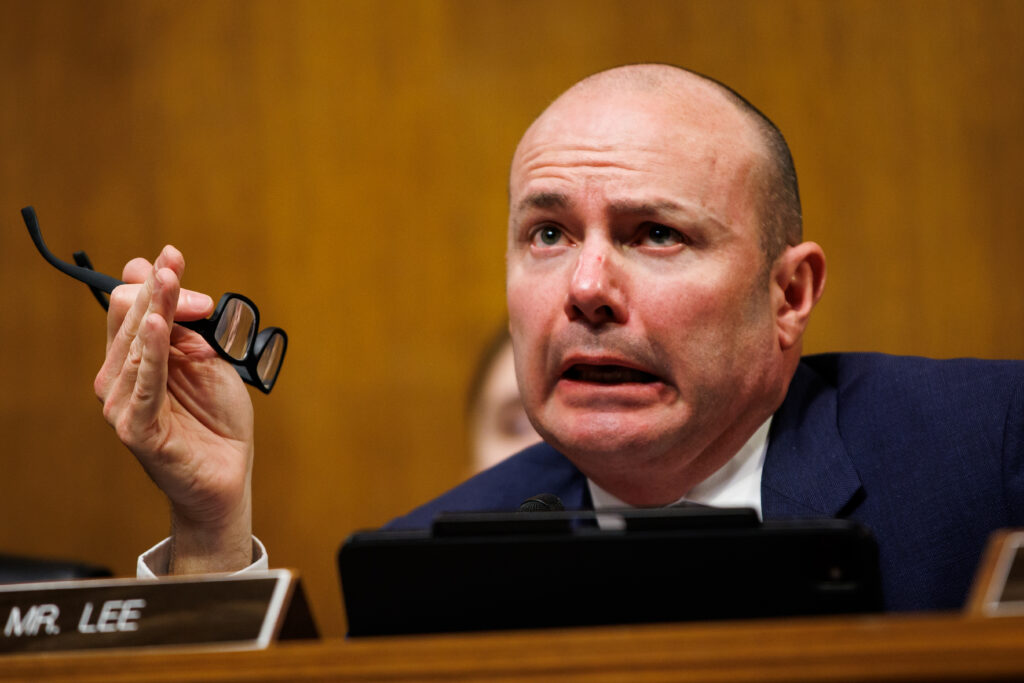
President Donald Trump and his allies have been pushing the Senate hard for months now to pass the SAVE America Act, which would require voters to provide documentary proof of citizenship — like a U.S. passport or birth certificate — when they register and show ID when they cast ballots. After it passed the House in February, the bill’s senate sponsor, Sen. Mike Lee (R-Utah) called for a talking filibuster to get around the normal 60-vote threshold to advance legislation in the upper chamber.
Lee has repeatedly railed against the so-called “zombie filibuster” in daily social media posts, urging supporters to lobby Senate Majority Leader John Thune (R-S.D.) in support of scrapping the Senate’s usual practices to enact the bill over uniform Democratic opposition by a simple majority. Unlike the House, the Senate places few limits on debate. So to end debate on a matter on the Senate floor, the majority usually moves to invoke cloture, which requires 60 votes to pass.
For months now, Lee has pitched the “talking filibuster” — essentially forcing Democrats to speak in opposition against the bill until all 47 of them (and Republican Sen. Lisa Murkowski of Alaska, another SAVE America Act opponent) had exhausted every dilatory motion and deliberative breath against it.
But Tuesday night, Lee’s actions spoke louder than his words. Lee declined to exercise his Senatorial prerogative to object to a request for unanimous consent to adjourn the legislative day and resume debate Wednesday. If the Senate had recessed instead of adjourned, the legislative day wouldn’t have ended — as far as the Senate’s rules would have been concerned, calendar Wednesday would still be Senate Tuesday. But the Senate adjourned instead, resetting the legislative day.
That matters because the Senate’s filibuster rules allow every senator to speak on a motion before the floor twice each legislative day. If Senate Republicans — including Lee — were serious about attempting a talking filibuster, they would have recessed and started to chip away at the times Democrats could speak against the SAVE America Act.
In addition to speaking against the bill itself and amendments to it, senators get to speak twice against every motion before the floor and have wide leeway to propose new motions. In practice, this means overcoming a talking filibuster maintained by a large minority is virtually impossible — in fact, it’s never been done.
The last time there was a lengthy talking filibuster was 1964, when conservative Southern Democrats fought passage of the Civil Rights Act for 60 days. In the end, some of the landmark legislation’s opponents folded, and the Senate voted to invoke cloture to end debate.
Thune has repeatedly tried to dissuade the demands for a talking filibuster, saying it’s infeasible, and GOP leadership reportedly sees this week’s lengthy debate as an exercise in helping Trump and his anti-voting allies face reality.
“We don’t have the votes, either to proceed [to] a talking filibuster nor to sustain one if we got on one,” Thune said last week. “That’s just a function of math. There isn’t anything I can do about that.”