Georgia court dismisses lawsuit seeking to block Fulton County absentee ballot drop-off policy
 Prefer us on Google
to see more of our voting rights news coverage when you search.
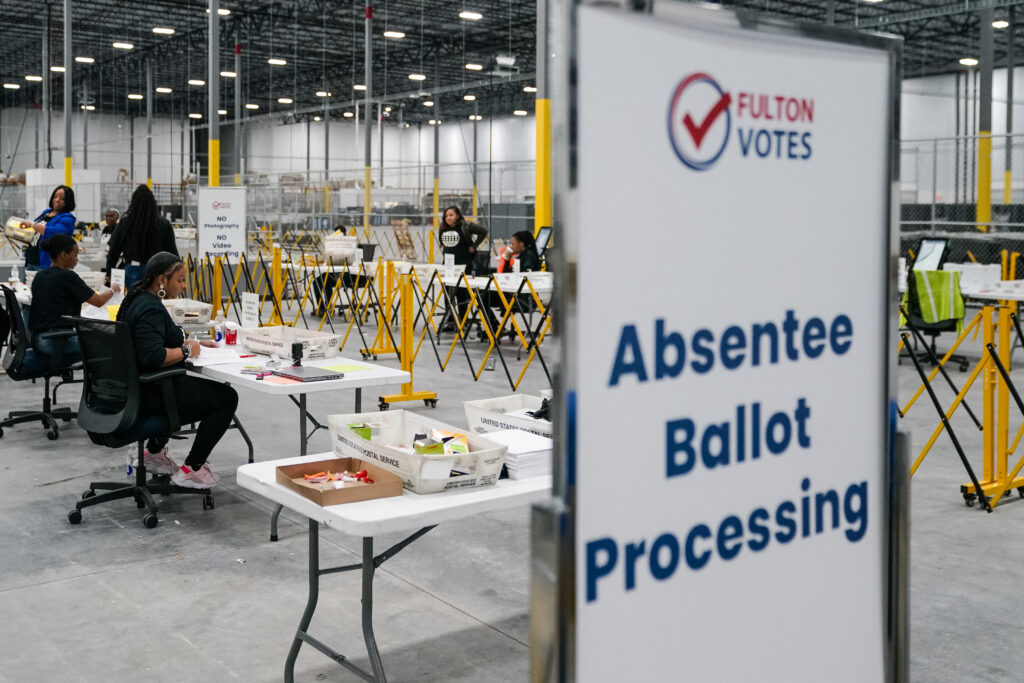
A Georgia judge Thursday dismissed an anti-voting lawsuit challenging a Fulton County Board of Registration and Elections’ policy that increased the number of sites where voters could drop off absentee ballots in Georgia’s most populous county.
Superior Court Judge Scott McAfee granted members of the board’s motion to dismiss because the policy had been discontinued in May.
The Republican National Committee, the Fulton County Republican Party and Georgia secretary of state candidate Tim Fleming initially filed the lawsuit in June, seeking to prohibit the board from implementing or enforcing the policy.
“The Court concludes it lacks jurisdiction because the challenged policy is no longer in effect. The petition must therefore be dismissed as moot,” McAfee wrote.
Get updates straight to your inbox — for free
Join 350,000 readers who rely on our daily and weekly newsletters for the latest in voting, elections and democracy.
In April, the Fulton County Board had approved a new policy regarding absentee ballot drop-off, which designated twenty-two advance voting locations as additional registrar’s offices where voters could deliver their ballots.
The plaintiffs challenged this new policy, arguing that it unlawfully created additional ballot drop-off locations “beyond Fulton County’s seven-box statutory cap.”
On May 14, the board unanimously voted to end the entire policy, McAfee wrote, which “wholly outweighs” the claim by the plaintiffs that the board intended to use the policy in the upcoming midterm election.
The approval and reimplementation of a similar absentee ballot drop-off policy would take weeks, if not longer, and would be conducted in the “public sphere” well before an election, McAfee added.
That meant the plaintiffs’ allegations that the policy could be redeployed were speculative and not enough to prevent dismissal, he concluded.
“Any affected party retains the ability to effectively pursue injunctive relief should a similar policy re-emerge,” McAfee wrote.
The dismissal was without prejudice, leaving room for the plaintiffs to pursue the challenge again should the board reinstate the policy.