Fulton County: FBI agent behind 2020 election raid may be forced to testify
 Prefer us on Google
to see more of our voting rights news coverage when you search.
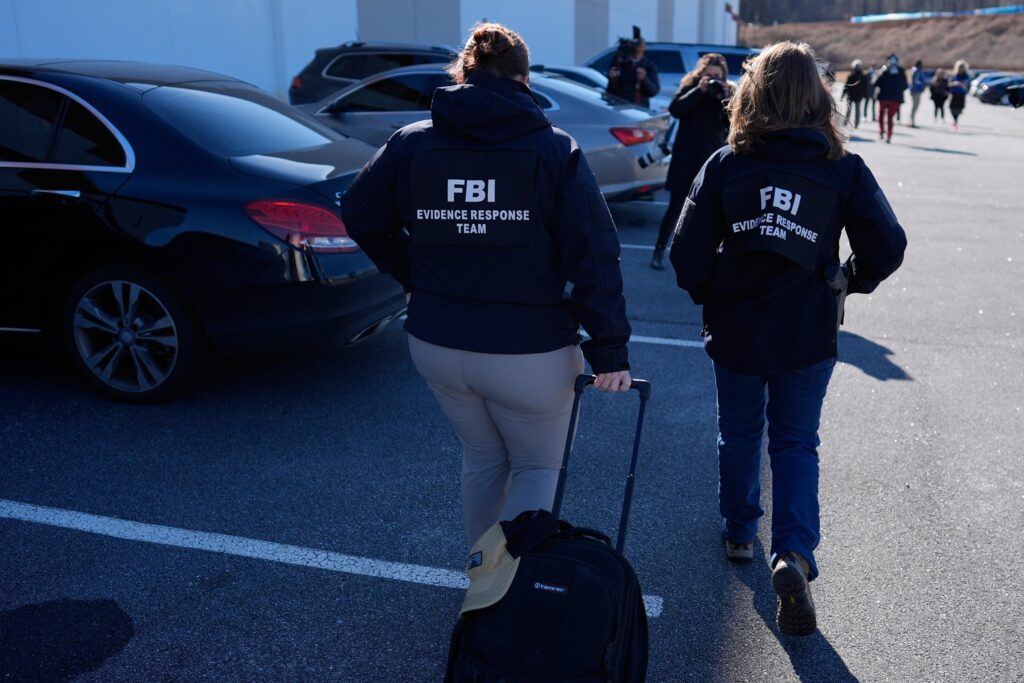
Almost two months after the FBI’s unprecedented and potentially illegal raid on an election facility in Fulton County, Georgia, the Department of Justice (DOJ) remains in possession of 2020 election documents seized by federal agents.
Fulton County officials are seeking to retake the materials — which include original 2020 ballots — in court. But they haven’t made much progress.
The presiding judge initially ordered the DOJ and the county to attempt to resolve their differences through negotiations, an idea that was basically doomed from the start. And the DOJ’s own position on the materials — and the court case — have repeatedly shifted.
Get updates straight to your inbox — for free
Join 350,000 readers who rely on our daily and weekly newsletters for the latest in voting, elections and democracy.
Now, an upcoming hearing in the case may force an FBI agent to testify about the extraordinary affidavit that backed the bureau’s search and offer new insights into the motives behind its criminal probe against the county.
Fulton County and former DOJ officials have alleged that the agent deliberately presented long-debunked conspiracy theories from notorious election conspiracy theorists — some of whom now work in the White House — to a court to secure the search warrant that authorized the raid.
Since the affidavit — the sole support for the search warrant against the county’s election hub — failed to provide probable cause that a crime had been committed, the FBI’s raid and seizure were a “flagrant constitutional violation,” Fulton County has alleged in its suit.
County officials have also argued that the FBI’s investigation wasn’t initiated over legitimate concerns of actual wrongdoing, but instead stemmed from President Donald Trump’s desire to relitigate his 2020 loss and undermine future elections.
Earlier this week, U.S. District Judge Jean-Paul Boulee, who was nominated by Trump in 2019, announced that mediation between the DOJ and Fulton County over possession of the seized documents failed.
Previously, Boulee ordered the department and county to reach an agreement on the materials through private negotiations.
That negotiations failed was largely unsurprising, as it was difficult to believe the department — now led by Trump’s former personal attorneys — would voluntarily return election materials to a county that has been a leading target of the president’s election denialism for almost six years now.
When he first ordered mediation, Boulee proposed that the DOJ could make copies of the records for use in ongoing or future investigations before returning the original documents to the county.
It was an alarming suggestion, especially ahead of the 2026 midterms. Such an arrangement could set a worrisome precedent, potentially allowing the department to illegally seize and perpetually access records from future elections without fear of legal repercussions.
During mediation, the DOJ didn’t bite on Boulee’s suggestion. Instead, it proposed the exact opposite: that it retain the originals while giving Fulton County copies of its own documents, according to a filing from the county detailing the negotiations.
That proposal marked a severe reversal by the department.
Even before Boulee ordered mediation, the DOJ told the county that it aimed to “expeditiously make copies of the seized election records, return the originals and a copy to Fulton County, and voluntarily stay its review of the copied records pending the Court’s final decision in this matter.”
The county noted that the DOJ’s reversal coincided with the department’s abrupt flip-flop regarding the testimony of Hugh Raymond Evans, the FBI special agent who submitted the affidavit. The county has sought to question Evans about the misstatements he included in his affidavit and the key facts and context he left out.
Initially, Thomas Albus, a Missouri-based U.S. attorney overseeing the DOJ’s probe into the 2020 vote in Georgia, told the county that the department wouldn’t oppose Evans testifying on the affidavit.
“I can’t imagine that will be an issue,” Albus, who was recently tapped by Attorney General Pam Bondi to conduct voter fraud probes across the country, told Fulton County’s attorneys in an email.
However, three days later, the DOJ backtracked and eventually moved to quash the county’s subpoena against Evans.
The county argued this week that both abrupt reversals stem from the department’s “effort to avoid judicial review of an unconstitutional seizure wholly lacking in probable cause.”
Since mediation failed, Boulee set an evidentiary hearing for next Friday that is currently set to include Evans’ testimony. However, the judge has yet to rule on the DOJ’s request to vacate the hearing.
In a filing Friday, the department again asked Boulee to cancel the hearing, claiming that forcing Evans to testify “would provide a roadmap for litigants to improperly disrupt and peek into ongoing criminal investigations.”
Lawmakers grilled Director of National Intelligence Tulsi Gabbard this week on why she was seen lurking in the shadows of the FBI’s raid in Fulton County.
Gabbard, who has emerged as a key player in Trump’s efforts to again challenge the 2020 election, offered shifting, contradictory explanations for her involvement. Ultimately, her testimony suggested that Trump had prior knowledge of the raid.
Boulee is also overseeing a separate lawsuit over Fulton’s election materials filed by the Lawyers’ Committee for Civil Rights Under Law on behalf of the NAACP.
Concerned that the Trump administration may attempt to misuse the seized documents to improperly disclose voters’ personal data or to intimidate them, the groups are seeking to bar the DOJ from using the materials for any purpose other than its stated criminal investigation.
The DOJ asked Boulee to dismiss or pause the suit, claiming that the groups don’t have standing to sue based on “speculative fears of future harm.”
In response, the groups argued that the department’s motion to dismiss “aims only for delay, which would provide the government an opportunity to use the seized voter data for purposes beyond the criminal investigation in a manner that is difficult or impossible to undo.”
“If use of the voter data beyond the criminal investigation is not the government’s design, it could easily say so,” they said.