Federal judge questions DOJ voter ‘purge’ targeting minorities right before election
 Prefer us on Google
to see more of our voting rights news coverage when you search.
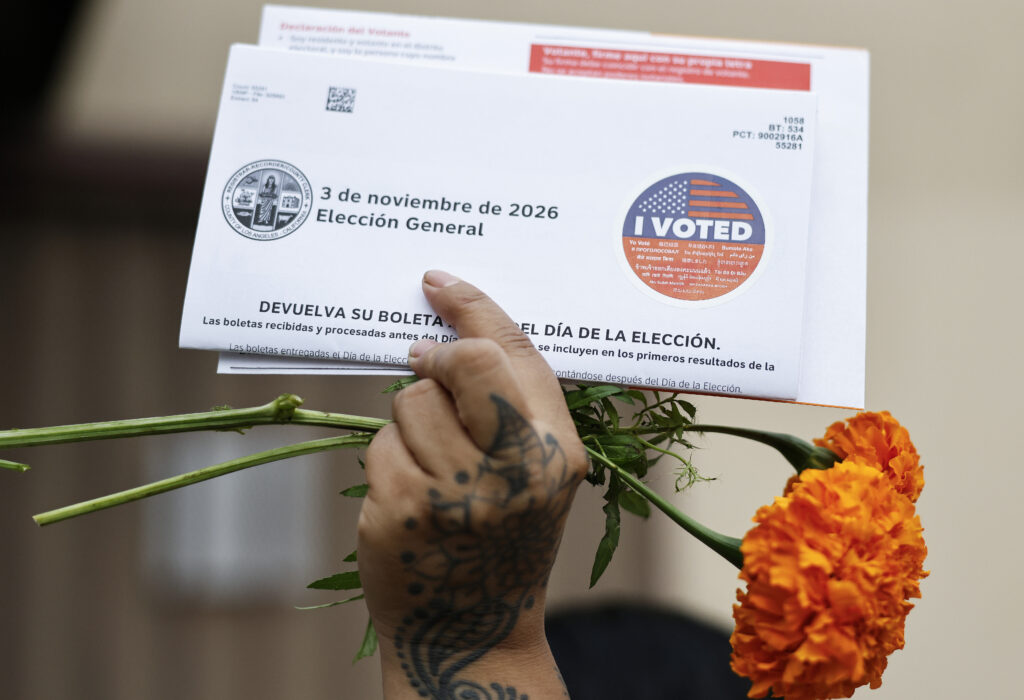
A federal judge on Saturday appeared highly critical of the Trump administration’s creation and transmission of voter data lists that it claims identify likely noncitizens on state voter rolls, suggesting the administration is deliberately targeting minorities.
U.S. District Judge Tanya Chutkan, appointed by former President Barack Obama, heard arguments on a request from pro-voting groups for a temporary restraining order to immediately block the Department of Justice (DOJ) from transmitting the lists to state officials. She said she will aim to issue a decision as soon as possible.
Chutkan pushed back on the federal government’s argument that the League of United Latin American Citizens (LULAC) and the Electronic Privacy Information Center (EPIC) don’t have standing to seek emergency relief.
“We are three or four days from a very high-profile and hotly-contested election, and the government has made no secret of its determination to purge the voter rolls of individuals that they believe are not eligible to vote,” Chutkan said. “Past efforts to do so have resulted in U.S. citizens being swept up into this law enforcement dragnet. … I’m not sure how much more you would argue should happen.”
The pro-voting groups argue the Trump administration’s policy is resulting in voter confusion and intimidation, and that a number of lawful voters may be wrongly disenfranchised as a result. More broadly, they say the policy violates several key voting and privacy laws.
The DOJ has already sent lists to California and Washington state with the demand that local election officials set aside ballots until the voters’ citizenship status can be confirmed. LULAC and EPIC also pointed to reports that the administration is mulling similar demands in other states either before or after the midterm elections.
Chutkan asked DOJ attorney Elizabeth Shapiro to shed more light on the administration’s plans for the lists, but got no additional details.
“We have no information about the intentions of the government with respect to issuing additional letters,” Shapiro said. “There’s just nothing that we have to share. It has not been shared with us.”
Get updates straight to your inbox — for free
Join 350,000 readers who rely on our daily and weekly newsletters for the latest in voting, elections and democracy.
Chutkan also took aim at the federal government’s process for creating the lists. Local officials in California and Washington have already found errors, and the administration’s sweeping allegations of noncitizen voter fraud in other states – like Nevada and Pennsylvania – have also been refuted.
“You’ll agree with me that the government has made mistakes?” Chutkan said.
“I cannot disagree with you that the government has made mistakes, but I think that the government is not trying to make mistakes,” Shapiro responded.
Shapiro went on to defend the lists as a voter integrity effort.
“Since when does the federal government get involved in voter integrity when there have been no convictions?” Chutkan interrupted. “This appears to be sort of some kind of belt and suspender situation … and it looks like it’s targeting states with higher numbers of maybe citizens of certain descent.”
“It would be hard not to describe this as having a chilling effect on citizens’ desire to, or their willingness to, go out to the polls,” Chutkan said.
The DOJ’s attorney disagreed with the notion that there is a chilling effect, saying any “apprehension” should be alleviated by the fact that states like California and Washington have rebuffed the Trump administration and “the federal government’s failures to date to be able to enforce action.”
She also argued that pro-voter groups haven’t suffered real injury unless they can demonstrate that an eligible voter has been prevented from casting a legal ballot, not just that they were afraid to do so.
“They cite apprehension and fear, but maybe, in protest and unification, they come out to the polls in force,” Shapiro said.
“We are harkening back to some actions that we thought that voters may have thought they didn’t have to take anymore by going out in force because they’re afraid,” Chutkan said.