Alaskans ‘not confused at all’ about ranked-choice voting, election advocate says
 Prefer us on Google
to see more of our voting rights news coverage when you search.
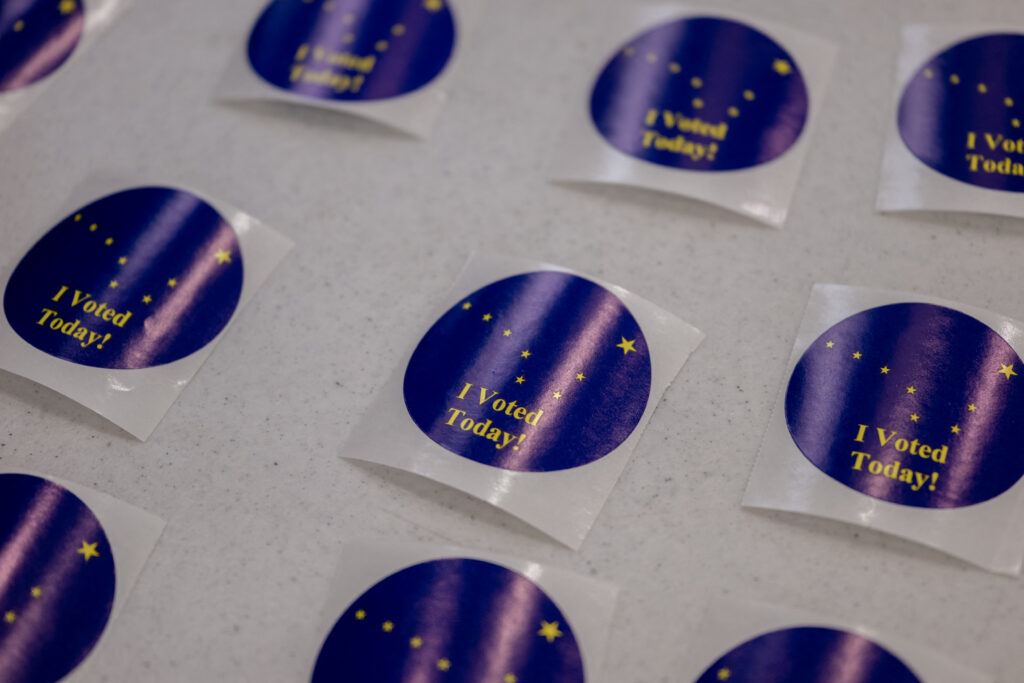
Anchorage, Alaska – President Donald Trump’s narrative that Alaskans are incorrectly casting ballots because of the state’s ranked-choice voting system couldn’t be further from the truth, an expert at the forefront of the issue told Democracy Docket.
“We’ve seen a lot of evidence that people are not confused at all about the process of voting,” said Juli Lucky, executive director of the nonpartisan group Alaskans for Better Elections. “People know how to fill out their ballots. They understand how to rank 1, 2, 3, 4.”
Despite voters reaffirming their support for ranked-choice voting this election, Trump has repeatedly attacked it as he tries to subvert the results, with Republican incumbent Sen. Dan Sullivan on track to lose to Democrat Mary Peltola.
Get updates straight to your inbox — for free
Join 350,000 readers who rely on our daily and weekly newsletters for the latest in voting, elections and democracy.
Trump claims voters are confused by the presence of two Dan Sullivans on the ballot – incumbent Sen. Sullivan and longshot candidate Dan. J. Sullivan Jr. – and that all votes cast against Peltola should go to the Republican incumbent.
Data show that’s not the case. Peltola’s lead remains ahead of all three of the other candidates combined, with 98% of the vote reported, according to the AP. Separate analyses from BBC Verify and the New York Times also found that voters aren’t confused by the presence of two Sullivans on the ballot.
“One of the things we’ve done is taught schoolchildren how to ranked-choice vote,” Lucky said. “There’s this huge event they have at the library, and my 14-year-old daughter taught elementary school kids how to rank-choice vote.”
Lucky said Alaskans’ mastery of the system was evident even the first time voters used it in a 2022 special election after Republican Rep. Don Young died.
“We saw less than 350 out of close to 190,000 votes where there was a problem with the ballot. Most of them, 99.9% of ballots, were valid,” she said.
In an analysis published Tuesday, BBC Verify found that more than a third of voters who ranked Daniel J. Sullivan Jr. as their first choice left their second choice blank. Their next most common choice was Peltola.
Lucky said exit polling has consistently shown that when a voter doesn’t continue ranking candidates after selecting their top choice, that is purposeful and not a mistake.
“It’s an actual choice not to rank, and they did that because it was the only candidate they liked,” she said, noting that more outreach can be done to educate voters on “how powerful ranking can be.”
Plus, Alaskans have a rich history of nonpartisan and open primaries. After statehood, Lucky said, Alaska for decades largely operated under a “blanket primary” system where voters chose from among all candidates of all parties listed on the ballot. That changed due to court battles in the late 1990s and early 2000s before the nonpartisan, top-four primary was passed by Alaska voters in 2020.
“Alaska just has the culture for it,” Lucky said. “Our voting culture is come and run, and everybody knows everybody, and we have viable third-party candidates, and we want to vote for who we want to vote for.”