DOJ is 0-24 in its voter roll grab after Vermont demand rejected
 Prefer us on Google
to see more of our voting rights news coverage when you search.
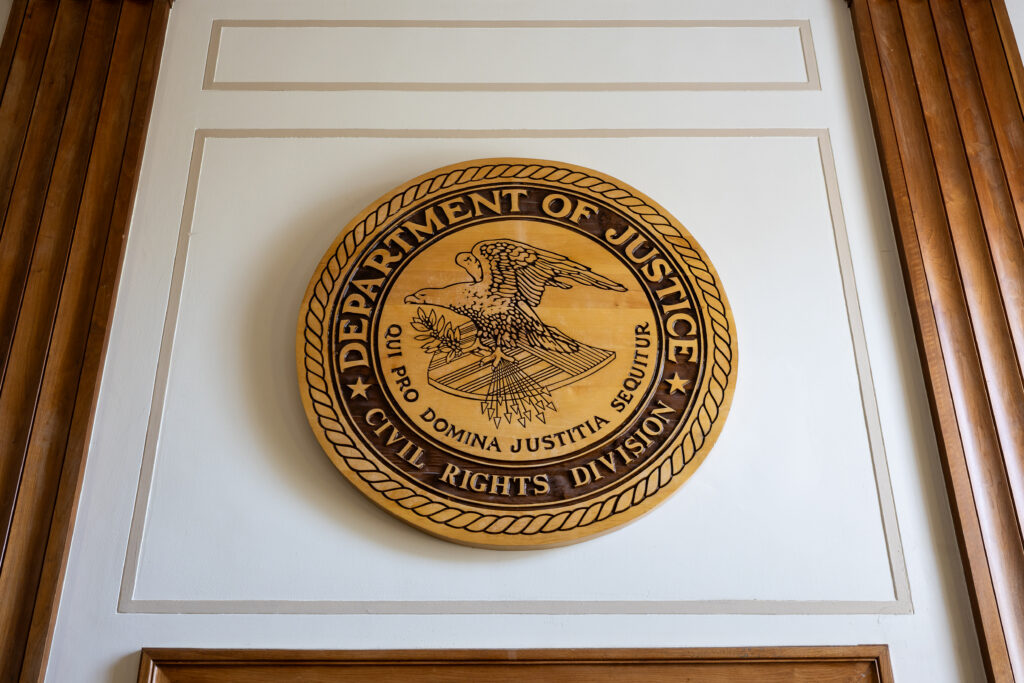
The Trump administration suffered its 24th straight court loss in its voter roll grab Thursday, after a federal judge in Vermont denied the U.S. Department of Justice’s (DOJ) effort to access Green Mountain State voters’ unredacted personal data.
It’s another bruising defeat for the DOJ in its crusade to collect states’ private voter data. Last summer, the department sent letters to every state demanding access to their voter rolls — which include sensitive personal data like voters’ addresses, driver’s license numbers, and Social Security numbers.
After most states refused to comply, the DOJ launched a legal blitz and sued 30 states and Washington, D.C., to obtain the unredacted rolls.
So far, the DOJ has lost every one of its cases to have been decided — and it also lost an appeal to the 6th Circuit Court of Appeals.
In her decision Thursday, U.S. District Judge Mary Kay Lanthier, who was appointed by President Joe Biden, rejected the DOJ’s argument that Vermont must hand over its unredacted voter roll to comply with two federal voting laws, the National Voter Registration Act of 1993 (NVRA) and the Help America Vote Act (HAVA).
“The Attorney General’s demand letter simply states ‘[t]he purpose of this request is to ascertain Vermont’s compliance with the list maintenance requirements of the NVRA and HAVA[,]’ without identifying a ‘basis,’” Lanthier wrote. “Indeed, the United States has provided no factual basis for its demand, as it has not alleged that Vermont is out of compliance with any federal election law.”
Get updates straight to your inbox — for free
Join 350,000 readers who rely on our daily and weekly newsletters for the latest in voting, elections and democracy.
The DOJ also hinged its argument on Title III of the Civil Rights Act, which authorizes the department to request state voter records to assess compliance with federal election laws. But the act also requires that the DOJ provide both a “basis” and a “purpose” for its request.
In a hearing on the Vermont case in April, the department admitted it had no evidence that the state was not complying with federal voting laws.
“Does the government have any evidence at all…to suggest that Vermont is not compliant with HAVA or the Voting Rights Act?” Lanthier asked DOJ attorney Brittany Bennett during the hearing.
“Well, we’re still in the investigatory phase, so that’s what we would be looking at when we look at the statewide voter registration list,” Bennett responded.
The DOJ has based its legal argument on the CRA in every one of its voter roll cases — and many judges have rejected that argument for the same reason: State voter registration lists are not records that the department can demand under the CRA.
Lanthier noted that trend in her opinion.
“It is worth noting that the United States has made similar requests for electronic copies of [statewide voter registration lists] across the country, in nearly every state,” she wrote. “The United States has sued the states that refused to provide their SVRLs, and, thus many district courts have dismissed these lawsuits. Consistent with several other courts, this court holds that Title III of the Civil Rights Act does not apply to the Attorney General’s request and that, even if it did, the United States’ written demand is insufficient under Title III.”