Federal judge shuts down Trump DOJ’s nationwide voter roll crusade, even in states that cooperated
 Prefer us on Google
to see more of our voting rights news coverage when you search.
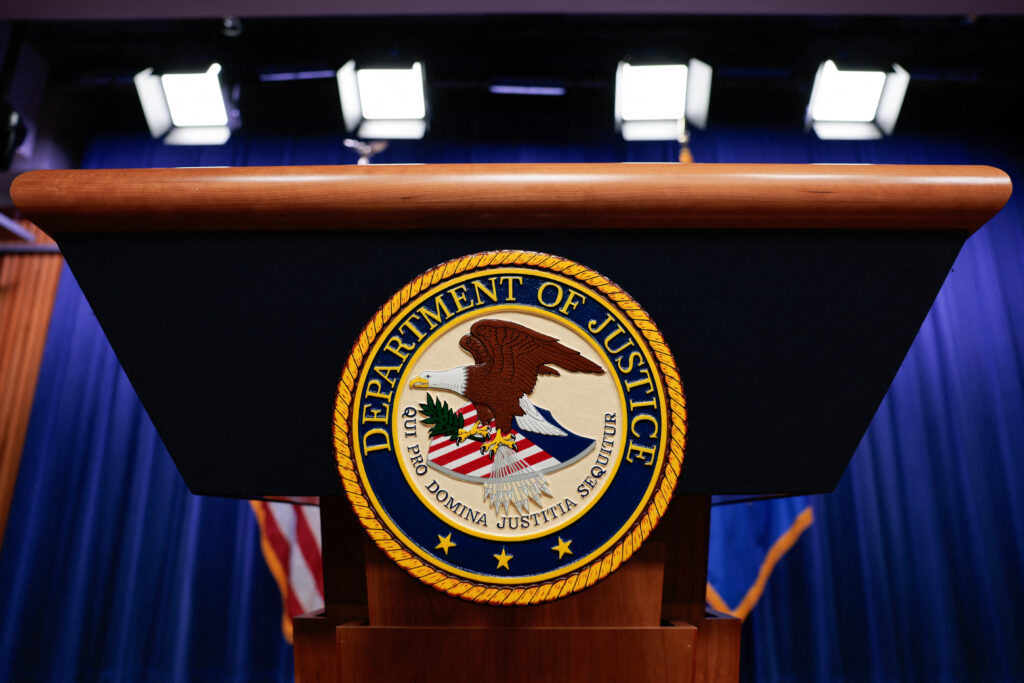
In a major ruling Friday, a federal judge struck down the Trump administration’s nationwide voter roll campaign, delivering a damaging blow to the Department of Justice’s effort to obtain states’ unredacted voter rolls, compare them against federal data and pressure states to remove voters it deems ineligible.
U.S. District Judge Sparkle Sooknanan vacated what DOJ internally called its “Voter List Maintenance Policy,” finding that the department exceeded its statutory authority and violated federal law.
The ruling goes far beyond the dozens of state-by-state cases in which courts have rejected DOJ’s attempts to force election officials to turn over sensitive voter information.
Sooknanan invalidated the nationwide policy itself.
The ruling also reaches voter rolls that states voluntarily turned over. By vacating the policy itself, the court barred DOJ from continuing to use those already-obtained files as part of the nationwide program — including sharing them with DHS, running them through citizenship databases and using the results to press states to remove voters.
The judge made clear, however, that states remain free to maintain their own voter rolls — including through the use of the SAVE database — even as DOJ is barred from using the system as part of its nationwide program.
Justin Levitt, a former deputy assistant attorney general in DOJ’s Civil Rights Division who worked on voting rights, said the ruling could carry even more serious implications for the 18 states that voluntarily provided their voter files.
“This is a big deal,” Levitt wrote on social media. “[The decision] effectively confirms that for the 18 states that submitted files willingly, whoever collected the files at DOJ Civil Rights committed federal crimes.”
Get updates straight to your inbox — for free
Join 350,000 readers who rely on our daily and weekly newsletters for the latest in voting, elections and democracy.
“DOJ cannot run roughshod over longstanding laws that were carefully crafted to protect the rights of the American people,” Sooknanan wrote. “The Court vacates a policy that has removed United States citizens from the voter rolls in their home states and risks disenfranchising many more — a policy that flies in the face of duly enacted laws designed to protect Americans.”
The case was brought by Common Cause and individual voters challenging DOJ’s broader voter roll operation, which began after President Donald Trump directed the attorney general to prioritize “election integrity” enforcement against states that did not cooperate with federal efforts to probe state voter data.
According to the record described in the ruling, DOJ demanded complete, unredacted voter rolls from 49 states and Washington, D.C., seeking information including voters’ names, birthdates, residential addresses, driver’s license and Social Security numbers.
At least 18 states turned over the requested files, while others refused, prompting a wave of lawsuits.
DOJ then shared voter data from cooperating states with the Department of Homeland Security, which ran it through the federal SAVE database to check registrants’ citizenship status. The Civil Rights Division also entered into an arrangement with Homeland Security Investigations, the investigative arm of ICE, to share state voter files for potential election-law investigations and further data analysis.
States participating in the program agreed that if DOJ flagged voters as potentially ineligible, they would “clean” their voter rolls within 45 days and remove those voters before resubmitting updated files to the department.
Sooknanan found that none of the laws DOJ invoked — the Civil Rights Act of 1960, the National Voter Registration Act or the Help America Vote Act — authorized that nationwide regime.
She also found that DOJ failed to adequately consider the risk that the citizenship databases it relied on could misidentify eligible U.S. citizens as noncitizens. The ruling notes that federal records may be outdated for people who became citizens after first receiving Social Security numbers and cites evidence that millions of citizens have historically been misclassified in federal records.
The court found that risk was not theoretical.
Sooknanan wrote that the challenged policy “has removed United States citizens from the voter rolls in their home states and risks disenfranchising many more.”
The judge also sharply rejected one of DOJ’s most expansive privacy arguments: that people appearing on statewide voter rolls could be treated as “subjects” of voter-fraud investigations for purposes of an existing DOJ records system.
Sooknanan called that interpretation “nonsensical,” writing that ordinary Americans would not understand themselves to be under federal investigation simply because they registered to vote.
The ruling marks the most consequential judicial setback yet for DOJ’s voter roll campaign. Sooknanan noted that at least 25 federal district courts had already dismissed the department’s separate voter roll enforcement cases and that one federal appeals court had affirmed dismissal.
But Friday’s decision suspends the campaign at its core.
Rather than merely rejecting a demand directed at one state, Sooknanan set aside DOJ’s nationwide policy under the Administrative Procedure Act, rejecting the department’s request to limit relief to the plaintiffs before her.
“Today’s decision does not prevent the federal government from taking lawful steps to support states’ efforts to maintain accurate voter rolls. Neither does it prevent states from maintaining their own voter rolls. And to state the obvious, the Court’s decision does not pave the way for ineligible voters to vote in our elections,” she concluded. “When the federal government defies federal laws, our system of checks and balances permits individuals to turn to federal courts for recourse. And if they prevail, courts are duty-bound to step in under the Constitution.”