Blue dots in red states brace for election interference with little help
 Prefer us on Google
to see more of our voting rights news coverage when you search.
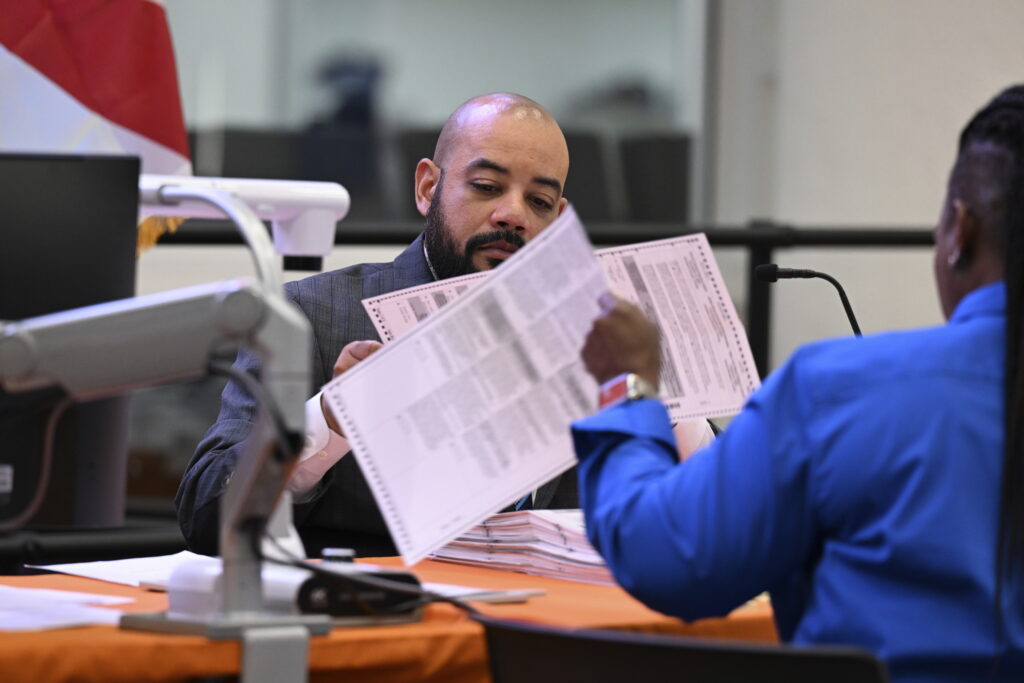
Democratic states have prepared for months to fend off election interference from the Trump administration. But some of the toughest battlegrounds are blue cities in Republican states where local election workers know the governor or attorney general won’t be coming to their aid.
“It’s absolutely insane where we are right now and what we’re having to do,” Broward County Supervisor of Elections Joe Scott (D) told Democracy Docket. “We should not be concerned that our federal government is going to disrupt an election. It’s unacceptable for us to feel this way, but nobody can say it’s uncalled for. The statements have been made. The actions have been taken. We have to prepare for this.”
Broward County, home to Fort Lauderdale and 500,000 registered Democrats, is Florida’s biggest blue county. Scott said he’s had to draft contingency plans and train election workers for previously unheard-of scenarios without help from the state.
“I do feel like I’m pretty much on my own here in Florida,” Scott said.
Scott’s predicament spotlights the quandary local election workers in red states find themselves in as President Donald Trump mobilizes the federal government to sway the upcoming vote to maintain Republican control of Congress. While Democratic-led states are marshalling resources to fight off Trump’s election interference schemes, smaller jurisdictions with meager support are trying to stand up for fair elections in the face of Department of Justice threats to prosecute poll workers.
Prepare for interference now
With a competitive U.S. Senate race and a fiercely contested state Supreme Court seat on the ballot, North Carolina’s Democratic voters know their elections could fall under scrutiny (again) this year.
In Wake County, home to Raleigh, Election Director Olivia McCall said it’s important to have plans in place now so election workers know what to expect and how to react if there are attempts to interfere with voting or ballot counting.
“We’re watching all of that,” McCall said. “We also think on a level of, ‘We’re a big county. We matter when it comes to a national level. What could happen, and what is our plan that we have in place and how do we respond?’”
She decided to work with local law enforcement to collaborate on the county’s plans.
“We actually were all on the same page as far as what the election laws are, what is voter intimidation, what to do in the event of ICE agents maybe in the parking lot or someone coming in and trying to seize ballots or voting equipment,” McCall said. “What do we do if we have a search and seize at our office? So we worked through all of those hypothetical situations and scenarios and came up with a plan.”
In Texas’s most populous county, the Harris County election protection working group, a collaboration of county leaders and outside counsel, made plans “to ensure that our elections not only follow the law to a T, but that we are ready for any and all scenarios and circumstances should they arise,” County Attorney Abbie Kamin (D) said.
“We have prepared for all scenarios with the clear objective to ensure that no agency at any level of government interferes with the rights of every eligible voter in Harris County to vote,” Kamin said, adding that her goal is to ensure that it’s the “most prepared county in the nation.”
Perhaps no county in the United States is more on alert for federal election interference than Fulton County, Georgia. Home to Atlanta, it was the target of the FBI’s unprecedented ballot seizure raid earlier this year.
With a very high-profile competitive U.S. Senate race on the ballot, Georgia’s local election officials are likely holding their breath.
But in recent public comments, Nadine Williams, Fulton County’s elections director, delivered a clear message to voters: “No matter what rumors you hear about people confiscating your ballots or other federal agents coming out, your vote is going to count if you get it in that scanner. And we’re going to protect those votes no matter what happens, and we’re going to follow the letter of the law.”
While she didn’t discuss details of the county’s plans, she said her office is working with local law enforcement and the county’s legal team to ensure the chain of custody of ballots, as well as the safety of voters and workers in the event of any election interference.
“So we are ready to protect everyone who’s part of this process,” Williams said. “Your voice will be heard and counted. So just don’t let anything deter you.”
Call your attorney
If a county can’t expect help from the state’s attorney general, then county attorneys will have to fill the breach and fight the legal battles.
Scott said Florida hasn’t provided guidance for possible interference. Instead, he’s relied heavily on the county attorney to create Broward County’s plans.
“We’ve been talking about this for months, and we’ve been preparing because we see what’s happening,” Scott said. “You can’t ignore these things. You can’t stick your head in the ground and pretend it’s not happening.”
Broward is a GOP target as home to five U.S. House districts, including two of the four seats Republicans are hoping to flip.
In Texas, Harris County officials took the added precaution of authorizing Kamin, the county attorney, to take quick legal action in the event of election threats, cutting out an administrative hurdle that could have slowed the county’s response.
Harris County is at particular risk because Texas Attorney General Ken Paxton, a noted election denier, is running his own race for the U.S. Senate and could use his office to inject further chaos in the election if he loses.
While North Carolina has a Democratic governor and attorney general, the Republican-dominated legislature wields unique power over the election process. McCall worked with her county attorneys and asked the state election board for guidance.
“All the information that was swirling on the national level – that prompted us to reach out to the state and say, ‘Hey, this is hypothetical, it probably won’t happen in North Carolina, however, if it does, who do you want us to call and uniformly how do you want us to respond?’” McCall said.
In response, officials with the state board told her they were working with federal partners and that she should call the state to report any incidents.
“The state’s guidance is, call them and they’ll handle it,” McCall said.
Broward County’s Scott said the unique risks posed by the Trump administration are forcing local election workers nationwide to think differently about their security plans. However, the problem is more acute in jurisdictions where they know state officials might side with Trump.
“I need to prepare because of our jurisdiction, because of the makeup of our county,” Scott said. “We’re a little bit different than the rest of the state. If there were to be some sort of operation that happens in Florida, it is very, very likely that they would come to this county. I’m sure most of the state of Florida has zero concern that anything could happen.”