California Supreme Court confronts GOP sheriff who seized 650,000 ballots in election conspiracy
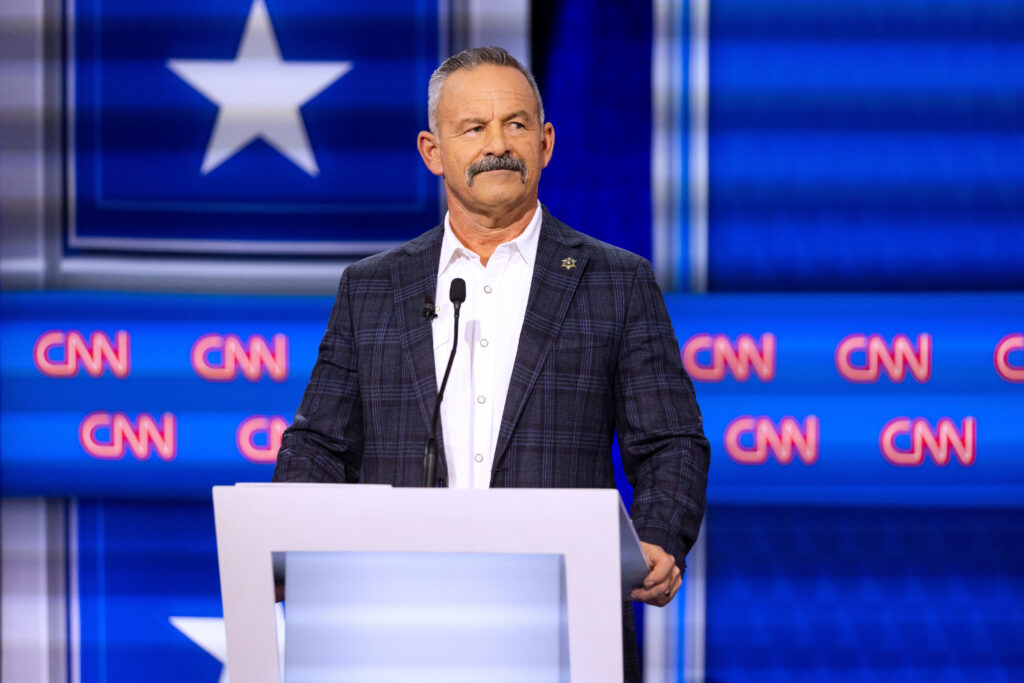
The California Supreme Court will hear arguments Monday in two cases stemming from a Republican sheriff’s seizure of roughly 650,000 ballots from the 2025 redistricting election. The outcome could determine who controls ballots after an election — and how much power the state’s attorney general has to stop a county sheriff from acting on election conspiracies.
First, the justices will hear a lawsuit that four Riverside County voters brought against Riverside County Sheriff Chad Bianco demanding he return their seized ballots. Then justices will hear California Attorney General Rob Bonta (D) argument that he has the power to order Bianco to stop his “investigation.”
Get updates straight to your inbox — for free
Join 350,000 readers who rely on our daily and weekly newsletters for the latest in voting, elections and democracy.
Together, the cases force the court to confront an extraordinary question: Can a county sheriff seize counted ballots from election officials, take them to a law enforcement facility to conduct his own investigation outside the normal election process? The cases will not address the new congressional election maps, which voters approved.
The dispute began after California voters in November 2025 overwhelmingly approved Proposition 50, a new congressional map proposed to counter nationwide GOP gerrymanders.
More than 657,000 votes were counted in Riverside County, where the measure passed with more than 56% of the vote. No formal election challenge was filed against the Riverside County results using California’s established procedures for recounts and election contests.
Instead, a right-wing group called the Riverside Election Integrity Team conducted its own review of public election records and claimed there were 45,896 fewer physical ballots than votes counted.
That claim became the foundation of Bianco’s probe.
But Riverside County Registrar of Voters Art Tinoco publicly explained that the group was comparing different types of election data and relying on preliminary or incomplete figures.
According to records cited by Bonta, Riverside’s voter tracking system recorded 657,219 verified ballots — only 103 fewer than the 657,322 ballots ultimately tabulated, a difference of about 0.016%.
Bianco nevertheless obtained search warrants, seized the ballots and election materials from the registrar. Bianco has said the 45,896-ballot claim was credible enough to investigate and that, if it proved true, could be a felony election offense.
Bonta’s office learned about the warrants in late February and quickly raised concerns about their legal basis. The attorney general directed Bianco to pause the investigation while the state reviewed the matter.
According to Bonta, Bianco instead seized roughly 1,000 boxes of ballots that same day. Bonta then formally ordered Bianco to stop further activity and preserve everything his department had taken.
The sheriff’s department later began opening and counting ballots.
One of Bianco’s own sergeants said in a sworn declaration that sheriff’s personnel unsealed ballot boxes and spent about two hours counting before Bianco called and told them to stop.
The sheriff’s department then sought court approval for a special master — an independent person appointed to oversee certain evidence — and later returned to the registrar to seize hundreds of additional boxes of election materials.
That is when the legal fight reached the California Supreme Court.
Attorney general power, ballot custody at issue
Four Riverside County voters sued, arguing that California law gives election officials, not sheriffs, control over voted ballots. California has detailed rules governing who may possess, handle and count ballots, and those safeguards do not disappear just because law enforcement obtains a search warrant.
A key provision of state law says that even when ballots become relevant to an election contest or criminal prosecution, “in no event” may the ballot package or its contents be taken from the custody of the election official. Other laws require ballot counting and recounts to occur under public safeguards and with trained election personnel.
The voters say those rules exist for an important reason. During the 2025 election, Riverside County livestreamed its ballot counting process. After Bianco seized the ballots, some were opened and handled inside a sheriff’s facility outside public view.
Bianco argues that his department was conducting a lawful criminal investigation under warrants signed by a judge. His lawyers also contend that the four voters do not have standing to sue and that the dispute should first go through a lower court.
But the California Supreme Court agreed to hear the case and will now consider whether the ballots must be returned to the registrar because their seizure violated California election law.
The second case raises a different but also consequential question: Who has the final word when California’s attorney general tells an elected county sheriff to stop an investigation?
The California Constitution names the attorney general the state’s chief law enforcement officer and gives the office “direct supervision” over county sheriffs. State law also says that when the attorney general believes the public interest requires it, the attorney general “shall direct the activities” of a sheriff relating to criminal investigations.
Bonta argues that this power allowed him to tell Bianco to pause the ballot investigation and turn over information for review.
Bianco’s position is that “supervision” does not mean the attorney general can simply shut down a sheriff’s criminal investigation after a judge has approved search warrants.
In April, the California Supreme Court ordered Bianco, his employees and anyone acting on his behalf to stop investigating the November election and preserve all seized materials while the case proceeds.
The cases come amid a broader wave of election conspiracy theories that have moved from social media and fringe political rhetoric into official government action. Bianco, a Republican who ran for governor and lost this year, has himself promoted false claims about illegal voting and election fraud.
California has spent decades building pro-voting and election security rules around ballot custody, public observation and professional election administration precisely to prevent election conspiracy claims from becoming a pretext for seizing voters’ ballots outside the safeguards meant to protect