Blanche blames Alaska’s ranked choice voting in latest justification for lawsuit to toss out Democratic win
 Prefer us on Google
to see more of our voting rights news coverage when you search.
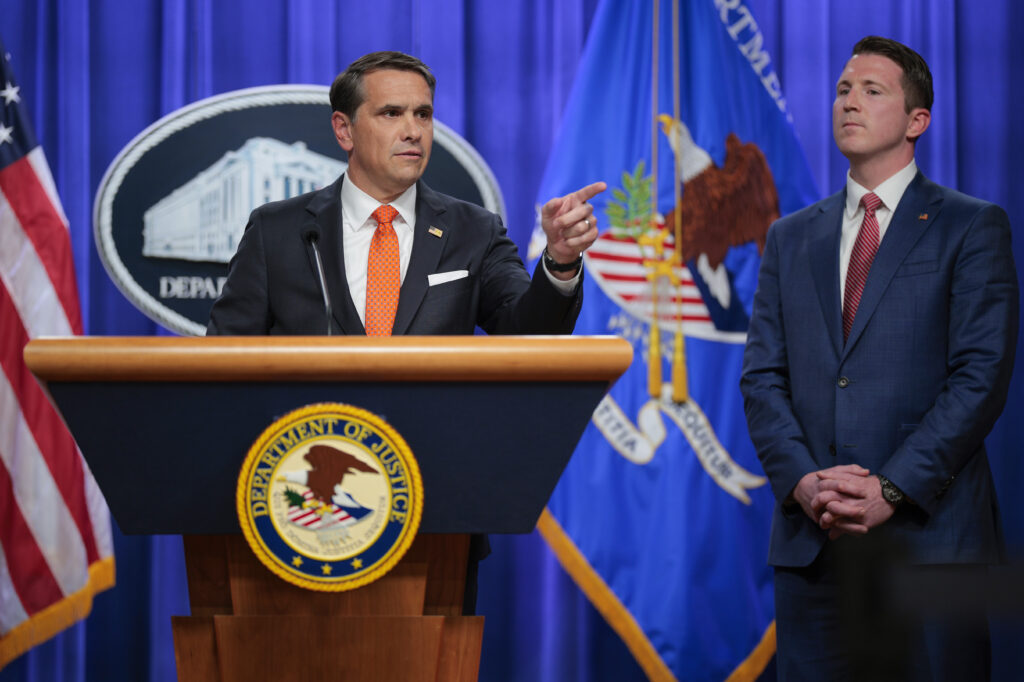
Attorney General Todd Blanche on Sunday blamed Alaska’s ranked choice voting (RCV) system for sowing “confusion” in his latest attempt to justify a lawsuit seeking to preemptively toss out a Senate win for Democrats.
The Trump administration has claimed that the presence of two Dan Sullivans on the ballot – one of whom is the Republican incumbent – is confusing to voters. The administration last week filed a shocking lawsuit that seeks to toss out a potential Democratic win in the Senate race, arguing that votes cast for the outsider Sullivan may have been intended for the current Republican senator instead. There are also several other candidates on the ballot, including the Democratic nominee Mary Peltola.
Pressed by CNN’s Dana Bash about how Alaskan voters’ intentions, or confusion, will be determined, Blanche said, “that’s exactly what we’re trying to do in this lawsuit.”
“Because of rank-based voting,” Blanche continued, “voters write not just one, not just two, but multiple names on the ballot, and so, there are a number of scenarios where it could be obvious that a voter was confused by the way they wrote down candidates.”
Get updates straight to your inbox — for free
Join 350,000 readers who rely on our daily and weekly newsletters for the latest in voting, elections and democracy.
He also blamed RCV for potential voter confusion later the same morning on Face the Nation.
Blanche’s comments appear to be a continuation of a broader agenda to attack how states choose to run elections and to lay the groundwork for subverting midterm results by stoking fear and confusion among voters.
RCV is just the latest scapegoat for the Trump administration. In the RCV system, voters select multiple candidates, rank them, and then the candidate with more than 50 percent of the highest-ranked votes wins.
It is thought to help mitigate situations where third-party candidates run to split the votes to weaken the chances of the more popular candidate winning. Alaskan voters voted to adopt the system in 2020, and it’s been in place in the state since 2022.
Alaskan Native communities in particular have rallied around preserving the system, arguing it gives them better chances to elect their preferred candidates. Republicans, meanwhile, have been working to repeal it and have a ballot measure on this year’s midterms to do so.
On Saturday night, President Donald Trump ripped into Alaska’s RCV system on social media, calling it a “scam” and imploring voters to support the ballot measure to repeal it.
(1/5) The Republicans’ Worst Senator, by far, Lisa Murkowski, of the Great State of Alaska (A State for which I produced, on a continuing basis, Billions and Billions of Dollars, and which Crooked Joe Biden and the Dumocrats had totally shut down — Then I came back, and
— TrumpReposter (@trumpreposter.bsky.social) October 24, 2026 at 11:15 PM
[image or embed]
Republicans sued earlier this year to have the independent candidate Sullivan removed from the ballot, but the Alaska Supreme Court ruled in June that he could remain.
To mitigate confusion, Alaska’s 2026 ballot clearly labels Sen. Sullivan as the incumbent, something it had not done on prior ballots.
Blanche told Bash that the DOJ lawsuit was not filed to help Sen. Sullivan win. Rather, the department had been looking into the situation “for months and months.” However, DOJ waited until four days after early voting began in the state to bring the lawsuit.
Blanche also denied that Trump directed him to file the lawsuit, despite Trump himself telling reporters Friday that he’s “the one that said ‘do it.’”
Blanche tried to argue that the DOJ has an obligation to step in when election laws are broken, but he danced around the question of which laws were broken in Alaska when Bash repeatedly asked.
“The very short answer to that question is that it is an obligation of the states to avoid confusion, among other things, in the minds of voters in the election process,” Blanche said.
When Bash pressed him further about how exactly the DOJ would determine which voters were confused, given ballot secrecy laws, Blanche said that would be up to Alaskan state officials.
“It won’t be at my behest,” said Blanche. “We’re filing a lawsuit to allow the documents and the ballots to be in a place” for the Alaskan government.
The complaint the Justice Department filed on Friday against Alaska does not request any documents or ballots for determining if or how voters were confused, though. It does implore Alaska to “not certify any election result that may be impacted by voter confusion,” and asks a court to block the state “from certifying any result that may be impacted by voter confusion.”
BRENNAN: The DOJ lawsuit demands the Alaska result not be certified if voters are confused. The confusion is defined as Sen. Sullivan not winning. BLANCHE: That’s not what it says BRENNAN: I’m quoting from it. You are telling them not to certify it. What right does the federal government have telling a state not to certify?
— Aaron Rupar (@atrupar) October 25, 2026
But Blanche claimed that the lawsuit was not about decertifying results, a claim he falsely also made on social media on Saturday.
“The relief that we are seeking is not to not certify,” Blanche told Bash. “It’s to not certify if the law is broken. So if the law is broken, and that’s for the Alaskan court system to determine, then any state should not certify.”
The law Blanche is resting his case upon, the National Voter Registration Act, does not authorize the federal government to block or interfere in states’ election results.
According to election law expert Rick Hasen, the legal complaint is based on language in the NVRA’s preamble, which “gives no power whatsoever to the federal government to do anything.”
But Blanche insisted on CNN that alleged voter confusion itself violates federal law, which authorizes DOJ’s intervention.
“Alaskans are going to go to the ballots potentially confused,” Blanche told Bash, “which is not something that’s allowed to happen in this country.”