Banning mail ballot grace periods would create chaotic ‘dual voting system,’ former election chiefs warn SCOTUS
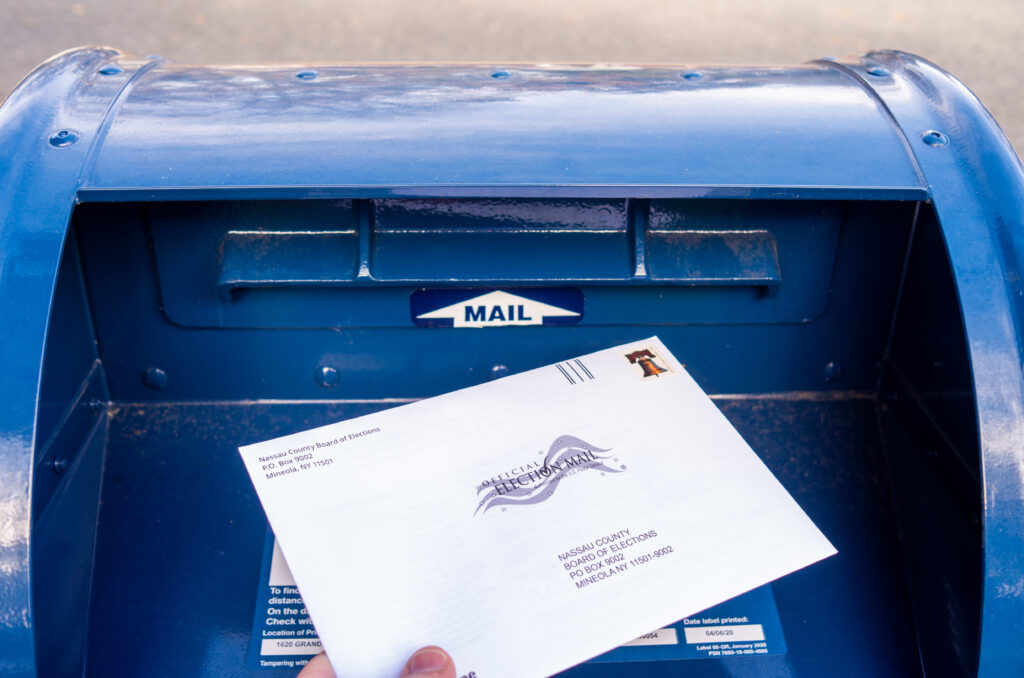
Former election chiefs warned the U.S. Supreme Court that ending mail ballot grace periods would create a confusing and chaotic election system that risks disenfranchising voters and undermining confidence just months before the 2026 midterms.
In a brief filed Friday, a group of former state election directors from across the country noted that if SCOTUS upholds a lower court ruling requiring mail ballots to arrive by Election Day, its decision would apply only to federal races. As a result, it would force election administrators to adopt different rules for federal and nonfederal races, greatly complicating the counting process and fracturing election systems that are designed to operate as a unified whole.
Get updates straight to your inbox — for free
Join 350,000 readers who rely on our daily and weekly newsletters for the latest in voting, elections and democracy.
The brief — which includes former election directors from California, Michigan, Wisconsin, North Carolina, Oregon and Texas — was submitted in a high-stakes case challenging a Mississippi law that allows mail ballots postmarked by Election Day to be counted, if they arrive within five business days. Republicans argue that federal law requires ballots to be both cast and counted on Election Day for federal races. The Fifth Circuit Court of Appeals agreed, setting the stage for Supreme Court review.
“Unless impacted states revise their ballot-receipt deadlines to align with the Fifth Circuit’s decision, their election officials would be required to apply different rules to different elections — or even to different races in the same election — a result Congress neither intended nor pursued,” the former election chiefs wrote.
In practical terms, the ruling could mean a single ballot containing races for president, senator, governor and school board is treated differently depending on when it arrives. If it reaches election offices a day or two after Election Day, votes for president or senator could be thrown out while votes for state and local offices on the very same piece of paper are still counted — a scenario the former administrators warn election systems are not designed to handle.
“A dual voting system is exactly what the Fifth Circuit’s preemption ruling creates because the federal election-day statutes govern only the general election day for federal offices,” the former administrators added. “Were this Court to adopt the Fifth Circuit’s judgment, state laws allowing the receipt of ballots after election day would still be valid as applied to nonfederal races.”
The administrators also caution that forcing different receipt deadlines onto the same ballot would overwhelm election offices and invite litigation.
“Implementing the Fifth Circuit’s ruling nationwide would require the application of different rules to different races on the same ballots in the same elections,” they wrote. “Confusion, dissatisfaction, and recrimination would inevitably follow the nonuniform application of an election-day receipt deadline.”
For voters, the consequences could be severe, the former directors further warned. Grace periods exist largely to protect voters from mail delays they cannot control, particularly in rural areas or during high-turnout elections.
“Many states also offer absentee voting and accept mail ballots received after election day so long as they are ‘cast’—voted—by that date,” the brief reads. “As a result, voters are spared unjustified disenfranchisement for reasons outside their control. The Fifth Circuit’s decision, if not reversed, will lead to a voting system that is more expensive, more confusing, more chaotic, and, ultimately, less reliable.”
A separate brief by 14 Democratic senators, also filed Friday, argues that Congress has repeatedly considered mail voting rules and deliberately chosen not to impose a nationwide deadline requiring ballots to be received by Election Day. The senators also urged that ending mail ballot grace periods would threaten protections for voters who live overseas or in rural areas.
The Supreme Court is expected to hear arguments in the case in March, with a ruling likely by early summer.