A few noncitizen votes are a scandal. But thousands of rejected ballots are business as usual
 Prefer us on Google
to see more of our voting rights news coverage when you search.
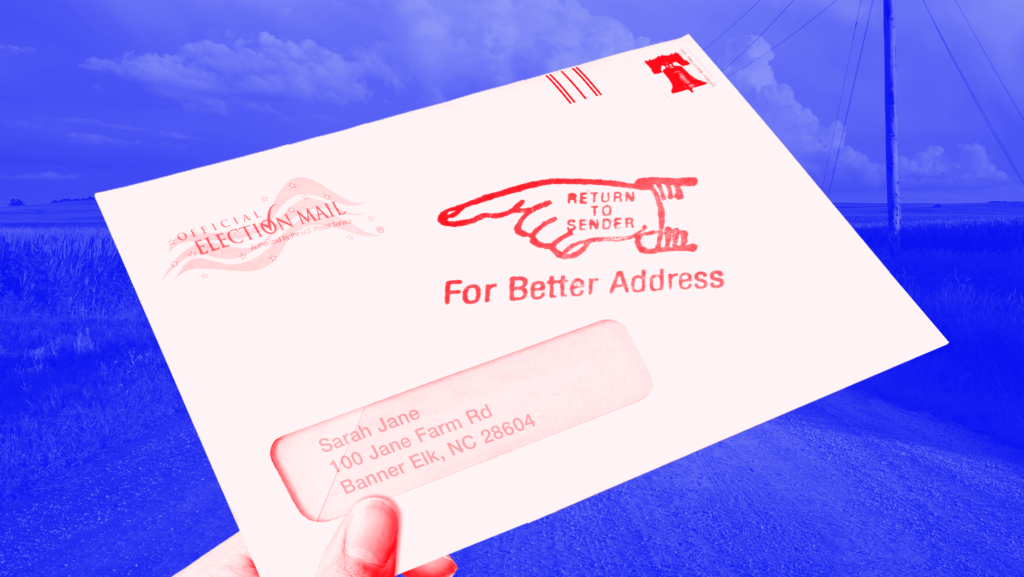
When New Jersey announced in July that a voter registration snafu had allowed fewer than 400 noncitizens to vote since 2023, the response from Republicans — and much of the political press — was apoplectic.
Congress and GOP state lawmakers both opened investigations, as major news outlets churned out story after story. The Department of Justice (DOJ) demanded detailed information and ordered the state to preserve all records. The Trump administration said the episode shows the urgent need to pass the SAVE America Act, a sweeping voter suppression measure. One Republican member of Congress from New Jersey called the mistake a “catastrophic breach of election security.”
But the furore ignored a much more consequential number: 72,000. That’s the number of ballots rejected across just six states during the 2026 primaries over technical issues, according to a new analysis by Democracy Docket that examined state data on rejected mail ballots. Those votes went uncounted over minor mistakes, like missing or mismatched signatures, that have little material bearing on the voter’s eligibility. In one striking instance, a state rejected ballots because some voters failed to include their mother’s maiden name on the back of the return envelope.
Separate federal data show that in the 2024 general election, a total of over 360,000 mail ballots nationwide — around 0.2% of all votes cast by all methods in that year’s presidential contest — were rejected over the same or similar issues.
If a tiny number of noncitizen votes compromised the integrity of New Jersey’s elections, the exponentially larger number of ballots from valid voters that were rejected due to strict interpretations of the rules — often enforced in ways that err on the side of suppression, rather than inclusion — surely did even more damage. And yet, the issue has spurred no investigations, no calls for new legislation loosening voting or counting rules, and no impassioned denunciations from lawmakers.
Get updates straight to your inbox — for free
Join 350,000 readers who rely on our daily and weekly newsletters for the latest in voting, elections and democracy.
The striking imbalance in the reaction points to a larger failing in the public debate over voting access — one that works to advantage President Donald Trump and his allies as they call for sweeping new restrictions in the runup to crucial midterm elections.
Votes cast and counted by those who are ineligible, though minuscule in number, are viewed — even by much of the media — as grave threats to our elections, demanding accountability for the officials responsible and immediate countermeasures. By contrast, when a far larger number of votes cast by eligible voters are rejected for technical reasons — skewing the fairness of the outcome to a far greater degree — they’re seen simply as the cost of enforcing the rules.
Until that basic conceptual flaw in the issue’s framing is fixed, the fight over access to the ballot will always be played out on Trump’s turf.
‘Every ineligible voter dilutes the vote of a citizen’
Countless studies have shown that illegal voting is exceedingly rare.
It’s difficult to determine the exact number of illegitimate votes cast in recent elections. The most effective way to do it might be to extrapolate from numbers cited by large states and jurisdictions that have conducted their own recent investigations.
Ohio — the nation’s seventh-largest state, with around 12 million people — this month announced that an aggressive audit using state and federal records had uncovered nine people who cast potentially fraudulent votes over multiple elections. And on Monday, Maricopa County, Arizona — America’s fourth-largest county, with roughly 4.7 million people — revealed that a similar probe had found eight noncitizens who voted going back to 2012.
If Ohio’s rate was in the middle of the national average, adjusted for the state’s size, it would give a national figure of only around 243 illegal votes in recent elections. Doing the same thing for Maricopa County would give a figure of around just 588 noncitizens who voted in elections since 2012.
The methodology isn’t foolproof. Perhaps those two investigations were flawed — though both were led by Republicans who weren’t motivated to minimize the level of illegal voting. Or maybe the rates of illegal voting in Ohio and Maricopa don’t reflect national rates — though Maricopa’s rate is more likely to be on the high side than the low, given its large noncitizen population.
But it’s incontestable, based on the cumulative picture from multiple studies over many years, that America’s rate of illegal voting is minuscule.
Still, backers of stricter voting rules say even one illegal vote is too many.
“Though our findings today would not change the outcome of any past election, every ineligible voter dilutes the vote of a citizen,” Maricopa County Attorney Rachel Mitchell said as she announced the numbers.
Hundreds of thousands of ballots from eligible voters thrown out
But the same must also be true of eligible voters whose ballots aren’t counted. That’s why Democracy Docket took a close look at state and national numbers for rejected mail ballots — and at the reasons given for the rejections.
While not every state makes voting statistics readily available shortly after elections, Democracy Docket obtained data on rejected mail ballots for the 2026 primaries from the following states: Alaska, California, Colorado, Connecticut, Florida, Georgia, Hawaii, Louisiana, Massachusetts, Nevada, North Carolina, Ohio, Oklahoma, Oregon, Utah, Virginia, Washington, and Wisconsin.
Those states counted about 15.8 million mail ballots this year, while spiking more than 213,000 for any reason.
Six of those states — California, Massachusetts, Louisiana, Oregon, Utah, and Washington — provide detailed breakdowns of the reasons for their rejections.
Some ballots from those six states were rejected for uncontroversial reasons, like if a voter was ineligible, or also voted in person, or tried to vote in the wrong jurisdiction. Those aren’t included in our tally of ballots rejected for non-material reasons. We also have excluded the over 130,000 ballots from the six states that were marked as arriving late, which make up a large share of all rejected ballots from the primaries.
Still, we found over 72,000 ballots across the six states that were rejected for technical, non-material reasons.
Over 52,000 were rejected by California over signature issues. That’s even though the state has some of the most pro-voter rules in the nation. It allows a lengthy period after the election for voters to fix signature or other technical issues with their ballots — one reason it takes a long time to announce results. That suggests rejection rates over signature issues may be even higher in some other states.
Signature requirements may seem like a simple anti-fraud measure, but every year, alleged discrepancies between voters’ signatures on their ballots and on their voter registration documents lead to thousands of legitimate votes being discarded.
Others across several states were rejected for lacking a secrecy envelope, or because the secrecy envelope was unsealed.
Other reasons for rejections appear even more troubling. In Louisiana, 46 primary voters’ ballots went uncounted because they didn’t include their mother’s maiden name.
And there’s reason to think the 72,000 number is much lower than the actual number of voters wrongly disenfranchised in those six states. That’s because many of the 130,000 late-arriving ballots not included in our tally — a much higher rate of late arrivals than in 2024 — may have been the result of the U.S. Postal Service (USPS) adopting new service standards in 2025, including ending pickups on Sundays and holidays. The changes have generally resulted in slower postmarking and delivery times.
After California — which requires only that ballots be postmarked by election day, as long as they arrive up to a week after — reported an unusually high number of ballots rejected for lateness in the primaries, advocates said they believed many voters had mailed their ballots on time, but the USPS delays had led them not to be postmarked until after Election Day.
In other words, many voters were likely disenfranchised by mail delays they could do nothing about. But since we don’t know the total number, the 72,000 figure doesn’t include them.
It’s a similar story with the federal data examined by Democracy Docket.
After every federal general election, the U.S. Election Assistance Commission (EAC) prepares a comprehensive voting report gleaned from state data. In the 2024 election, 584,463 total mail ballots were spiked, out of 47,629,437 ballots received by election officials. That rejection rate — 1.2% of mail ballots returned — largely aligns with a 1.3% rejection rate Democracy Docket calculated for the 2026 primaries, looking at the total number of discarded ballots
The EAC data shows an even higher percentage that were rejected for technical, non-material reasons: around 360,000, or around 62% of all rejected ballots. Almost 238,000 were rejected because the signatures on the ballot and the envelope were deemed non-matching or incomplete.
Those likely-legitimate voters, and many more, were denied a voice in the most consequential national election of our lifetime because they ran afoul of strict rules.
Trump has said he wants to ban mail voting, arguing that it allows for large numbers of fraudulent votes to be cast and counted. He has described mail voting as an “out of control” system involving “millions being sent to everybody.”
But Democracy Docket’s analysis suggests that, in fact, the reverse is true: Large numbers of legitimate mail voters are routinely disenfranchised by rules that are skewed against them.
And it attracts almost no notice at all.
Delaney Lynch contributed reporting.