Missouri voters reject Trump-backed gerrymander in referendum vote
 Prefer us on Google
to see more of our voting rights news coverage when you search.
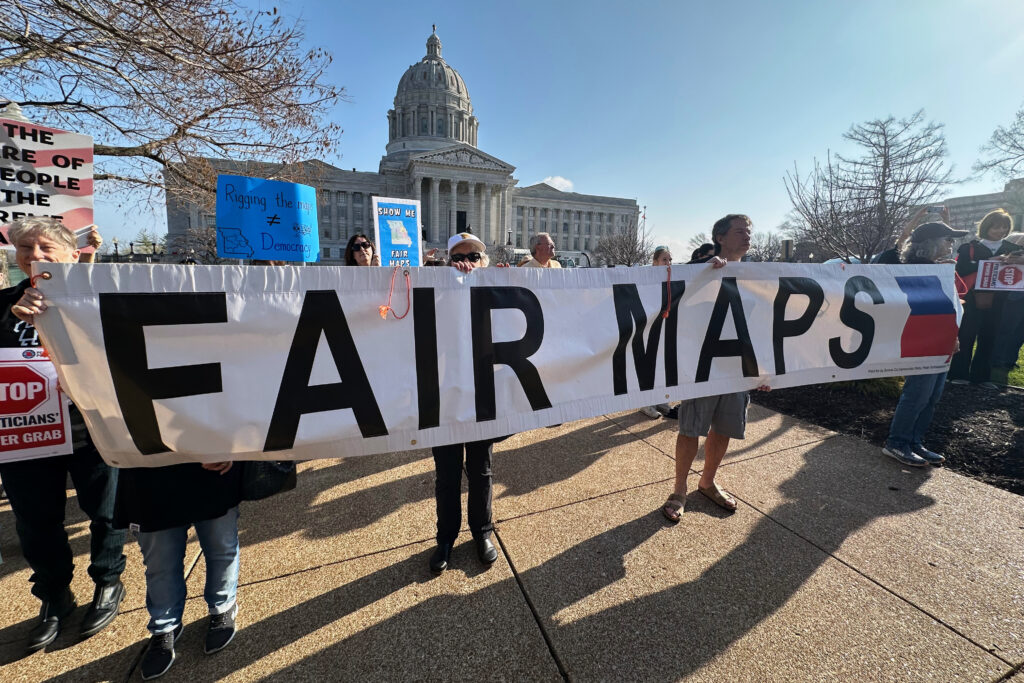
Missouri voters rejected a Republican gerrymander supported by President Donald Trump following a successful yearlong battle to put the anti-voting measure, which was passed by the GOP-controlled state legislature, to a statewide referendum vote.
Voters shot down the redrawn map by 62% to 38%, according to the Associated Press.
Missouri Republicans redrew the congressional map at Trump’s request, dismantling a Kansas City district at the expense of Black voters in an attempt to gain one more GOP seat in Congress. Despite Republicans’ best efforts, Missouri voters had the final word.
Missouri law gives voters the right to veto state legislation by putting a referendum on the ballot. But after the legislature passed Trump’s gerrymander, GOP state officials — including Secretary of State Denny Hoskins, Attorney General Catherine Hanaway and Gov. Mike Kehoe — fought tooth and nail to keep Missourians from voting on the map.
Opponents of the gerrymander, led by the group People Not Politicians, ultimately prevailed following a gauntlet of administrative hurdles, deliberate delays and a staggering amount of litigation.
In the end, the Missouri Supreme Court ruled that the referendum would appear on this year’s ballot, and the U.S. Supreme Court affirmed* — three times — that the new gerrymander would not be in effect for the midterms.
Get updates straight to your inbox — for free
Join 350,000 readers who rely on our daily and weekly newsletters for the latest in voting, elections and democracy.
Both the state and federal high courts blasted Hoskins for miring the 2026 elections in unnecessary confusion in his attempt to force the state to use the new map, despite the referendum effort and pending litigation. Thanks to Hoskins, the primary election was conducted using the new gerrymander, while the November general election was held using the state’s previous map.
The Missouri Supreme Court wrote that Hoskins’ concerns about being forced to switch maps between elections were “particularly misplaced,” because Hoskins’ own delays had created the very “confusion, expense, and practical difficulties of which he complains.” The court then took the extraordinary step of holding Hoskins in contempt for defying its order to use the older map. Hoskins ultimately backed down that same day, conceding that the new gerrymander would not be used in the general election.
In its ruling, the U.S. Supreme Court also wrote that Hoskins was “well aware” of the “significant risks” of using the new gerrymander in the primary election but “nonetheless chose to proceed” anyway.
After the year-long legal battle, Missouri voters faced one more challenge: misleading ballot language describing the referendum. That GOP strategy to confuse voters failed.
However, it’s clear this was just one chapter in a redistricting war that will only resume after the midterms.
Missouri state officials argued in federal court in September that voters should not have authority to hold referendum elections on redistricting plans in the future.
*The Elias Law Group (ELG) represents the pro-voting parties in this case. ELG Firm Chair Marc Elias is the founder of Democracy Docket.