Pennsylvania starts voting under federal scrutiny. Here’s what we’re watching
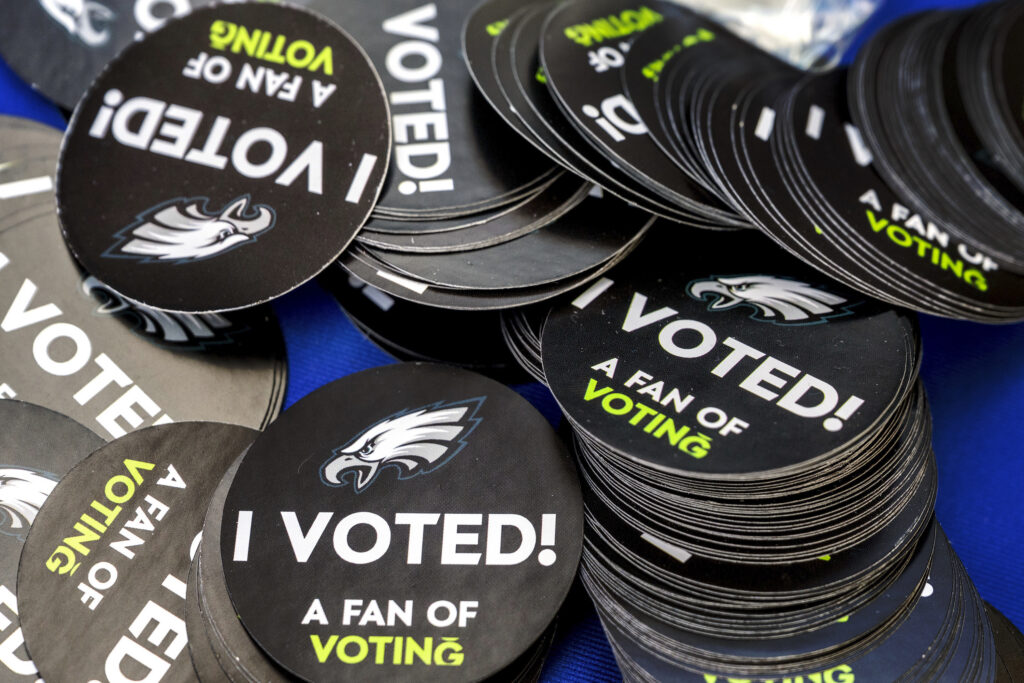
Voters in Pennsylvania have begun casting ballots in the 2026 general election, and they’re doing it under a federal microscope.
President Donald Trump’s unhealthy interest in the Keystone State dates back to before he infamously claimed “bad things happen in Philadelphia” during a 2020 presidential debate. The Commonwealth has been a swing state for decades, and it will now host four pivotal congressional races, with control of the U.S. House up for grabs.
That has placed it in the Trump administration’s crosshairs.
The Department of Justice (DOJ) sued Pennsylvania for its unredacted voter rolls, which Secretary of the Commonwealth Al Schmidt (R) refused to hand over. A federal judge dismissed the lawsuit in June, making Pennsylvania the 10th state to notch a win against the DOJ over this issue (the agency is now 0-25 in a brutal losing streak).
But that didn’t stop the Trump administration’s scare tactics. Pennsylvania was one of four states Trump singled out in a primetime address this summer: He claimed there were 15,000 noncitizens on its voter rolls. Schmidt questioned the methodology the Department of Homeland Security (DHS) used to come up with those figures, while Homeland Security Secretary Markwayne Mullin and the DOJ both threatened to prosecute election officials personally for any incidents of illegal voting.
DHS later admitted it lacked “high confidence” in its claims.
In April, Auditor General Timothy DeFoor (R) conducted a voter roll audit of more than 200,000 motor-voter registrations sent by PennDOT in the first half of 2024, finding that just one noncitizen was registered (who never voted and had his registration canceled).
Also over the summer, DHS began to withhold security grants from some states, including Pennsylvania, over their refusal to bend to the administration’s election-related demands. Gov. Josh Shapiro (D) joined other states in suing over the agency’s alleged extortion scheme.
In August, CNN reported that Homeland Security Investigations was launching a voter fraud investigation surge in a few targeted states, including Pennsylvania. The next month, the DOJ announced fraudulent registration charges against three individuals in Pennsylvania.
It’s not entirely surprising the Trump administration is so focused on Pennsylvania: A lot is at stake.
Get updates straight to your inbox — for free
Join 350,000 readers who rely on our daily and weekly newsletters for the latest in voting, elections and democracy.
Shapiro’s reelection is nominally the biggest race on the ballot this year, but the incumbent appears poised for a commanding victory against erstwhile election denier Stacy Garrity (R), the state treasurer. Now, attention is fixed on four congressional races where Republican incumbents are hoping to stave off Democratic challengers in the 1st, 7th, 8th and 10th districts.
Despite all the federal attention, Schmidt has maintained that voting in the Commonwealth will continue as normal, recently telling the Pennsylvania Capital Star that nearly 1 million mail ballot applications have already been approved this year.
Pennsylvania doesn’t do traditional early voting. Instead, voters can cast a mail ballot in person at designated county election offices. According to the University of Florida’s Election Lab early vote tracker, nearly 14,000 mail ballots have been returned in Pennsylvania as of Thursday.
Schmidt recently unveiled a new “On Demand Mail Ballot Voting” toolkit available to counties to streamline the process. Voters can drop off a mail ballot in person up until 8 p.m. on Election Day. The deadline to request a mail ballot is Oct. 27.
To get out ahead of possible misinformation, Schmidt also started holding weekly press briefings earlier this fall.
Pennsylvanians can find more information on voting options and polling locations on the Department of State’s website or by checking with their local county commissioners.