Court refuses to stop Tennessee’s gerrymander
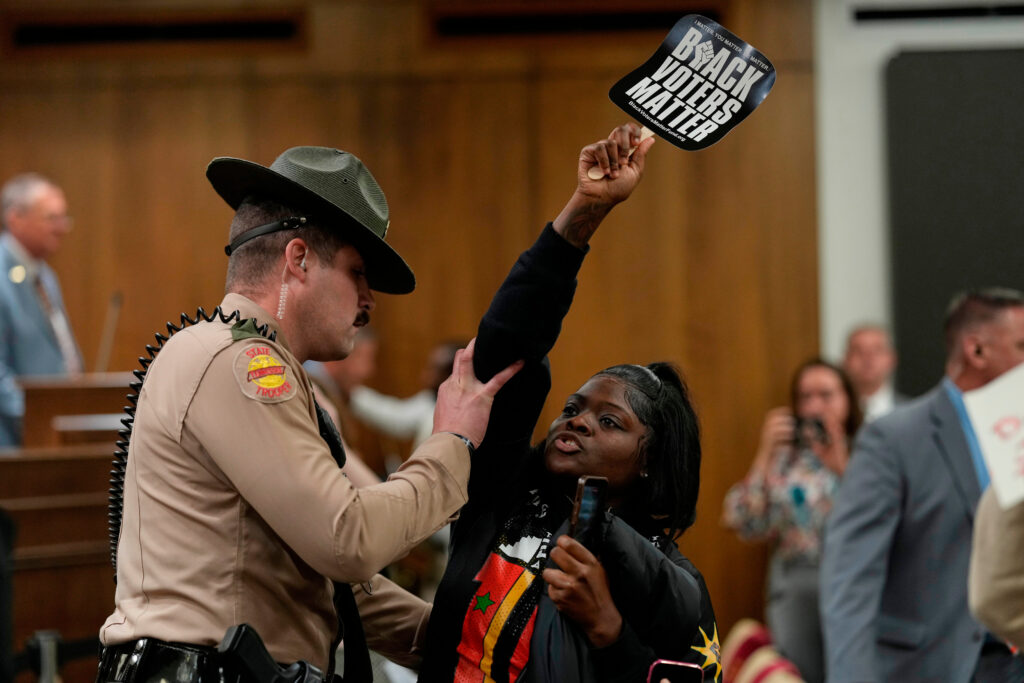
A gerrymandered map in Tennessee’s only majority-Black district will stay gerrymandered.
A three-judge panel Thursday denied the plaintiffs, Black voters and allied organizations, a motion for a preliminary injunction that would have paused the map’s effect before midterm elections.
The plaintiffs claimed the map was drawn to dilute Black political power and violated the Equal Protection Clause because of a race-based redraw.
Get updates straight to your inbox — for free
Join 350,000 readers who rely on our daily and weekly newsletters for the latest in voting, elections and democracy.
While the map was redrawn just a week after the Louisiana v. Callais decision that eviscerated significant federal protections within the Voting Rights Act, the judges said the new Memphis map was not motivated by race.
Tennessee was the first state to take action on a new U.S. House map following the Supreme Court decision.
The judges, two Trump appointees and one Obama appointee, argued the plaintiffs failed to prove it was anything other than political motivation that caused Republicans in the state to carve Memphis into three congressional districts.
In the decision, the judges admonished the plaintiffs for not bringing their own map to the table while admitting Black voters would be disadvantaged as a result of the redraw.
“So the affidavits show the new map’s surgical ability to accomplish its purported political purpose: preventing Democrats from being elected to Congress. And Plaintiffs don’t show how the new map strays from that purpose,” the judges wrote. “Of course, the only way to accomplish this purpose is by disadvantaging Democratic voters, some of whom are Black.”
In a footnote of the opinion, the judges pointed out the GOP legislature felt emboldened to draw its map because of Callais.
“It’s true that Callais was about race, and it’s true that Callais was one of the primary impetus behind the timing of the legislature’s actions,” the opinion read. “But that doesn’t show that the actions themselves were motivated by race or racial animus.”
In response to the plaintiffs’ arguments that some GOP legislators have made racist remarks, the judges said they would not make a decision based on “one insensitive and regrettable remark from Rep. Paul Sherrell, who remains in the legislature.”
In 2023, Sherrell (R) invoked imagery of lynching and caused mass outrage when he asked if he could bring “hanging by a tree” into consideration for the death penalty.
Thursday’s decision is one in a string of lawsuits brought by Black voters and civil rights groups following the May redraw.