Shattering decades of precedent, Supreme Court expands Trump’s dismissal powers
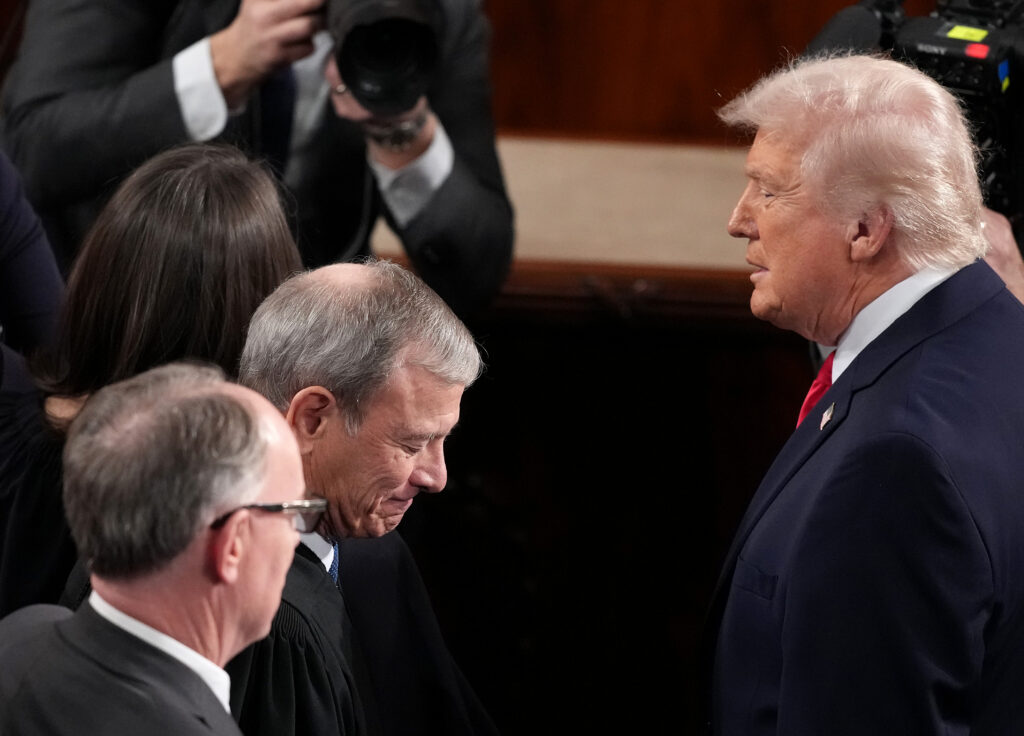
The Supreme Court upended nearly a century of legal precedent Monday by formally endorsing President Donald Trump’s dismissal of the last Democrat on the Federal Trade Commission (FTC).
While the decision removes some of the few remaining restraints on the president’s ability to arbitrarily fire officials at independent federal agencies, in a separate case, the Court rejected Trump’s attempt to remove Federal Reserve Governor Lisa Cook without cause.
Taken together, the two rulings amount to a dramatic restructuring of executive power and the role of most independent agencies. It will likely supercharge Trump’s effort to assert absolute control over agencies that regulate banking, the stock market, federal campaign finance, communications and more.
Get updates straight to your inbox — for free
Join 350,000 readers who rely on our daily and weekly newsletters for the latest in voting, elections and democracy.
Trump hailed the Court’s decision in Slaughter’s case as “greatly increasing Presidential Power at a time when it is most needed!”
In siding with Trump’s dismissal of FTC Commissioner Rebecca Kelly Slaughter, the Court officially overruled Humphrey’s Executor v. U.S., a 90-year-old ruling that for decades largely protected independent agencies from undue political interference from the White House.
In a 6-3 vote, the Court ruled that the for-cause removal provision in the law that created the FTC is contrary to the separation of powers because subordinates who exercise the president’s power must be subject to removal by him.
“Then, and only then, can they remain accountable to the President, and the President to the people,” Chief Justice John Roberts wrote in the majority opinion.
“If Congress wishes to establish independent agencies to assist it with its functions, it may do so. But it may not foist those agencies upon the President, and thus deprive him of “the executive power vested [in him] by the Constitution”—something Humphrey’s itself never purported to permit,” the opinion reads.
“If anything more is left of Humphrey’s, we overrule it,” it continued.
But in blocking Trump’s bid to unseat Cook, the Court reasserted the central bank’s independence and its right to make monetary policy without direct interference from the White House.
In a 5-4 ruling, the Court held that Trump violated procedural protections Cook was entitled to under the Federal Reserve Act. The Court found she wasn’t given notice and an opportunity to respond to Trump’s charges before her termination.
“Without such protections, she could not properly dispute the charges the President laid against her,” the Court’s majority opinion in Cook, which Roberts also penned, reads.
Reacting to the Court’s decision in Cook’s case, Trump said his administration “will take appropriate action immediately to make sure that someone who has committed wrongdoing will not be making vital decisions concerning the Welfare of the United States of America!”
Through the ruling, the Supreme Court blocked Trump’s request to stay a lower court order preventing Cook’s removal, meaning she will remain in her role as a Fed governor while litigation continues.
Last year, Trump moved to fire Cook while claiming he had evidence that she committed mortgage fraud. She has adamantly denied the allegations, and a review of her property records also contradicted the accusations.
It’s unclear what Trump meant in saying his administration would “take appropriate action immediately.” However, Bill Pulte, a Trump loyalist who first leveled the mortgage fraud claims against Cook, said on social media that he believed she will be criminally indicted.
In ruling in Cook’s favor, the Court found that the removal protections she enjoys are constitutional because of the U.S.’ “long tradition of independent central banking.”
“Acceptance of the Government’s position would in effect transform the Federal Reserve’s for-cause protection into at-will employment—an interpretive leap out of step with the statute Congress enacted and our Nation’s tradition of central banking protected from political interference,” it held.
Dissenting from the Court’s decision in Slaughter’s case, Justice Sonia Sotomayor warned that the two rulings arbitrarily conflicted with each other.
In upholding Cook’s removal protections only because the Fed follows in the country’s long “tradition” of independent central banking but denying Slaughter’s, the Court set “a half-baked theory of executive power that is simultaneously all encompassing yet also subject to necessary but undefined exceptions,” Sotomayor wrote.
In a separate order last year over Trump’s dismissal of independent agency officials, the Supreme Court determined the Fed should be insulated from undue executive influence — not because of for-cause removal protections — but because the central bank is “a uniquely structured, quasi-private entity.”
This story has been updated with additional details throughout.