Republicans introduce REAL ID bill to sneak parts of SAVE America Act past Senate
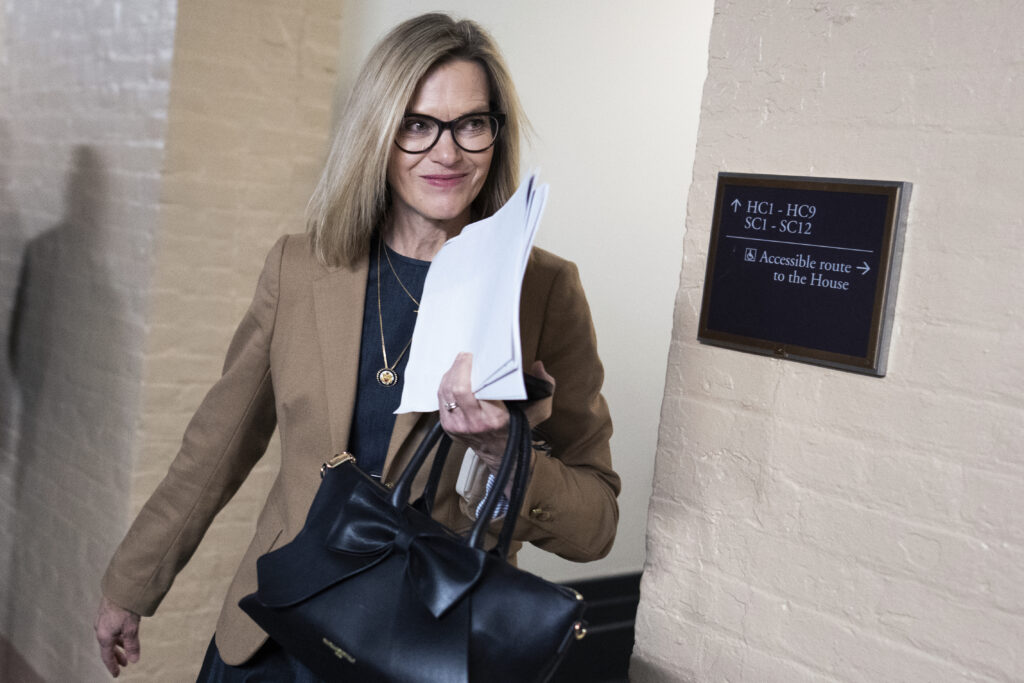
Republicans introduced a new bill Thursday that could help revive pieces of the SAVE America Act — a sweeping voting restrictions package that has stalled in the Senate — by using a federal grant program to bypass a Democratic filibuster.
U.S. Rep. Julie Fedorchak (R-N.D.) and U.S. Rep. Laurel Lee (R-Fla.) introduced the “SAVE America Through REAL ID Act,” a bill that would authorize $50 million a year from fiscal years 2027 through 2031 for states to assist residents in obtaining REAL ID-compliant driver’s licenses and identification cards.
But the bill’s purpose is not just to help low-income residents get IDs. It’s also a procedural workaround.
Get updates straight to your inbox — for free
Join 350,000 readers who rely on our daily and weekly newsletters for the latest in voting, elections and democracy.
After the SAVE America Act stalled in the Senate, Republicans are trying to repackage parts of the same anti-voting agenda as a spending program — a move meant to help the proposal survive the Senate’s strict reconciliation rules. Reconciliation is a budget process that allows legislation to pass with a simple majority, meaning Republicans could move it without Democratic support if they stay within the rules.
Fedorchak’s office said the bill is designed to fit into reconciliation.
“The legislation was developed as part of broader Republican efforts to strengthen election security and restore public trust in federal elections,” Fedorchak’s office wrote. “The bill is also structured to have a clear on-budget effect so it can comply with Senate parliamentary procedure and qualify for consideration under the budget reconciliation process.”
The original SAVE America Act’s proof-of-citizenship and ID mandates would likely run into trouble in a party-line reconciliation bill because they are policy changes, not budget measures.
By creating a grant program with federal spending, Republicans are trying to give their voting restrictions a budgetary pathway.
The bill text says its stated purpose is “to ensure that all eligible individuals, regardless of income, have access to identification documents that meet Federal election standards by supporting State efforts to eliminate financial barriers to obtaining such identification.”
There is no current nationwide REAL ID requirement to vote in federal elections. The bill instead appears aimed at helping states move toward stricter ID systems while giving Republicans an answer to criticism that ID restrictions can disenfranchise low-income voters.
Fedorchak cast the bill as a response to those concerns.
“Requiring photo ID to vote helps ensure that only American citizens vote in our elections,” Fedorchak said. “This is a commonsense safeguard that nearly 9 out of 10 Americans support.”
The proposal, however, has a significant problem.
REAL ID is not proof of citizenship for everyone who has one. Lawful permanent residents can also obtain REAL ID-compliant cards, but they cannot vote in federal elections. That means the bill could help build out stricter ID infrastructure without fully addressing the citizenship issue Republicans claim to be targeting.
The bill itself does not mandate that states require REAL ID cards at the polls. Instead, it would fund the machinery that could make those requirements easier to impose.
That distinction matters. Republicans are not abandoning the SAVE Act’s voting restrictions. They are trying to move a narrower version of the same agenda through a budget bill.
The SAVE America Through REAL ID Act shows how Republicans are adapting after hitting procedural roadblocks in the Senate. Rather than win Democratic votes for a sweeping federal voting restrictions bill, they are trying to use reconciliation to push a narrower version through on party lines — one that could still help states build the infrastructure for stricter ID rules.
The SAVE America Act may be stalled, but the GOP’s push to make voting harder is not.