What we lost when the Supreme Court gutted the Voting Rights Act — and why we need a new one
 Prefer us on Google
to see more of our voting rights news coverage when you search.
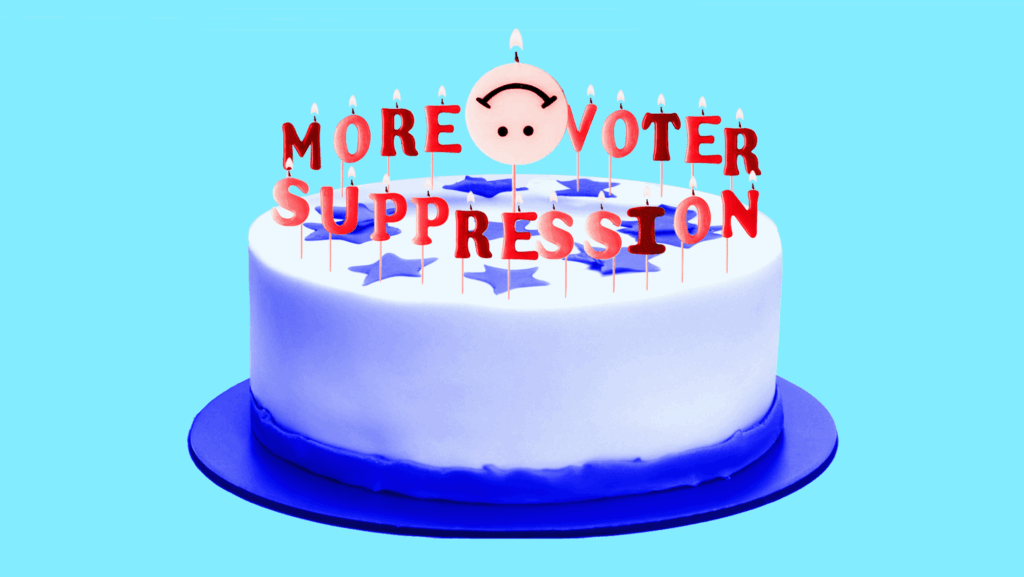
The path to voting rights was paved with the blood, sweat and tears of generations of people who endured injustice from a system that did not recognize their equality or, at times, their humanity.
People like my great-grandfather, who was forced to take a literacy test and find three white men to vouch for his character when he registered to vote in Alabama.
People like my grandfather, who was forced to pay poll taxes to register to vote, and my father, who kept his 1947 poll tax receipt in his Bible as a reminder of the obstacles he had to overcome.
People like my mother, grandmothers and great-grandmothers, who could not fully participate in our democracy until August 6, 1965, when the Voting Rights Act (VRA) was signed into law.
Now here I stand, 61 years later, and the clock has turned back.
Get updates straight to your inbox — for free
Join 350,000 readers who rely on our daily and weekly newsletters for the latest in voting, elections and democracy.
We face one of the greatest challenges to Black political participation since the VRA first came into existence. The Supreme Court case Louisiana v. Callais has opened the door to a new era of racial gerrymandering, leaving the VRA powerless to address discrimination in our electoral system. Since the decision came down in April, we have already witnessed the fallout of this new era of greater voter suppression.
How did we get here?
The VRA enforced a promise made to Black Americans 100 years prior, when the 15th Amendment guaranteed the right of citizens to cast their vote freely and without discrimination based on “race, color, or previous condition of servitude.” Yet states across the Deep South post-Reconstruction devised new ways to implement voting practices that were on their face “race-neutral,” but intended to prevent Black communities from exercising that constitutional right. These Jim Crow laws disenfranchised millions of Black voters through poll taxes, literacy tests and gerrymandered maps.
For my family and so many others, disenfranchisement is not just a concept — it’s a core part of our family history, and something we have felt the weight of for decades. That changed 61 years ago with the VRA. Section 2 directly addressed Jim Crow laws by prohibiting voting practices that have a discriminatory impact on the basis of race or language, even if they didn’t specifically name the communities that they were trying to suppress. This provision allowed voters to legally challenge racially gerrymandered maps that dilute minority votes or stand in the way of minority representation by “packing” too many into single districts or “cracking” them across several districts.
Now here I stand, 61 years later, and the clock has turned back.
Then Louisiana v. Callais came along. The majority-right-wing Supreme Court’s ruling in Callais effectively guts Section 2, marking the latest chapter in the Roberts Court’s campaign to erode key protections of the VRA.
In the aftermath of the Callais decision, we are already seeing Southern states like Louisiana, Tennessee and Alabama — the same states that suppressed Black votes post-Reconstruction — move with deliberate speed to deny Black voters their fair representation. In response, Congress must reclaim its power and pass legislation to restore the Voting Rights Act and rein in right-wing state legislatures seeking to weaken Black voting power.
In the Virginia General Assembly, I championed legislation that made Virginia the first state in the South to pass its own Voting Rights Act. In Congress, I’m fighting to carry on these efforts. The Congressional Black Caucus, of which I am a leadership member, is working with civil rights organizations and advocates to challenge the Callais decision in the courts. In the 119th Congress, I proudly joined every member of the House Democratic Caucus to reintroduce the John R. Lewis Voting Rights Advancement Act, which would strengthen and restore gutted protections first established in 1965. House Republicans have yet to join us in this effort.
History has a habit of repeating itself, and too often we forget that the trials and tribulations of the past are not some distant thing, but always just within reach. In Virginia, the birthplace of American democracy and the birthplace of American slavery, we know this all too well. For over 20 years, I have fought to protect and expand voting rights in the General Assembly and in Congress, and I will not stop now. As other states work to prevent Black voters from electing their candidate of choice, we must work twice as hard to defend Black voices at the polls.
Rep. Jennifer McClellan is a Democratic U.S. Representative for Virginia’s 4th congressional district. She became the first Black woman to represent Virginia in Congress after winning a 2023 special election.