I spent two years defending these Mississippi ballots
 Prefer us on Google
to see more of our voting rights news coverage when you search.
We’re keeping the paywall down a little longer. Marc’s premium analysis is free while the post-election fights play out. Start reading, and become a member to keep it coming.
Lawyers like to joke that they went into law to avoid math. But my career has been marked by certain unforgettable numbers.
There is 218, the number of seats a party needs to control the U.S. House. And there’s 60, the number of votes it takes to break a Senate filibuster.
There is 428, Harry Reid’s margin of victory after his 1998 recount. And there’s 312, Al Franken’s margin over Norm Coleman after months of recounts and litigation following the 2008 election.
Today, a new number was burned into my memory: 67. That is how many absentee ballots Hinds County, Mississippi, received, processed and counted in the five business days after Election Day.
Election Day has passed, but the fight hasn’t ended. Marc’s full analysis stays open for an extended time. Join now so you don’t lose access when the paywall goes back up.
To be clear, these voters, like thousands of others across the state, did everything right. They filled out and mailed their absentee ballots by Election Day. Through no fault of their own, slow mail service meant county officials did not receive them until afterward.
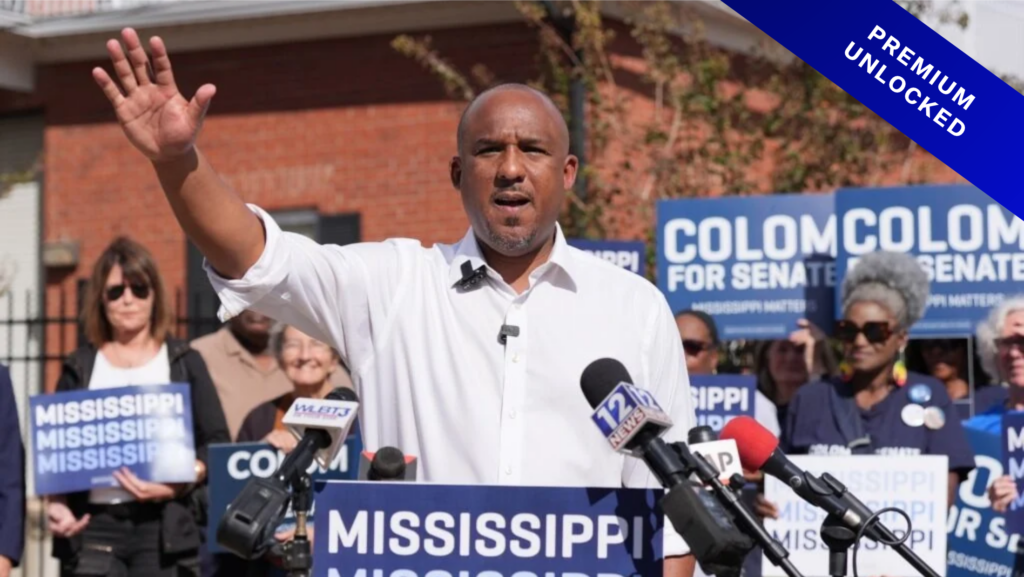
In Hinds County, these ballots were reviewed and processed, and as a result, Scott Colom’s lead grew by a net 58 votes.
If Republicans had had their way, these ballots never would have been counted. They would all have been rejected for arriving too late, and the voters who cast them would have been disenfranchised.
I do not make this statement lightly or as a generalization. It is a statement of fact.
In January 2024, the Republican National Committee sued the state of Mississippi to invalidate its law allowing ballots postmarked by Election Day to be counted if they arrive within five business days afterward.
By then, I had already litigated several cases against Republicans over this very issue. Because these ballots tend to skew Democratic, the RNC and its allies have repeatedly fought to have them discarded. Elias Law Group has fought just as hard to have them counted.
The RNC has been candid about its motive. “Late-arriving mail-in ballots that are counted for five additional days,” its lawyers wrote in the Mississippi complaint, “disproportionately break for Democrats.”
In a state where race and party are so closely correlated, they might as well have added that counting ballots cast by Black voters would hurt Republicans’ chances of winning. Hinds County itself is more than 70% Black.
When the RNC sued Mississippi, it seemed clear to me that it was hoping to find a friendly red state that would either quietly settle or, at the very least, not fight back hard. It did not count on my law firm intervening to defend the Mississippi law.
Over the two years that followed, on behalf of Vet Voice Foundation and the Mississippi Alliance for Retired Americans, my firm and I fought the RNC at every level of the federal courts. We won before a conservative federal district judge in Mississippi, only to see that victory reversed by the even more conservative 5th U.S. Circuit Court of Appeals.
Along with the state, we took the case to the U.S. Supreme Court, though few thought we would succeed. But we did.
This past June, the Supreme Court ruled in our favor, 5-4, in Watson v. Republican National Committee.
Writing for the majority, Justice Amy Coney Barrett explained that “by default, responsibility for the mechanics of congressional elections belongs to States.” Those words would come to matter not only in Mississippi but in other cases nationwide.
At the time of the decision, most of the attention focused on what it would mean for the more than a dozen other states with laws similar to Mississippi’s. Few expected it to matter much in a state as Republican as Mississippi itself.
So, when I saw the numbers from Hinds County earlier today and realized what these voters had helped accomplish in the Senate race, I paused. It is not just that these voters would have been disenfranchised for no reason. It is that they would have been denied the chance to be part of history.
Over the last several years, Republicans have relied on the courts to advance their disenfranchisement schemes. The Supreme Court’s 6-3 decision in Louisiana v. Callais, gutting the Voting Rights Act, remains the most prominent example. But hardly the only one.
Republicans thought they would win Watson. As a voting rights lawyer, and as counsel in the case, I was thrilled they did not.
But today, my connection to this case grew deeper. It was no longer just an important precedent. It was a lifeline for democracy and free and fair elections in Mississippi.
Which is why another number will forever be burned into my mind: 4,669. Scott Colom’s margin of victory over Cindy Hyde-Smith to be elected to the U.S. Senate.