Why is no one talking about this?
 Prefer us on Google
to see more of our voting rights news coverage when you search.
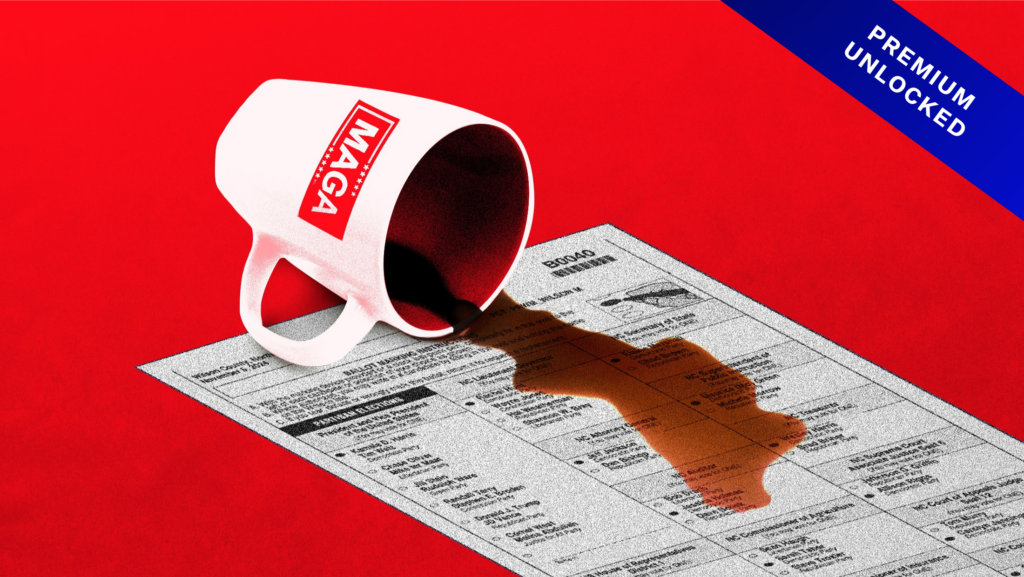
We’re keeping the paywall down a little longer. Marc’s premium analysis is free while the post-election fights play out. Start reading, and become a member to keep it coming.
Earlier this week, amid all the excitement in Mississippi and uncertainty in Alaska, a federal judge quietly closed the book on the Department of Justice’s lawsuit against California. The DOJ had sued to force the state to set aside more than 20,000 ballots it did not want counted.
After aggressively litigating the case all the way to the Supreme Court, and losing at every level, the DOJ asked the court to dismiss its own lawsuit. The court obliged.
Only two weeks ago, the specter of the DOJ prosecuting election officials for counting ballots hung over the Golden State and elections nationwide. We watched as the Trump administration escalated its lies and demands. We worried that this case might be a prelude to seizing ballots.
Election Day has passed, but the fight hasn’t ended. Marc’s full analysis stays open for an extended time. Join now so you don’t lose access when the paywall goes back up.
The order closing the case was a simple one page. But in it, U.S. District Judge David O. Carter offered one last statement explaining what had been at stake:
This lawsuit attempted to disrupt an ongoing election and create confusion and uncertainty for voters and election workers alike. The right to vote is sacred. So, too, is trust in our democracy.
These words echo what conservative Third Circuit Judge Stephanos Bibas wrote six years ago when he sternly rejected the Trump campaign’s challenge to the 2020 presidential election in Pennsylvania:
Free, fair elections are the lifeblood of our democracy. Charges of unfairness are serious. But calling an election unfair does not make it so. Charges require specific allegations and then proof. We have neither here.
The parallels between November 2020 and today are striking. In both instances, Trump’s party lost hotly contested elections. Both involved litigation Trump instigated to try to change the outcome. And both then and now, the courts soundly rejected his outrageous claims.
Beneath those similarities, however, lie disturbing differences.
The Pennsylvania case in 2020 was litigated by a bumbling Rudy Giuliani on behalf of the Trump campaign. It was the dying gasp of a losing campaign.
The California case, by contrast, was filed by the Department of Justice. It was not born of desperation; it was part of a larger, premeditated attack on free and fair elections.
And while the Pennsylvania lawsuit sought to throw out lawful votes, the California case went further. It was paired with threats to investigate and prosecute state and local election officials.
Perhaps most importantly, the dismissal of the Pennsylvania case was celebrated in the national media as a triumph of democracy over efforts to discredit free and fair elections. The dismissal of the California case this week barely registered outside a handful of outlets.
Over the last two years, there have been many instances of Trump’s aberrant and destructive behavior. None has done more damage to the nation’s identity than his ceaseless attacks on our elections.
But worse than Trump’s conduct is the way it has been normalized in places that once would have found it outrageous and worthy of unsparing condemnation.
If a federal judge can remain judicious while saying the DOJ’s lawsuit “attempted to disrupt an ongoing election,” why can’t the legacy media use similarly direct language? If a court is willing to say the DOJ’s intent was to “create confusion and uncertainty for voters and election workers,” why can’t our civic leaders say the same?
After the 2020 election, for a brief time at least, this was not a problem. After Jan. 6, 2021, the condemnation of Trump was forceful and uncompromising.
He was impeached, and a bipartisan majority of the Senate voted to convict him. Media outlets across the spectrum spoke in clear moral terms. Business leaders pledged to support democracy.
Yet today, as Democrats celebrate their victories and the GOP nurses its wounds, there is near silence about Trump’s assault on voting and elections. It is as if it were a passing phase, a remnant of the pre-election period that we can now forget.
This was the mistake many made after Trump left office the first time. We thought he was gone and his movement discredited. The initial shock and outrage over his behavior wore off. Corporate pledges quietly lapsed. Polite society moved on.
How many more elections must we endure in which the threats reach critical levels? How many more times can we ask lawyers and the courts to bail us out?
The time to act is now.
In the coming weeks, Democrats will take power in Congress and in states around the country. They must address the threats we have endured for nearly a decade under Trump and the MAGA Republicans.
That means enacting strong new voting laws, protecting voters and election officials from intimidation, and conducting oversight over the executive branch’s unlawful actions.
We as citizens must do our part as well.
That means calling and writing our representatives and demanding that they use every tool available to them. It means showing up when our legislatures debate election laws. And it means standing up, speaking out and working to defeat Trumpism as an ideology.
I understand that there are many other important issues facing our country, from the cost of living to health care. But unless we fix our democracy, none of those other problems will be solved.
Over the next few months, I plan to make this a central theme of my writing and advocacy. I hope you will join me. Subscribe to Democracy Docket to follow along.