DOJ’s losing streak just might save the midterms
This piece was originally published for Democracy Docket members only. We’re sharing it more widely because it felt too timely to keep behind the paywall. Become a member to get Marc’s exclusive notes first.
Donald Trump desperately wants to build a national database of voters. His plan is to have his administration control who stays on the list and who gets removed. He has issued unconstitutional executive orders to accomplish this goal, and the U.S. Postal Service has proposed a new rule to do his bidding.
The problem for Trump is that his Department of Justice keeps losing cases that it needs to access this critical data. This humiliating string of defeats threatens to derail Trump’s signature plan to subvert the 2026 midterm elections.
Get updates straight to your inbox — for free
Join 350,000 readers who rely on our daily and weekly newsletters for the latest in voting, elections and democracy.
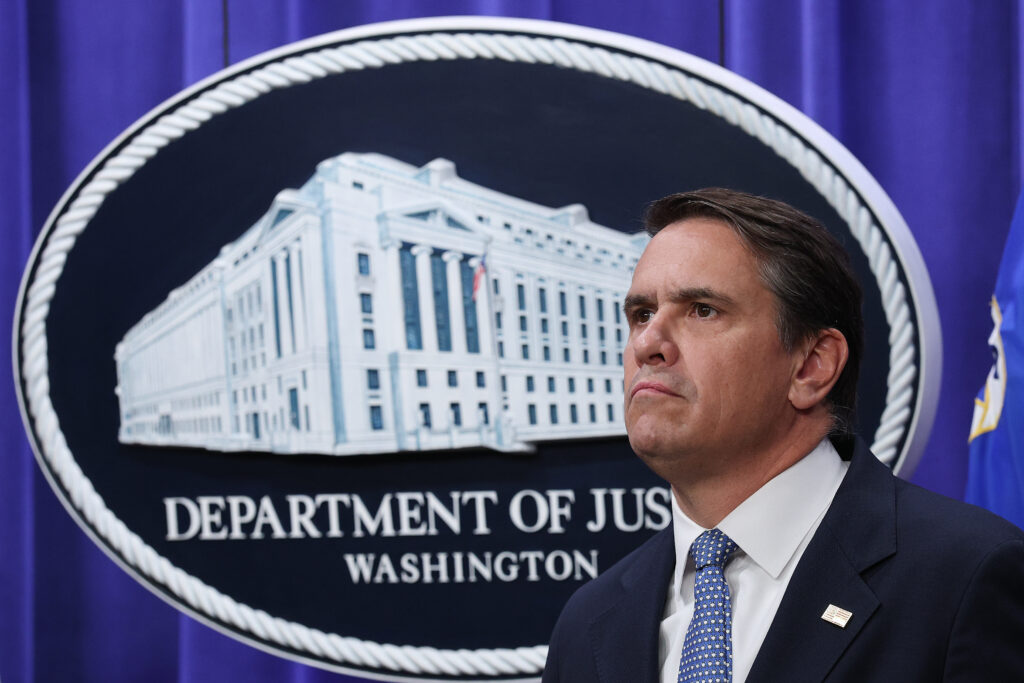
This morning, a federal judge in Maryland handed the DOJ its ninth defeat in a series of 31 cases the department has filed to gain access to state voter files. The DOJ has yet to win a single one. The court wrote that it “joins every court to have addressed this issue in concluding that [a state voter file] is not a record or paper that a state must produce to the United States.”
Importantly, of the nine cases the DOJ has lost, five were decided by judges nominated by Trump. This is nothing short of a debacle for Attorney General Todd Blanche, Assistant Attorney General Harmeet Dhillon, and the rest of the department’s leadership.
From nearly the start of Trump’s second term, the DOJ began seeking access to these voter records. Initially, many assumed this was simply an effort to bolster false claims of widespread voter fraud.
Proponents of that theory contended that the administration would highlight a handful of names on the list as supposedly fraudulent — ginning up his supporters and providing talking points for Republican candidates.
From the start, I have argued that this plan was not simply about spreading lies and disinformation. It was not only aimed at creating an environment to undermine free and fair elections — it was the lynchpin to achieving that outcome.
The distinction is critical.
There remains a faction in the pro-democracy camp that believes Trump’s anti-voting rhetoric and actions are largely performative. They view the fights over the SAVE Act, mail-in voting and access to voter files as mostly a messaging effort.
Underpinning their view is the belief that our election systems are strong and that voter suppression laws are ineffective. Historically, they have treated legal fights over these laws as less important than the messages they send to voters.
By contrast, I take Trump’s attacks on voting rights both literally and seriously.
I believe voter suppression laws can alter the outcomes of elections, and I have watched our election system become weakened by years of sustained attacks. Most importantly, when Trump says he wants to take over voting and vote-counting, I believe him — and I plan accordingly.
That is why, when the DOJ started suing states to obtain access to their voter lists, I did not simply call it out — my law firm joined the legal fight. And we did not just pick a case or two. Instead, we made a substantial investment to defend the rights of voters in all 31 cases brought by the DOJ.
So far, that approach has paid off. Today’s victory brings us one step closer to the goal of protecting the 2026 midterm elections. However, Election Day is still months away, and many fights remain — both in court and in public.
In the days, weeks, and months to come, the midterms will come into sharper focus. As Republican electoral prospects wane, Trump will grow more desperate, and that desperation will lead to even more extreme actions by the administration. It will also require much more litigation.
On behalf of the Democratic Party, we have already sued to block Trump’s anti-voting executive orders. If the USPS adopts an anti-voting rule, we will bring litigation to stop it.
In the next few weeks, the Supreme Court is set to decide a critical mail-in voting case brought by the Republican National Committee. At issue is whether ballots mailed and postmarked by Election Day may be counted even if they arrive in the days afterwards.
The outcome could disenfranchise tens of thousands of lawful voters. My firm and I are defending against that lawsuit as well.
And, of course, the fight in the 31 voter file cases continues. Twenty-one trial courts have yet to rule, and the DOJ is appealing its defeats in nearly every case. In each one, we are battling back.
The road ahead for democracy is narrow and filled with obstacles — but we have already shown that we can clear them. I will continue to do everything I can in court to ensure safe passage for voters, and today’s victory is proof that when we fight, we can win.
Analysis like this from Marc always lands exclusively in members’ inboxes. If this one resonated, become a member so you don’t miss the next one — and support our mission as a pro-democracy newsroom that never pulls punches.