What comes next in Alaska after state certified the Senate results
 Prefer us on Google
to see more of our voting rights news coverage when you search.
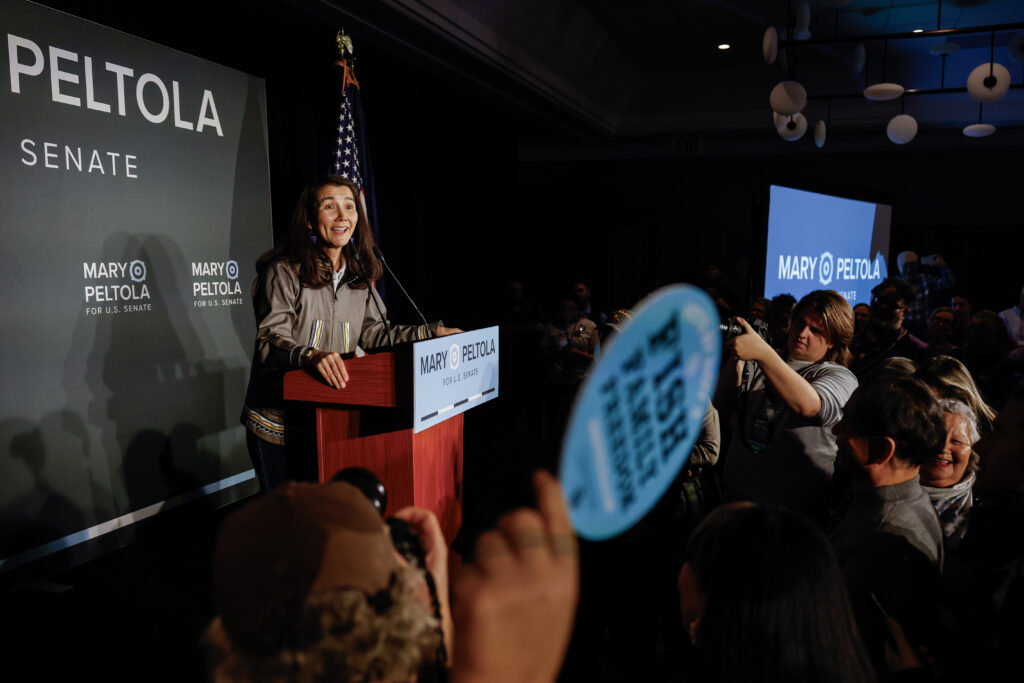
Alaska certified its election results Monday, but that may not stop Republicans from new attempts to challenge Democrat Mary Peltola’s U.S. Senate win.
The certification, finished two days before the target date, officially started the clock for candidates to request recounts or file other election contests.
Republican incumbent Sen. Dan Sullivan has yet to concede or otherwise comment on the election outcome, despite previously saying an update would come after results were certified. His campaign hasn’t responded to Democracy Docket’s request for comment.
If Republicans insist on disputing Peltola’s win, they’ll have the option of demanding a recount – which rarely changes the outcome of elections – or attempting to block her from being seated in the Senate, which Democrats will control in January.
If Sullivan wants to request a recount, he will need to do so by Nov. 28.
A recount is highly unlikely to flip the race’s result. Peltola won an outright majority of Alaskans’ first-place votes, making the state’s ranked-choice tabulation unnecessary. In the end, she received 12,000 more votes than Sullivan, defeating him by more than 4%.
Plus, data suggest that voters were not confused by the presence of two Dan Sullivans on the ballot: the incumbent senator and a long-shot candidate Daniel J. Sullivan Jr. The second Sullivan received just 1.65% of the vote.
Get updates straight to your inbox — for free
Join 350,000 readers who rely on our daily and weekly newsletters for the latest in voting, elections and democracy.
The Trump administration and state Republican leaders, though, are forging on with investigations into the second Sullivan and Peltola’s campaign after a report alleged her team helped recruit him. Peltola’s campaign has denied any involvement in his candidacy. Despite that, “ballot stacking” is not illegal or uncommon.
Alaska Gov. Mike Dunleavy (R) has said the probes are aimed at shoring up a potential challenge to Peltola’s win.
If Sen. Sullivan wants to file an election contest in the state, he has until Dec. 3 to do so in Alaska Superior Court. Candidates must file a contest within 10 days of the state completing its election review.
Republicans may also try to file a contest in the U.S. Senate to challenge Peltola’s seating, but that would most likely take place while she is seated provisionally. That challenge is unlikely to succeed because Democrats will enjoy a clear majority in the chamber come Jan. 3.
Dunleavy is responsible for signing the certificate of election needed under federal law for Peltola to be seated in the Senate. If Dunleavy were to refuse, a court could compel him. Dunleavy’s term is also coming to an end, with a newly elected Democratic governor being sworn in on Dec. 7.
Peltola dismissed potential challenges to her win as a “distraction” in an interview with Alaska Public Media published Monday.
“Alaskans have spoken loud and clear,” Peltola said. “There’s a process. I believe in the rule of law, and I won by over 50%. The spread was over 12,500 votes. In Alaska, that could be considered a landslide. So I don’t think there’s any confusion, and Alaskans have just been really clear they’re ready for change.”