Trump DOJ cites no clear legal authority in demand that California sideline ballots from suspected noncitizens
 Prefer us on Google
to see more of our voting rights news coverage when you search.
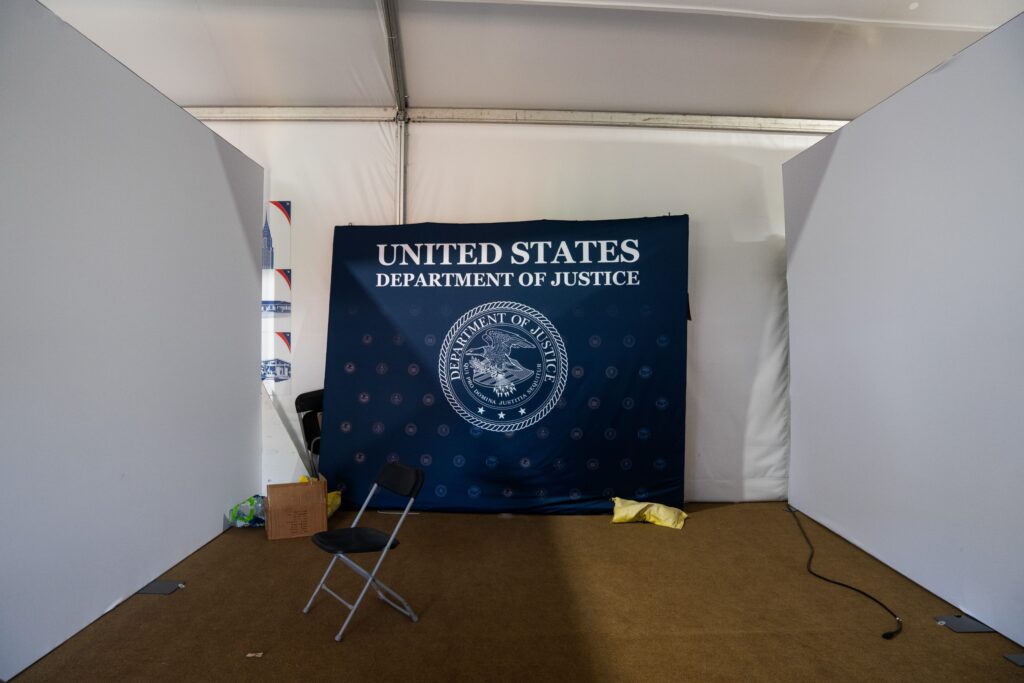
The Department of Justice (DOJ) threatened to sue California unless election officials sideline ballots from people the federal government believes are “likely noncitizens.” But in letters reviewed by Democracy Docket, the department cites no clear legal authority for ordering state and local election officials to take those steps.
The omission of clear legal authorities is notable because the DOJ has previously invoked a far broader collection of federal statutes when warning election officials about potential noncitizen voting.
Get updates straight to your inbox — for free
Join 350,000 readers who rely on our daily and weekly newsletters for the latest in voting, elections and democracy.
Acting Deputy Attorney General R. Trent McCotter gave California Secretary of State Shirley Weber and Los Angeles County Registrar Dean Logan 48 hours to review a federal list of suspected noncitizens.
For people whose citizenship officials cannot independently confirm, DOJ wants election administrators to segregate their mail ballots, stop sending ballots that have not yet gone out and, for ballots already returned, halt signature verification and tabulation until citizenship is resolved.
If California officials refuse, DOJ says it “will have no choice but to seek emergency relief.”
Yet the letters offer only two legal citations supporting the demand, neither of which directly addresses DOJ’s claimed authority to dictate how California handles the ballots.
The first is 18 U.S.C. § 611, a federal law prohibiting noncitizens from voting in federal elections, but DOJ’s letters do not point to any language in the law authorizing the federal government to dictate how California must process ballots belonging to people whose citizenship is still uncertain.
The second is Norwood v. Harrison, a 1973 Supreme Court decision arising from Mississippi’s efforts to provide free textbooks to private schools that practiced racial discrimination.
DOJ quotes Norwood for the proposition that states “may not induce, encourage or promote private persons to accomplish what it is constitutionally forbidden to accomplish.”
But the constitutional issue in Norwood was racial discrimination. The Supreme Court held that Mississippi could not provide tangible state assistance to discriminatory private schools because racial discrimination by state-operated schools was barred by the Fourteenth Amendment.
The DOJ‘s letters to California do not identify a constitutional provision that similarly forbids noncitizen voting. Instead, the DOJ points to Congress’ statutory prohibition and moves from that prohibition to a demand that California alter its handling of individual ballots.
Los Angeles County Registrar Logan pushed back on DOJ’s demand, saying his office has not accessed the USB drive containing the federal list because doing so would conflict with the county’s established data privacy and information-security protocols. Logan said the county does not consider the device a secure medium.
“The letter included a USB drive purportedly containing the referenced records, along with a handwritten note providing a password,” Logan said. “We have not accessed the drive because doing so would conflict with established data privacy and information security protocols. We do not consider the device a secure medium.”
Logan also said DOJ did not specify how many people are on the list or describe the information contained in the records, even as it gave California officials just 48 hours to act on the federal government’s claims.
He also rejected the idea that unverified federal matching alone would be enough to take action against voters.
“Federal and state laws are clear on how voter eligibility is established – and any action to remove a voter from eligibility must be based on verifiable information, not assertions of unconfirmed data matching,” Logan said.
Logan said his office is reviewing DOJ’s correspondence in coordination with the California secretary of state and attorney general before determining next steps.
“With the 2026 General Election underway, we remain focused on administering a safe, secure, accurate, and transparent election,” he said. “We will continue following established legal requirements and verification procedures while protecting the rights of every eligible voter.”
In July, the department’s Civil Rights Division sent election officials in all 50 states letters warning that they could face criminal liability if they knowingly facilitated illegal voting. The DOJ cited the National Voter Registration Act’s criminal provision, 52 U.S.C. § 20511, as well as federal aiding-and-abetting law, conspiracy statutes and other criminal provisions.
None of those provisions appears in McCotter’s new California letters.
The distinction could matter. The July theories repeatedly depended on election officials acting knowingly or willfully. The DOJ’s new list, by contrast, contains people whom the federal government says only that it “believes are likely noncitizens.” The DOJ expressly asks California officials to determine whether citizens have been mistakenly included.
In other words, the department is threatening court intervention while acknowledging that the citizenship status of the voters at issue has not necessarily been established.
The letters also do not explain how the federal government generated the list, what databases were used or what evidence supports its determinations — questions that have taken on added significance after federal officials previously misidentified eligible U.S. citizens as potential noncitizens during the administration’s broader voter fraud initiative.
The DOJ has given California until noon Thursday to implement its requested ballot-handling process.