Trump DOJ charges James Comey for a third time as political retaliation claims mount
 Prefer us on Google
to see more of our voting rights news coverage when you search.
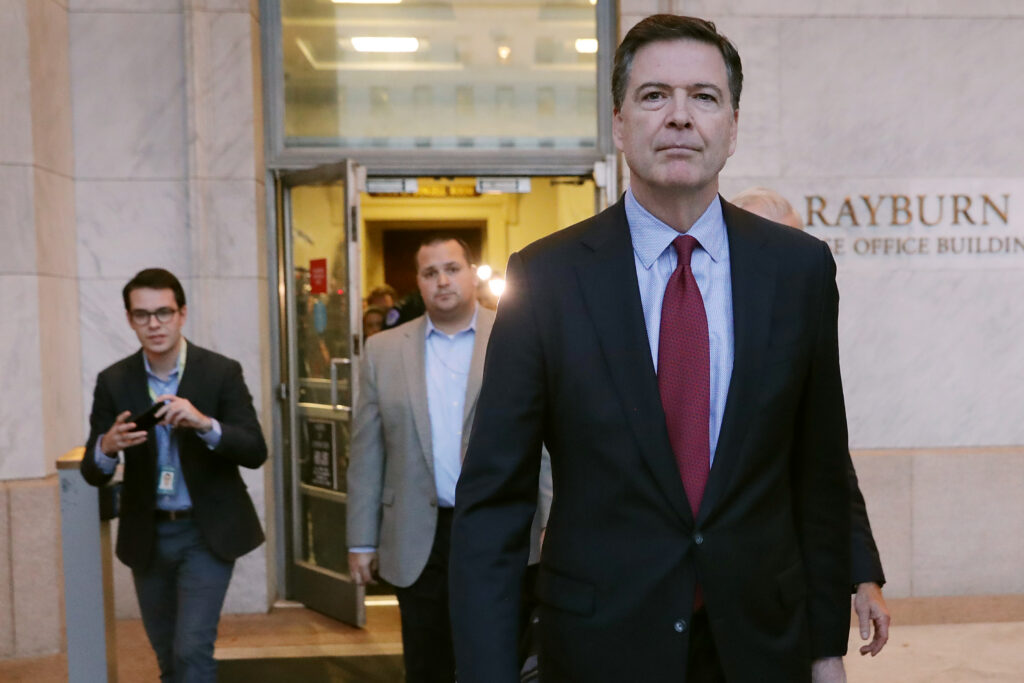
The Trump administration has brought a third criminal case against former FBI Director James Comey, this time accusing the longtime target of President Donald Trump of unlawfully transmitting national defense information to the press a decade ago.
A criminal information filed under seal Oct. 5 and made public Monday charges Comey with transmitting national defense information and conspiring to do so under a provision of the Espionage Act. The case was filed in the U.S. District Court for the District of Columbia.
The latest prosecution adds another chapter to an extraordinary campaign of criminal cases against Comey, whom Trump fired as FBI director in 2017 and has repeatedly attacked and demanded be prosecuted.
Comey has denied wrongdoing in the cases against him and said Monday, “I’m still innocent.”
Get updates straight to your inbox — for free
Join 350,000 readers who rely on our daily and weekly newsletters for the latest in voting, elections and democracy.
According to the new charging document, prosecutors allege that on or about Oct. 5, 2016, Comey, while lawfully possessing or having access to information relating to the national defense, “knowingly and willfully” caused that information to be transmitted to someone who was not entitled to receive it.
A second count alleges that Comey and unnamed others conspired to violate the same law beginning no later than Oct. 4, 2016 and continuing through the date prosecutors filed the case this month.
The charging document provides just one specific act allegedly carried out in furtherance of that conspiracy. Prosecutors claim that on Oct. 5, 2016, Comey, acting “through one and more co-conspirators,” directed an unidentified person to “disclose national defense information to a reporter for a national news publication.”
The three-page filing does not identify the alleged national defense information, the reporter, the news outlet or the person prosecutors call “Individual #1.” It also does not explain what conduct prosecutors believe allowed an alleged conspiracy originating in 2016 to continue until October 2026.
The filing is signed by Acting Deputy Attorney General R. Trent McCotter and Associate Deputy Attorney General Aakash Singh, as well as three special assistant U.S. attorneys.
The new case is the third criminal prosecution of Comey brought during Trump’s second term.
In September 2025, federal prosecutors charged Comey with making a false statement and obstructing a congressional proceeding over testimony he gave to Congress.
The case followed public demands from Trump for Comey’s prosecution and was brought after the president replaced a U.S. attorney who had expressed misgivings about pursuing charges. A federal judge later dismissed the case after finding that Lindsey Halligan, the Trump ally who secured the indictment, had been unlawfully appointed as U.S. attorney. The Justice Department has appealed.
Then, in April, the Justice Department charged Comey in North Carolina over a social media post showing seashells arranged to form the numbers “86 47,” which prosecutors allege constituted a threat against Trump. Comey has said he understood the image as a political message and did not intend violence.
Comey’s lawyers have argued that the government’s efforts to prosecute him are improperly motivated by Trump’s longstanding hostility toward the former FBI director. DOJ has denied that its prosecutions are politically driven.
Trump’s own statements have been central to those allegations. Shortly before Comey’s first indictment, Trump publicly demanded action against Comey and other political adversaries. After that indictment, Trump wrote that Comey “LIED” and could not “explain himself out of it.” Legal experts told Reuters at the time that those statements could bolster a defense claim of selective or vindictive prosecution, though such claims are difficult to prove.
The newest charges surfaced on the same day a federal judge ruled that the Trump administration unlawfully fired Comey’s daughter, former federal prosecutor Maurene Comey. She has separately alleged that her firing was connected to her father and the administration’s political grievances, though the judge has not yet ruled on that claim. The Justice Department said it plans to appeal the ruling.