Trump DOJ appeals loss in Michigan voter roll case, asks for emergency expedited hearing
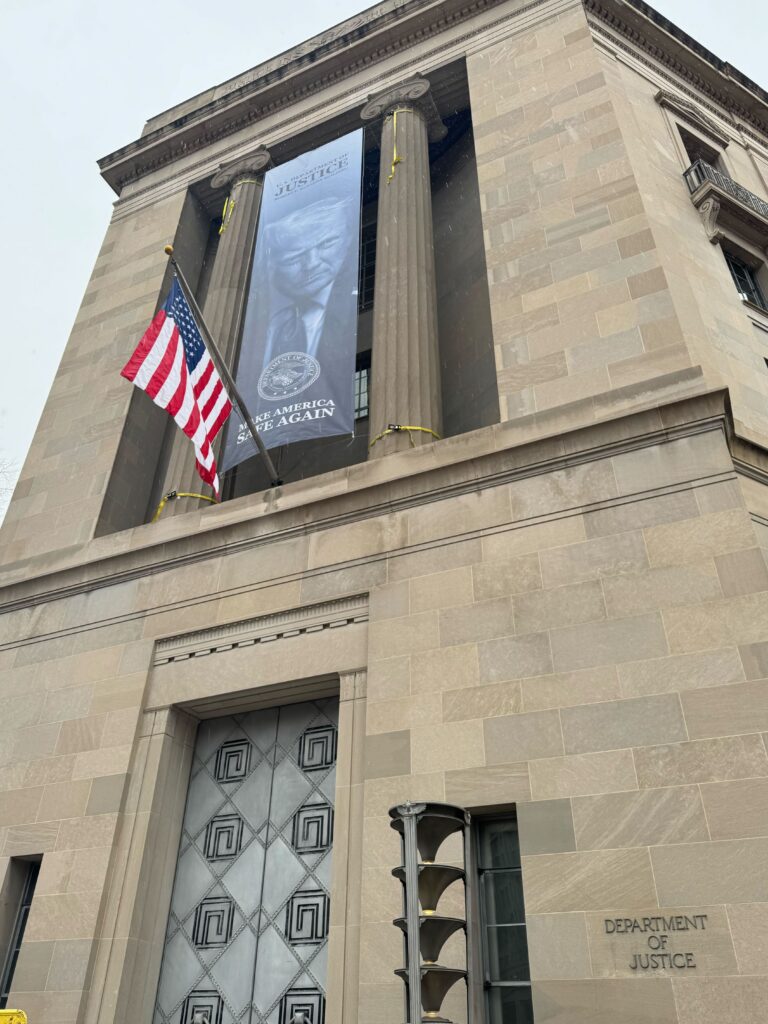
The Department of Justice (DOJ) intensified its quest for unfettered access to state voter registration rolls Monday, filing an emergency appeal in Michigan after a federal judge rejected the government’s demands.
The DOJ has sued 29 states plus the District of Columbia for unredacted voter registration records, swearing to judges it merely wants to ensure states are complying with federal registration roll maintenance requirements, but admitting elsewhere that it is using the information to help the administration’s hunt for undocumented immigrants.* So far, the administration has lost three cases and had a fourth dismissed without prejudice for being filed in the wrong jurisdiction (the DOJ since refiled).
The DOJ filed an emergency motion to expedite appeal because “it raises an issue of urgency with regard to the security of elections in the United States,” and that “the security and sanctity of elections in Michigan would be questioned absent an immediate ruling on this issue.”
The appeal marks a shift in the DOJ’s so-far unsuccessful legal strategy in seeking state voter registration records. It is the first time in the Michigan litigation — or in any of the 30 voter roll lawsuits — that the federal government has claimed in writing that time is of the essence.
Get updates straight to your inbox — for free
Join 350,000 readers who rely on our daily and weekly newsletters for the latest in voting, elections and democracy.
The emergency motion asks the 6th Circuit Court of Appeals to rule well ahead of the upcoming midterm elections in November. “Prior to that date, Michigan voters need to know that its elections are secure and that noncitizens, deceased, and voters with multiple records are not registered to vote in its elections,” the DOJ writes, alluding to the repeatedly debunked claim that noncitizens vote in significant numbers.
In making the case for a fast ruling well ahead of the midterms, the DOJ is setting itself up for another quick appeal to the U.S. Supreme Court. Since President Donald Trump returned to the White House, the Court has repeatedly sided with the administration in emergency “shadow docket” appeals of lower court decisions blocking its actions.
Judge Hala Jarbou, a Trump appointee, ruled last month that federal law does not require Michigan to disclose its voter registration lists. That opinion was more narrow than those issued in California and Oregon, where the judges harshly rebuked the department’s demands and questioned the trustworthiness of its lawyer’s courtroom statements.
The DOJ filed notices of appeal in all three losing jurisdictions last week, but so far it hasn’t sought expedited hearings in the California and Oregon lawsuits.
In the DOJ’s earlier filings in Michigan and elsewhere, the department’s lawyers focused their claims on the legal right to access the voter files, without claiming they were needed to ensure noncitizens were not voting.
The judges in California and Oregon both noted that the agency’s in court justifications did not match statements made by Attorney General Pam Bondi and Assistant Attorney General Harmeet Dhillon explaining how the voter rolls were being used.
In Oregon, U.S. District Judge Mustafa T. Kasubhai went so far as to set aside the presumption of regularity — that the DOJ could be taken at its word. “When Plaintiff, in this case, conveys assurances that any private and sensitive data will remain private and used only for a declared and limited purpose, it must be thoroughly scrutinized and squared with its open and public statements to the contrary,” Kasubhai wrote.
It is illegal for noncitizens to vote in federal elections. The few that do are often caught and then face prison time and then deportation. A comprehensive 2025 audit in Michigan found just 16 suspected — not confirmed — potential noncitizens out of the 7.2 million active registered voters in 2024.
The DOJ’s request asks for briefing to be completed by April and waives a request for oral argument. The filing itself contains multiple typos and misspellings, referring at times to “votors,” and, the “United Staes” and an “Emeregency.” The caption also refers to a non-party — the League of Women Voters’ request to intervene in the lawsuit was denied — as an intervenor-appellee.
*Democracy Docket Founder Marc Elias’s law firm, Elias Law Group, represents intervening defendants in many of these lawsuits.
*Yunior Rivas contributed to this report.