Texans head to the polls, putting Trump’s redistricting map to the test
 Prefer us on Google
to see more of our voting rights news coverage when you search.
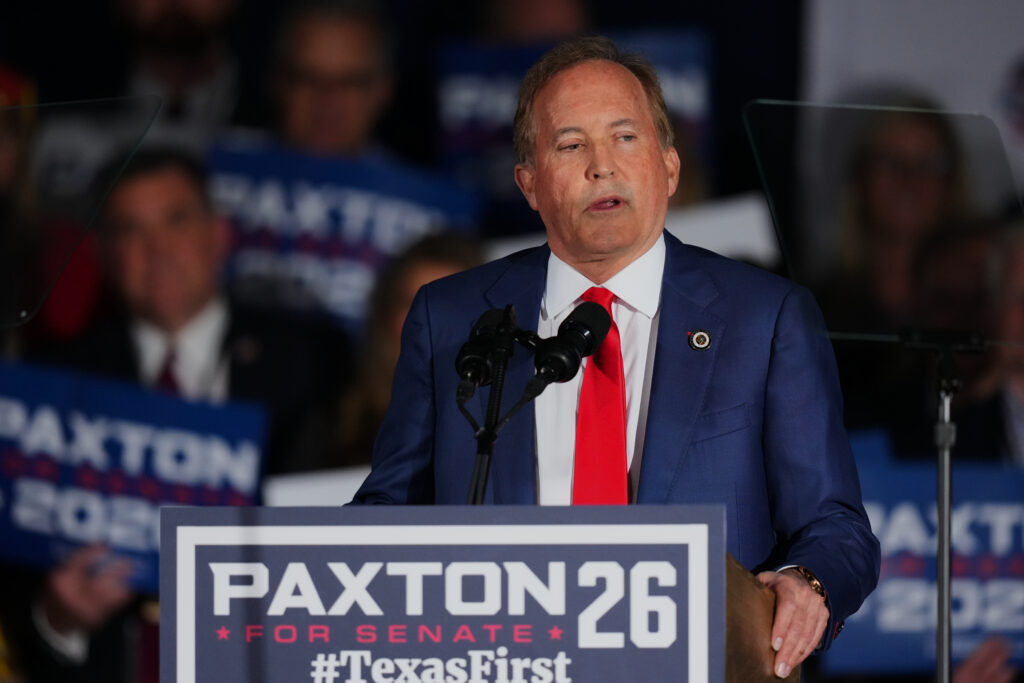
One year after President Donald Trump kicked off an unprecedented redistricting war to gain five more GOP congressional seats in Texas, his plan now faces its greatest test: the voters.
Early voting in the Lone Star State kicks off Monday and runs through Oct. 30. In addition to newly drawn congressional maps, Texas voters have to brace for the prospect that one of their Senate candidates – Attorney General Ken Paxton (R) – will exploit the powers of his office to investigate his own election if he loses. Also, Texas voters in one of the most populous counties will have far fewer options for voting on Election Day.
A loyal Trump ally and election denier, Paxton is trailing in the polls behind state Rep. James Talarico* (D) in the race for a U.S. Senate seat. Gov. Greg Abbott (R) also faces stiff competition from his opponent, state Rep. Gina Hinojosa (D).
Texas Democrats could win a statewide election for the first time in decades. While Paxton could refuse to accept a loss — and it wouldn’t be the first time he challenged election results — Texas legal experts say they have confidence the courts would protect the election outcome against any bad faith efforts to overturn it.
Get updates straight to your inbox — for free
Join 350,000 readers who rely on our daily and weekly newsletters for the latest in voting, elections and democracy.
This will also be the first test for the state’s new top election official, Secretary of State Robert Howden. He took over in July after the previous officeholder was unceremoniously replaced without explanation. It remains to be seen how he will respond to potential pressure from Paxton if the attorney general loses his Senate race and challenges the results.
Paxton isn’t the only election denier on the ballot in Texas this year. The list also includes state Sen. Mayes Middleton, the GOP candidate for Texas attorney general; state Rep. Steve Toth, a GOP candidate running for a U.S. House seat; and Alex Mealer, another GOP candidate running for a U.S. House seat.
Though Trump announced last year that the GOP was “entitled” to five more congressional seats in Texas — and Republican lawmakers bent the knee to pass Trump’s district map — it’s increasingly unlikely that voters will go along with the plan, with Trump and his MAGA allies far less popular in the Lone Star State than they were two years ago.
Some Texas voters will face other roadblocks to casting their ballot this year.
Already this year, thousands of Texans were impacted by a statewide voter registration problem that left local officials scrambling to process a significant backlog of registrations shortly before the election.
Voters in Tarrant County, a major battleground area, are preparing for the possibility of longer lines at the polls after Republican local officials slashed Election Day voting locations by 30%.
In Texas, mail ballots must be returned by 7 p.m. on Election Day, or by 5 p.m. the following day as long as the envelope is postmarked by Election Day.
*The Elias Law Group (ELG) represents the Talarico campaign and the Democratic Senatorial Campaign Committee. ELG Firm Chair Marc Elias is the founder of Democracy Docket.