With Voting Rights Act gutted, Supreme Court vacates discrimination finding against Washington map
 Prefer us on Google
to see more of our voting rights news coverage when you search.
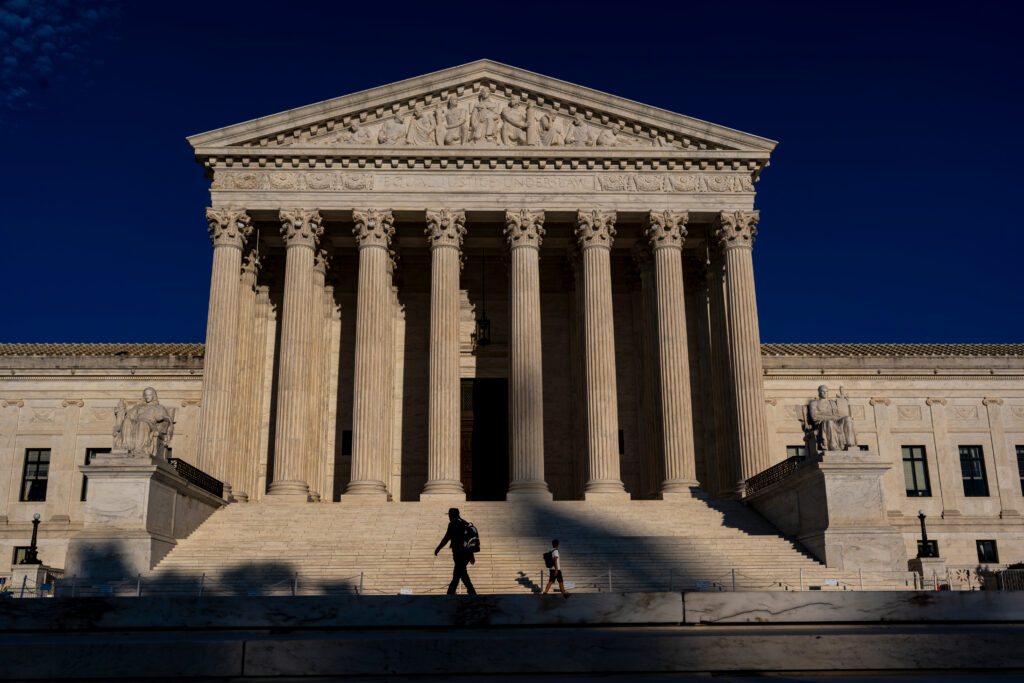
The Supreme Court on Monday reversed two pro-voter decisions in cases related to Washington’s legislative redistricting, sending them back to a lower court for new proceedings in light of the Court’s decision earlier this year in Louisiana v. Callais, instead of hearing oral arguments.
The Callais ruling gutted Section 2 of the landmark Voting Rights Act (VRA), giving states the green light to draw electoral districts in ways that undercut the political power of racial minorities.
The Court’s order in the Washington cases is a significant setback for pro-voting groups that challenged the state’s redrawn map after the 2020 census as a violation of Section 2 for intentionally diluting the voting strength of Latino voters in the Yakima Valley region.
Under Callais, the plaintiffs must now prove intentional discrimination — a nearly impossible standard — in order to overturn an electoral map.
Get updates straight to your inbox — for free
Join 350,000 readers who rely on our daily and weekly newsletters for the latest in voting, elections and democracy.
In the first Washington case, Soto Palmer v. Hobbs, voting rights groups sued after the state legislature approved new maps in 2022, saying they deliberately “cracked” Latino voters between districts.
In 2023, a federal judge agreed and said the boundaries of the contested district “in combination with the social, economic, and historical conditions in the Yakima Valley region, results in an inequality in the electoral opportunities enjoyed by white and Latino voters in the area.”
As the litigation was playing out in the case, Benancio Garcia III, a former Republican candidate for office, brought another challenge against the redrawn map. He alleged that the map focused too much on race in violation of the 14th Amendment’s Equal Protection Clause.
Garcia’s case was dismissed in light of the federal judge’s decision in Soto Palmer, and ultimately a remedial map proposed by voting rights groups was used in the 2024 elections.
But the Supreme Court’s decision in Callais earlier this year revived the legal fight.
Voting rights groups encouraged the justices to deny review of the cases altogether, saying the remedial 2024 map “was drawn without any consideration of race and selected by the district court based on traditional redistricting factors alone.”
But on Monday the Supreme Court vacated the lower court’s finding that Washington’s redrawn map violated Section 2 and sent the two cases back down to the 9th Circuit Court of Appeals.