Right-wing bid to turn NVRA into a tool for voter purges dealt major setback by SCOTUS
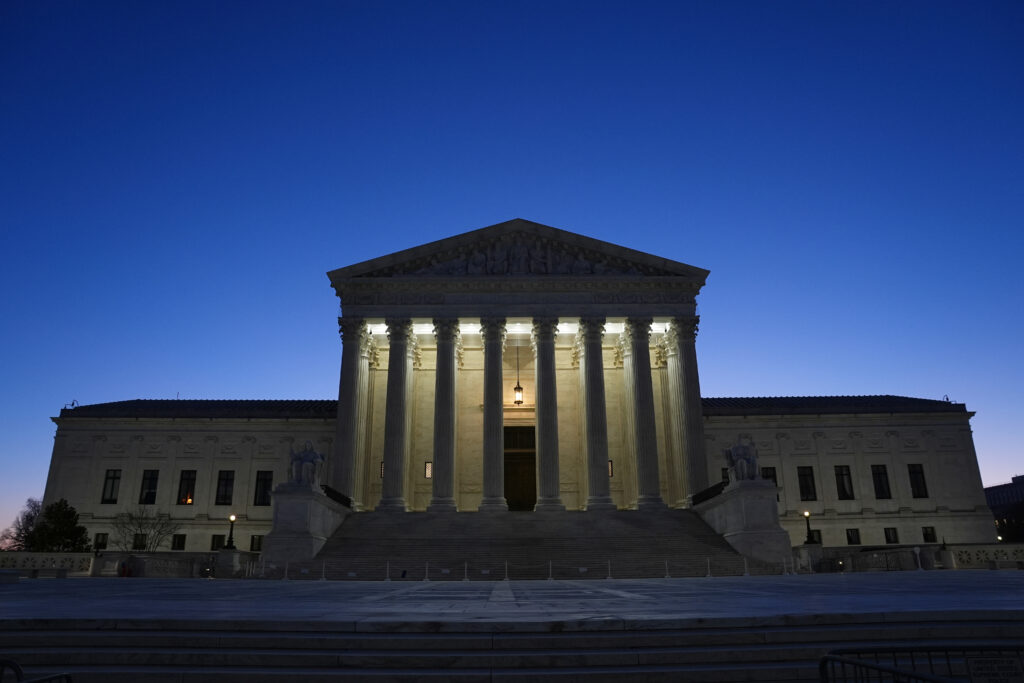
The U.S. Supreme Court (SCOTUS) declined to hear two petitions Monday brought by a leading advocacy group for more restrictive voting rules, which had asked the nation’s highest court to weaken a key federal voting law.
In one petition — related to access to the state voter rolls of Michigan — the Public Interest Legal Foundation (PILF) asked SCOTUS to reinterpret aspects of the National Voter Registration Act (NVRA) designed to expand voting access as, instead, a mandate for aggressive voter purges.
The NVRA — also known as the “Motor Voter” law, which passed in 1993 — is one of the most significant voting rights laws passed since the Voting Rights Rights Act was enacted in 1965. Among several other provisions, it requires states to make “reasonable” efforts to maintain accurate voter rolls.
But PILF has long sought to firm up the definition of “reasonable” in the NVRA’s language, and argued to SCOTUS that “reasonable” demands far more aggressive removals than states already do.
Get updates straight to your inbox — for free
Join 350,000 readers who rely on our daily and weekly newsletters for the latest in voting, elections and democracy.
PILF also wanted to make it easier for groups to have standing to sue states for access to their voter rolls, which was what the Pennsylvania petition focused on.
The group has a long track record of pushing for voter roll purges and, in both petitions, also argued that the NVRA’s public disclosure provisions empower the group to sue for voter data when states decline to hand it over.
“With the NVRA, Congress intended to increase and enhance registration and voting by ‘eligible citizens,’ protect the integrity of the electoral process, and ensure that accurate and current voter registration rolls are maintained,” PILF argued in their petition. “Congress intended maintenance of state voter rolls to be transparent because oversight and accountability safeguard the right to vote.”
In both the Michigan and Pennsylvania cases, PILF failed to convince the federal appeals court of their argument to weaken the NVRA — and then appealed to SCOTUS, in hopes that the court’s conservative supermajority might reconsider.
But PILF’s efforts to weaken the NVRA aren’t limited to the courts.
Last year, PILF president J. Christian Adams testified before Congress and urged lawmakers to pass legislation that requires states to take more aggressive measures in maintaining accurate voter rolls.
“Here’s a question Congress might ponder: What does the Section 8 of the National Voter Registration Act mean when it mandates that states must ‘conduct a general program that makes a reasonable effort to remove the names of ineligible voters from the official lists of eligible voters?’” Adams asked. “According to federal courts, unfortunately, it means next to nothing. That isn’t what Congress intended.”