Postal Services appeals court order blocking Trump’s anti-mail voting order
 Prefer us on Google
to see more of our voting rights news coverage when you search.
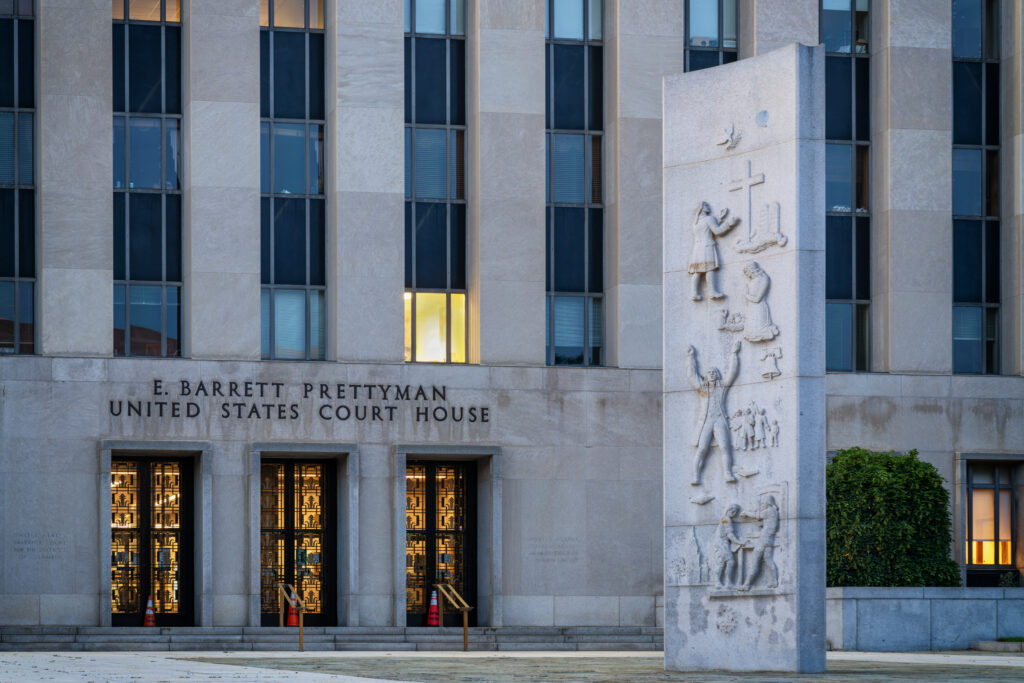
The U.S. Postal Service (USPS) has asked a federal court to pause its order blocking the implementation of President Donald Trump’s executive order against mail voting as it appeals the ruling.
Meanwhile, Democratic elected officials are urging the USPS not to move forward with the order, warning that doing so will make it harder for states to smoothly administer the upcoming midterms.
In a filing Monday, the federal government argued that unless the court grants a stay, the “sweeping injunction” will “severely disrupt USPS’s efforts to potentially promulgate a final rule” fulfilling Trump’s March 2026 order ahead of November’s midterms elections.
Last week, Judge Emmet Sullivan ruled that USPS’s proposed rule violated the terms of a 2021 settlement with the NAACP. The agreement required the Postal Service to safeguard mail-in voting in future federal elections and prioritize the timely delivery of election-related mail through 2028.
After the Postal Service posted its proposed rulemaking, the NAACP asked the U.S. District Court for the District of Columbia to enforce the settlement.
Trump’s diktat directed the Postal Service to only deliver mail ballots if states first handed over their voter lists to the administration. It also ordered the Department of Homeland Security (DHS) and the Social Security Administration (SSA) to compile separate lists of citizens eligible to vote in each state.
Legal experts have widely called the executive order unconstitutional, noting that the Constitution empowers states to run elections, supervised by Congress. The president has no legal role.
In its filing Monday, USPS asked the court to rule on its stay motion by Wednesday, to allow for time to file a quick appeal if Sullivan denies the request. The Postal Service also notified the court that it will appeal the underlying opinion to the D.C. Circuit Court of Appeals.
Get updates straight to your inbox — for free
Join 350,000 readers who rely on our daily and weekly newsletters for the latest in voting, elections and democracy.
The filing mostly rehashes procedural arguments the Postal Service’s lawyers from the Department of Justice (DOJ) previously made, which Sullivan explicitly addressed and dismissed in his opinion.
For example, USPS contends that the NAACP is improperly splitting claims because it filed a separate lawsuit challenging Trump’s order. But after considering that argument, Sullivan concluded it was “without merit.”
However, the government did put forward a few novel arguments. In a footnote, USPS claimed that when DOJ attorneys had admitted the lists might by underinclusive or inaccurate, they were only referring to the executive order’s other list, the “State Citizenship Lists” compiled by DHS and SSA, and not the “Mail-In and Absentee Participation Lists” that states would need to send to USPS.
The note is both an admission of the inherent disenfranchisement risks created by Trump’s executive order and an attempt to selectively wave away those concerns as legally inconsequential because they are problems for DHS and SSA, not the Postal Service.
The filing also suggests that the Trump administration is currently not on track to carry out the executive in time for the 2026 elections.
Before a judge will grant a stay, the requesting party has to show that they will suffer “irreparable harm” if the court’s order remains in effect. In its supporting memorandum, the government argued that the injunction would prevent USPS from developing a web portal for states to upload their absentee and mail-in ballot lists and from providing “further technical instructions regarding barcode creation, service type identifiers, acceptance processes, file preparation, documentation submission, and entry of data into the proposed portal.”
“That these efforts would not be complete in time for deployment as to the upcoming general election is especially harmful for Defendants because these preparatory steps themselves do not impose any harm on Plaintiff,” the government contended.
Separately, some Democratic elected officials opposed to the order published the public comments made in opposition to USPS’s proposed rulemaking. In that release, nine Democratic governors argued that the uncertainty around the rule’s status threatens to paralyze election officials.
“Our state and local officials cannot wait until the eve of the upcoming elections to learn whether they must attempt to comply with the Proposed Rule’s unlawful directives,” they wrote, calling for the rule’s immediate withdrawal.
In a separate lawsuit, a federal judge in Massachusetts issued a decision in June that enjoins implementation of Trump’s order in the 23 states that sued to block it. The day before that ruling, Postmaster General David Steiner testified in Congress that USPS would refuse to deliver ballots in states that declined to share their mail voter lists.
U.S. Reps. Raja Krishnamoorthi (D-Ill.) and Joe Morelle (D-N.Y.), the ranking member of the House Administration Committee, wrote Steiner Monday demanding reassurances USPS would comply with the courts’ orders.
“The law is clear: USPS has no authority to regulate mail-in voting, dictate how states conduct elections, or condition the delivery of ballots on states surrendering sensitive voter data to the federal government,” they wrote. “No president can override the law with an executive order. A federal court has now reaffirmed those limits.“