Nevada voters approve restrictive ID measure
 Prefer us on Google
to see more of our voting rights news coverage when you search.
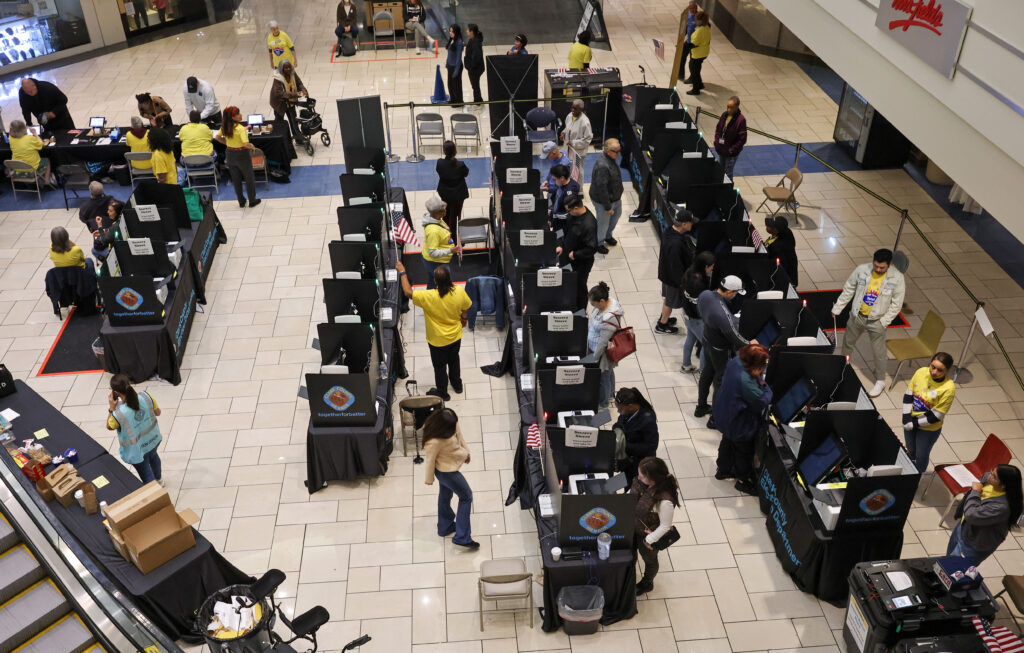
Nevada voters approved a prohibitive voter ID ballot measure, changing the state constitution to require voters to verify their identity before voting both in-person and by mail.
In a loss for voters, the measure was greenlit with a 62.3% to 37.7% vote Tuesday.
This means voters are now required to present a form of photo identification to vote in person or verify their identity by adding the last four digits of their driver’s license or Social Security number to their ballot when voting by mail.
Get updates straight to your inbox — for free
Join 350,000 readers who rely on our daily and weekly newsletters for the latest in voting, elections and democracy.
For a constitutional amendment to pass in the Silver State, it must be approved by voters in two consecutive election years. Voters already approved the amendment 73.23% to 26.77% in 2024.
Nevada, Ohio and North Carolina all passed new voter ID laws Tuesday. Voters rejected voter ID laws in California and Colorado. An Arizona voter ID law has not been called as of Wednesday morning, though the AP reports 53.2% of voters have voted no with 83% of the vote counted.
Voter ID laws have been consistently opposed by voting rights and democracy advocates for the unnecessary barriers they place on voters. Since 2020, numerous states have passed new or stricter voting legislation in the name of election integrity, but these laws often come at a cost for eligible voters.
Most notably, the hurdles voter ID laws pose can often impact Black and Latino voters more than others. A January 2024 study from the University of Maryland’s Center for Democracy and Civic Engagement found that over a quarter of Black and Latino citizens do not have a driver’s license with their current name or address, compared to 12% of the national average.
President Donald Trump supported the Nevada measure – he and his administration have been outspoken proponents of voter ID laws. Before the election, Trump tried to strong-arm Congress into passing the SAVE Act, a voter suppression law that would have required voters to present a narrow set of photo IDs to be eligible to vote and could have prevented millions of people from voting in the midterms and beyond.