In win for voters, Montana court blocks Republican-backed attack on Election Day registration
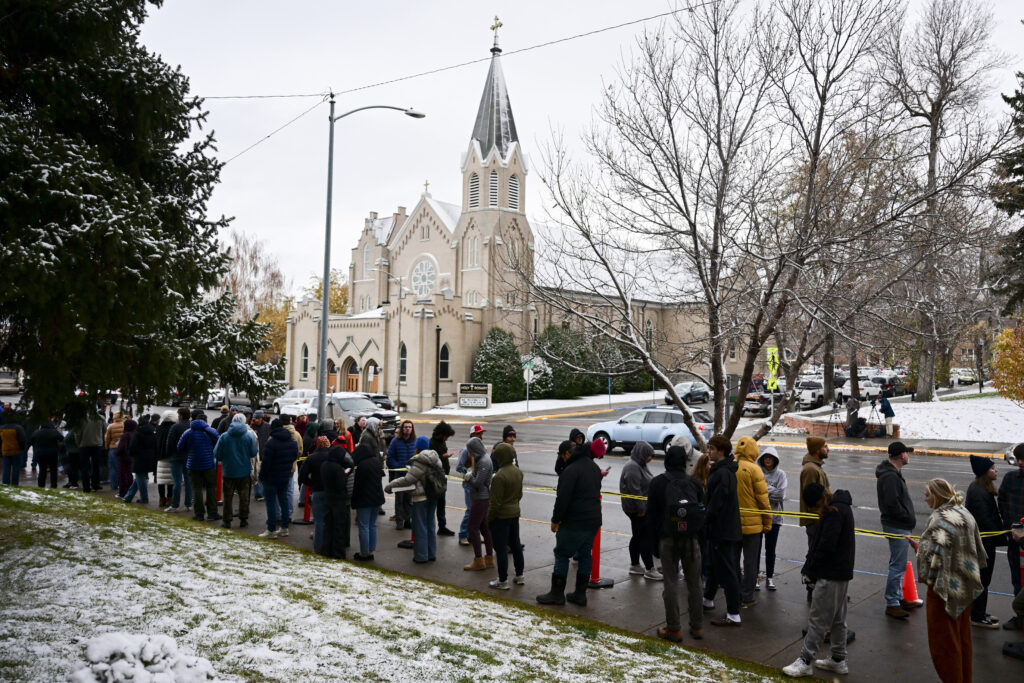
In a major win for Montana voters, a court blocked a voter suppression law that would’ve cut off Election Day registration for federal elections at noon — preserving an essential voting option Montanans have used for decades ahead of the 2026 midterms.
In an order Friday, the First Judicial District Court of Montana enjoined Senate Bill 490 (SB 490), a Republican-backed law that would’ve barred voters who register after 12 p.m. on Election Day from voting in federal races.
The ruling temporarily blocks enforcement of the law and means Election Day registration will remain available to Montana voters for the full day as the lawsuit continues.
“Election Day registration shall remain available to all eligible voters for the full duration of Election Day, consistent with the practices in place prior to the enactment of SB 490,” the court wrote.
Get updates straight to your inbox — for free
Join 350,000 readers who rely on our daily and weekly newsletters for the latest in voting, elections and democracy.
The decision is a significant victory for the pro-voting plaintiffs* — including the Montana Federation of Public Employees, Native American tribal nations and youth voting groups — who challenged the law, arguing that it would create needless confusion, burden election officials and block eligible voters from casting ballots in federal elections.
The court agreed that the law threatened real harm.
“The record demonstrates that SB 490 will prevent some otherwise eligible voters from casting ballots in federal elections,” the court added. “A law that prevents eligible voters from voting constitutes a direct burden on the fundamental right of suffrage.”
For over 20 years, Montana has allowed eligible voters to register and vote on Election Day. The court noted that the system has become a key safeguard for voters who may discover registration problems when they arrive to vote, including voters who recently moved, had paperwork errors or otherwise didn’t know their registration needed to be fixed.
SB 490 would’ve left Election Day registration in place for state races after noon, but cut it off for federal races. That would’ve forced election officials to run a confusing two-track system: one ballot for voters who registered before noon and another, stripped of federal contests, for voters who registered later in the day.
The court rejected the state’s argument that the law would have eased election administration.
“The Court finds that the State has not presented competent evidence demonstrating that SB 490 reduces administrative burdens or improves election efficiency,” the court wrote. “The Court further finds that the State has not presented evidence of voter fraud associated with Election Day Registration.”
Instead, the court found that SB 490 could make election administration harder by requiring election officials to track the exact time a voter registered, issue different ballots based on that time and manage separate processes for state and federal races.
The ruling also emphasized that the law would’ve fallen hardest on voters already facing barriers to the ballot, including Native American and young voters.
“The undisputed record further demonstrates that SB 490 disproportionately impacts Native American voters and young voters,” the court found. “Laws that disproportionately burden particular classes of voters trigger heightened constitutional scrutiny.”
Native American voters in Montana face long travel distances, limited transportation options and unreliable mail service. Young voters and students also rely heavily on Election Day registration as they move more often and may face scheduling challenges.
The ruling builds on a 2024 Montana Supreme Court decision that struck down earlier restrictions on Election Day registration and ID requirements. In that case, the state Supreme Court recognized Election Day registration as a longstanding and widely used part of Montana’s election system.
The court ultimately found that the loss of voting rights, even temporarily, is an irreparable harm that can’t be fixed after an election is over.
“SB 490 is likely unconstitutional under the Montana Constitution,” the court concluded. “Plaintiffs will suffer irreparable harm absent relief.”
A trial in the case is currently scheduled for August.
*The plaintiffs in the case are represented by the Elias Law Group (ELG). ELG firm chair Marc Elias is the founder of Democracy Docket.