Delaware upholds rights for permanent absentee ballot voters, rejecting GOP challenge
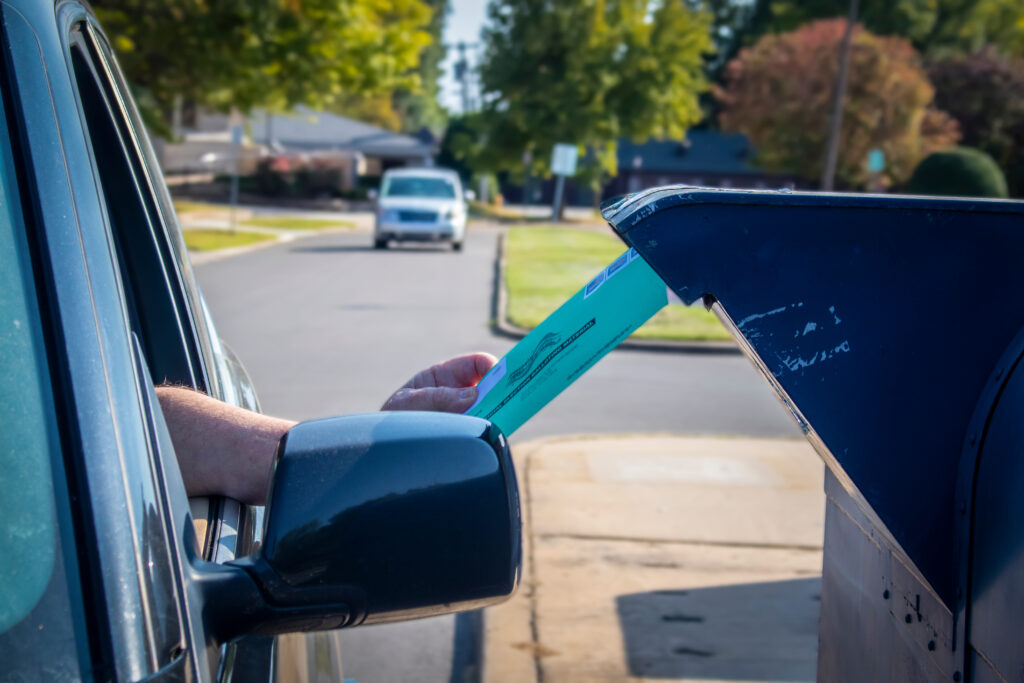
A Delaware court upheld the right to vote via permanent absentee ballot, rejecting a GOP-led challenge to restrict the option used most widely by overseas voters and those with disabilities.
A Delaware Court of Chancery judge ruled on summary judgment against two state senate candidates who argued the state’s permanent absentee ballot voting measures are unconstitutional. Friday’s ruling marks a loss for Delaware’s top Republican elected official, Senate Minority Leader Gerald W. Hocker, and for the Republican Party’s crusade against mail voting in the run-up to midterms.
Republican candidate for state senate Steve Washington joined Hocker in the challenge.
Get updates straight to your inbox — for free
Join 350,000 readers who rely on our daily and weekly newsletters for the latest in voting, elections and democracy.
In Delaware, those eligible under the Permanent-Absentee Statute automatically receive an absentee ballot for each election. Republicans seeking to restrict mail voting claimed the state’s permanent absentee list expanded the “scope of electors.”
But the court found it merely ensures the right to vote for those already eligible.
“Because the Permanent-Absentee Statute neither expands the circumstances qualifying an elector to vote absentee, nor permits an elector to vote absentee if he or she is able to appear in person, it does not contravene the Delaware Constitution,” Vice Chancellor Bonnie David wrote for the court.
David also said the plaintiffs were wrong because the word permanent is a “misnomer.” If a voter no longer meets the eligibility requirements, the Department of Elections removes them from the list.
Republicans, in their argument against the system, also noted that 1,000 voters on the list have moved from their listed addresses and 200 have died. David dismissed this as an argument against the list altogether.
“Even imperfect procedures for policing permanent absentee voters’ continued eligibility do not render ‘every application’ of the Permanent-Absentee-Statute unconstitutional,” David wrote.
David added it’s the General Assembly, not the court, that has the authority to decide who qualifies for this absentee voting list — which the state did over a decade ago.