Lawsuit seeks federal voting commission records on ties to election deniers
 Prefer us on Google
to see more of our voting rights news coverage when you search.
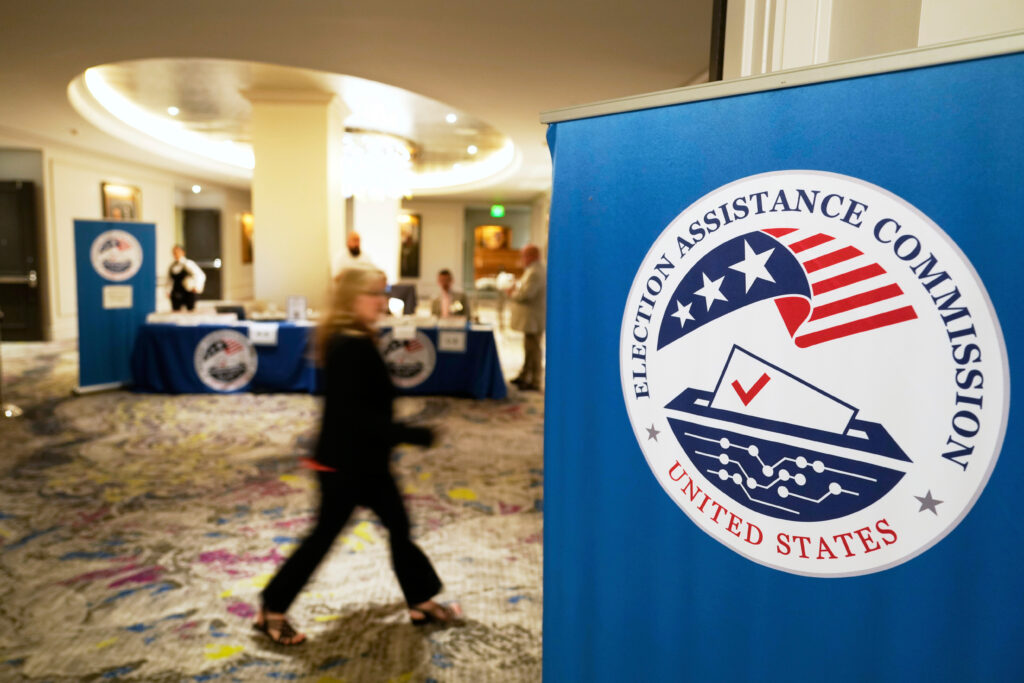
A new lawsuit filed Wednesday seeks to force the U.S. Election Assistance Commission (EAC) to turn over records about its communications with anti-voting and election denial figures.
The lawsuit, filed by the pro-democracy group Democracy Forward*, follows recent reporting by Democracy Docket that raised urgent concerns about growing partisan activity inside the EAC — an independent agency created to help states administer elections.
Get updates straight to your inbox — for free
Join 350,000 readers who rely on our daily and weekly newsletters for the latest in voting, elections and democracy.
In one instance first reported by Democracy Docket last month, a lawyer for the commission was scheduled to brief a group led by election denier Cleta Mitchell while it was pressuring the agency to require proof of citizenship for voter registration.
Democracy Docket’s report noted that the briefing occurred as anti-voting groups were mobilizing supporters to influence the agency’s rulemaking process — raising concerns about the commission’s impartiality.
In a separate controversy, EAC Commissioner Christy McCormick, now its vice chair, drew backlash after Democracy Docket exclusively reported about her promoting a fringe conspiracy theory about illegal voting during a partisan event.
“[Democrats] need open borders, they need illegal citizens to increase their votes,” McCormick said during a panel discussion. “And this is why they’re fighting so adamantly against us.”
The lawsuit accuses the EAC of failing to comply with the Freedom of Information Act (FOIA) — the federal law that requires agencies to release public records — by delaying responses to requests for key documents.
The group says the records could shed light on whether outside actors with a history of promoting false claims about elections are influencing federal election policy ahead of the 2026 midterms.
“The commission tasked with supporting our elections cannot operate in secrecy, especially in light of the Trump-Vance administration’s efforts to undermine elections and restrict voting rights,” Skye Perryman, president and CEO of Democracy Forward, said in a statement. “But that is what it is doing. It has suggested that it may only produce records of its activities until after the 2026 elections. The U.S. Election Assistance Commission’s failure to release these records before the 2026 elections raises urgent questions about who is influencing decisions that impact Americans’ fundamental right to vote. The public deserves transparency now, and we will continue going to court to ensure accountability.”
The lawsuit centers on two FOIA requests filed by Democracy Forward in February meant “to shed light on the influence of individuals and organizations with a history of challenging election outcomes without substantiating evidence on EAC’s operations.”
The requests sought emails, text messages and other communications from EAC commissioners — including exchanges with outside figures like Mitchell, her Election Integrity Network and other anti-voting groups, such as Public Interest Legal Foundation and True the Vote.
Despite acknowledging the requests in February, the EAC told the group it may not produce records until 2027 — a delay that would push disclosure until after the midterms.
Under FOIA, agencies are generally required to respond within 20 business days. When they fail to do so, requesters can go to court to compel a response — which Democracy Forward argues it is now entitled to do.
The EAC was created to help state election officials and maintain public confidence in the voting process. But the lawsuit argues that delays in releasing records — combined with recent reports of partisan activity — raise serious questions about transparency at a critical moment for U.S. elections.
Democracy Forward is asking the court to order the agency to conduct a full search for responsive records and release all non-exempt documents related to the requests.
With the 2026 midterms approaching, the case could determine whether the public gains access to information about how a key federal election body is operating — and who may be influencing its decisions.
*Democracy Docket Founder Marc Elias is the chair of Democracy Forward’s board.