‘DOJ cannot be trusted’: Lawmakers ask judge for independent oversight on Epstein files
Nearly three weeks after the Department of Justice (DOJ) violated a new federal law by not releasing all of its files on convicted sex offender Jeffrey Epstein, two lawmakers now want the judiciary to step in.
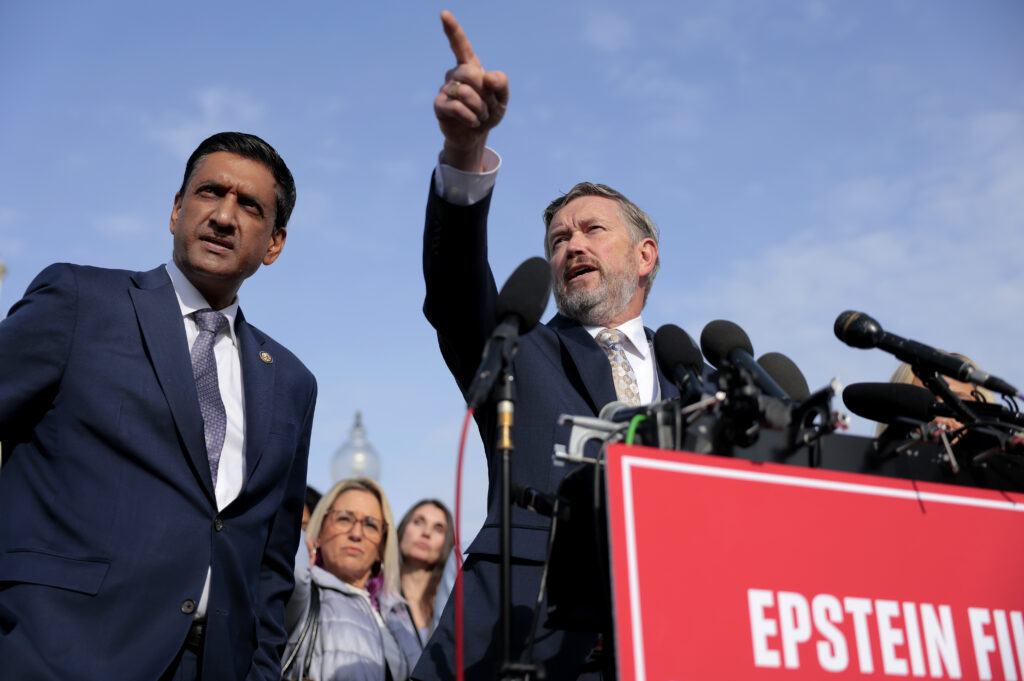
In a bipartisan letter, Reps. Ro Khanna (D-Calif.) and Thomas Massie (R-Ky.) asked a federal judge in New York to appoint an independent monitor to compel the department to comply with the law.
Get updates straight to your inbox — for free
Join 350,000 readers who rely on our daily and weekly newsletters for the latest in voting, elections and democracy.
“Put simply, the DOJ cannot be trusted with making mandatory disclosures under the Act,” Khanna and Massie wrote to U.S. District Judge Paul Engelmayer, who has presided over aspects of the department’s criminal case against Epstein’s longtime accomplice and girlfriend, Ghislaine Maxwell.
“Absent an independent process, as outlined above, we do not believe the DOJ will produce the records that are required by the Act and what it has represented to this Court,” they added.
Khanna and Massie spearheaded the Epstein Files Transparency Act, which passed Congress with near unanimous approval before President Donald Trump signed it into law last month.
The act required the DOJ to release all of the material it had gathered over the past two decades through investigations into Epstein’s sexual abuse of young women and underage girls by Dec. 19, 2025.
However, the department has largely slow-rolled the release in violation of the new law, which does not allow the department to delay.
The DOJ claimed it needed additional time to redact the files in order to protect victims. It also suddenly discovered over a million more documents potentially related to Epstein that it did not include in its initial review and that could be covered by the act.
The law had already given the department 30 days to process the documents for release, and the FBI started an extensive review and redaction process on the documents in March.
In a letter to Engelmayer earlier this week, the DOJ said it has so far released less than 1% of the documents in its possession that may be covered by the law.
The lawmakers’ request to Engelmayer comes as the DOJ faces strong criticism from both parties over the incomplete release and its noncompliance with the law in other ways.
The act also ordered the DOJ to give Congress a report detailing why it made redactions in the released documents, as well as a list of “all government officials and politically exposed individuals” named in the files within 15 days after publication.
However, the DOJ blew past the Jan. 3 deadline for the report and list without explanation.