In fiery hearing, House Dems question AG Bondi — but not about her assault on voting
 Prefer us on Google
to see more of our voting rights news coverage when you search.
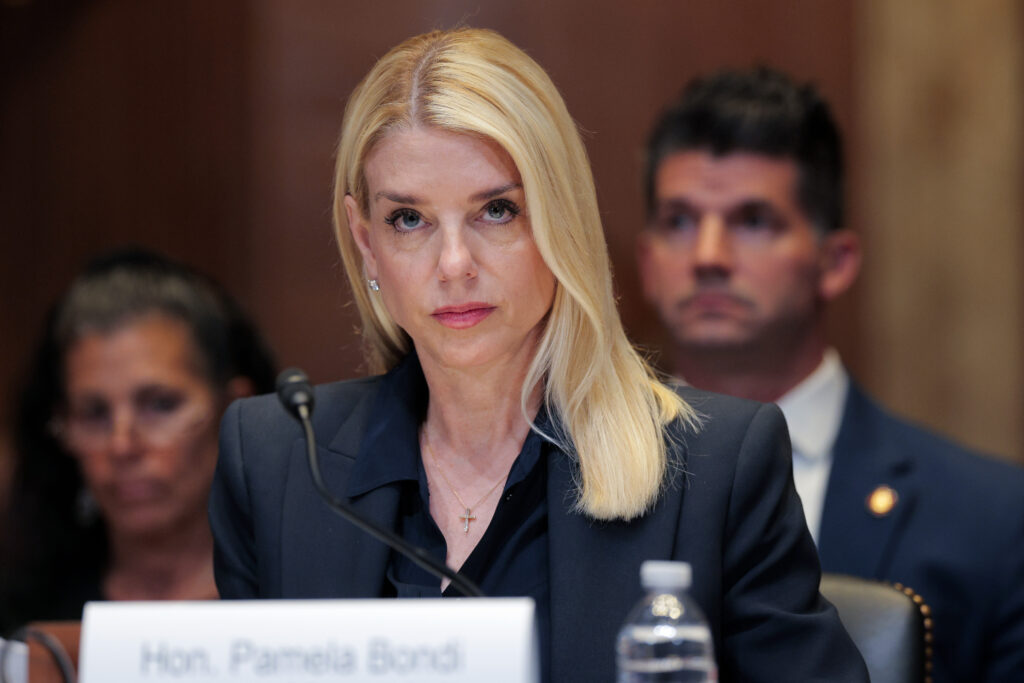
Attorney General Pam Bondi stonewalled and personally attacked lawmakers during a lengthy House Judiciary Committee hearing intended to give Congress the opportunity to exercise oversight over the Department of Justice (DOJ).
Since President Donald Trump returned to the White House last year, the DOJ has attempted to prosecute his political opponents, sought out states’ unredacted voter rolls and pushed debunked conspiracy theories that the 2020 presidential election — which Trump lost — was stolen.
But Wednesday’s hearing failed to touch upon those issues. For roughly four hours, Democratic lawmakers mostly questioned the attorney general about how the DOJ handled the release of all its files on convicted sex offender Jeffrey Epstein. In response, Bondi went on the offensive, and the hearing repeatedly descended into a shouting match.
Get updates straight to your inbox — for free
Join 350,000 readers who rely on our daily and weekly newsletters for the latest in voting, elections and democracy.
Bondi, one of President Donald Trump’s former personal attorneys, refused to apologize to victims of Jeffrey Epstein’s abuse for the DOJ’s mishaps in the case, including its failure to release the files with a deadline mandated by federal law.
The department failed to fully redact personal information and explicit images of victims in the over 3.5 million documents it released. Lawmakers from both parties also alleged that the department improperly withheld the identities of people who the FBI considered co-conspirators in Epstein’s crimes.
In addition to personal attacks, Bondi dodged questions by compulsively praising Trump. At one point, she claimed that Trump was “the greatest president in American history.”
In response to a question from Rep. Jerry Nadler (D-N.Y.) about the Epstein files, Bondi pivoted to the stock market.
“The Dow is over 50,000 right now. The S&P [is] at almost 7,000 and the Nasdaq [is] smashing records. Americans’ 401k and retirement savings are booming right now,” she said. “That’s what we should be talking about.”
Bondi’s glorification of the president was extraordinary behavior from an official who has traditionally been expected to act independently and in a nonpartisan manner in enforcing the law.
Before the hearing, survivors of Epstein’s abuse held a meeting outside of the capitol building and sharply criticized Bondi’s handling of the Epstein files’ release.
Many of them also attended the hearing and stood when Rep. Pramila Jayapal (D-Wash.) asked for victims to rise and raise their hands if they had not been able to meet with DOJ officials and share information about the abuse they faced.
Rep. Thomas Massie (R-Ky.), a co-sponsor of the law that forced the DOJ to release the files, asked Bondi why the department initially redacted Les Wexner’s name from the files.
Wexner, the former CEO of Victoria’s Secret, was labeled as a co-conspirator in Epstein’s criminal activities in an August 2019 document from the FBI’s Criminal Investigative Division.
However, his name was blacked out in the DOJ’s initial release of the document and was only revealed after Rep. Ro Khanna (D-Calif.) and Massie accused the department of violating the Epstein Files Transparency Act.
Bondi did not answer Massie’s question. Instead, she said he had “Trump derangement syndrome” and accused him of hypocrisy for voting against a bill banning nonconsensual deepfake pornography generated through artificial intelligence tools.
Throughout the hearing, Democrats largely failed to ask the attorney general about the DOJ’s recent, prominent attacks on voting rights — most notably, the FBI’s unprecedented raid on a Fulton County election facility in late January.
As Democracy Docket has reported, that raid was based on debunked claims of fraud during the 2020 election pushed by anti-voting conspiracy theorists, some of whom now work in the Trump administration.
In another major assault last month, Bondi personally demanded access to Minnesota’s voter records the same day federal agents shot and killed 37-year-old Alex Pretti in Minneapolis. In doing so, Bondi appeared to tie the DOJ’s quest for state voting records to the Trump administration’s expansive immigration enforcement operations.
Election officials across the country interpreted the document as an extortion attempt and an affront to states’ constitutional authority to administer elections. A federal judge later cited the letter in concluding that the DOJ could no longer be trusted in its push to seize state voter rolls.
Wednesday’s hearing was Bondi’s first appearance before Congress since her tumultuous hearing with the Senate Judiciary Committee in October. In that hearing, Bondi deployed similar tactics to get around questions.
This story has been updated with additional information throughout.