After court order, DOJ releases timeline of Fulton County election probe
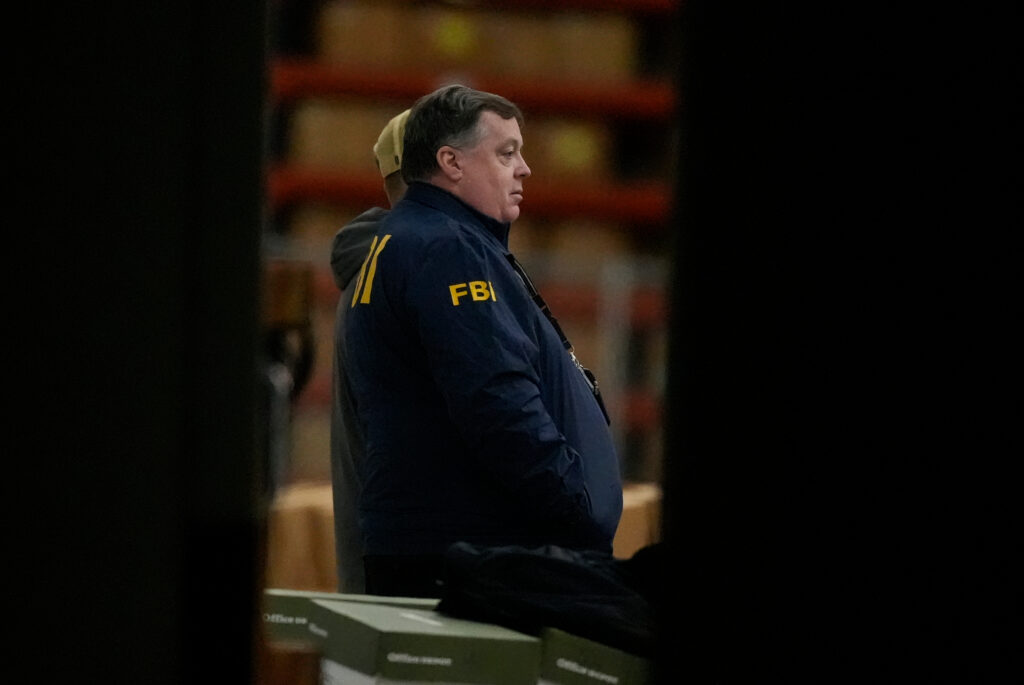
Following a federal court order earlier this week, the Department of Justice (DOJ) Friday turned over key details about its seizure of 2020 election records in Fulton County, Georgia.
For weeks, the DOJ tried to keep the information — a timeline of events leading up to the FBI’s criminal probe into Fulton County and the raid — from county officials in their ongoing lawsuit to force the federal government to return the sensitive records, which included original ballots.
Get updates straight to your inbox — for free
Join 350,000 readers who rely on our daily and weekly newsletters for the latest in voting, elections and democracy.
The timeline indicates the FBI executed its extraordinary raid on Fulton County’s elections hub just weeks after receiving a complaint from Kurt Olsen, a notorious conspiracy theorist hired by the White House to investigate the 2020 election.
Fulton County, a Democratic stronghold, has long been a leading target for those in the election denial movement since President Donald Trump’s loss to former President Joe Biden in 2020.
Fulton County officials have argued that the DOJ, which, before the raid, had sought the materials through demand letters and a civil lawsuit, used the criminal probe to obtain the records by force.
Previously, the DOJ had admitted that the criminal investigation was initiated by Olsen, a pro-Trump lawyer who in late 2020 pushed the DOJ to nullify the election.
U.S. District Judge Jean-Paul Boulee, the judge overseeing Fulton County’s suit, has been open to hearing evidence on the county officials’ claim, though the DOJ had repeatedly stonewalled or rejected their requests for information.
Boulee, who was appointed by Trump in his first term, ordered the DOJ Thursday to disclose basic factual information about the origins of its criminal investigation, such as when the FBI received Olsen’s criminal referral against Fulton County. The DOJ did so Friday afternoon.
According to its timeline, Olsen sent the referral on the morning of Jan. 5 earlier this year. That date is important, as just hours later on that same day, Ché Alexander, the clerk of courts for Fulton County, filed a motion to dismiss the DOJ’s Civil Rights Division’s lawsuit against her seeking the election materials.
A day after it received the referral, the FBI assigned Hugh Raymond Evans, an Atlanta-based special agent, to look into the complaint. Six days later, Evans asked that the matter be opened as a full investigation, which was granted on Jan. 14.
On Jan. 19, Evans, based on witness interviews and other evidence, began writing an “investigative summary” that he would later convert into the search warrant affidavit that backed the FBI’s raid.
The compressed timeline of the investigation — just 23 days elapsed between Olsen’s referral and the raid — may explain why, for example, Evans’ affidavit was filled with disinformation and debunked voter fraud claims pushed by election deniers since Trump’s loss in the 2020 election.
It may also explain why the agent did not include context on the credibility of the witnesses included in the affidavit and other key details about their claims. Had he included that information, the federal magistrate judge who ultimately approved of the raid likely would have rejected the application, former DOJ officials claimed in a court filing earlier this year.
The FBI acted on Olsen’s criminal referral even though officials in the Atlanta Division had previously debunked his claims, which were based on a “report” from a group of known election deniers alleging election fraud in the county.
Paul Brown, the former chief of the Atlanta field office at the time, was forced out of the office after debunking Olsen’s claims.
It’s unclear how much the timeline released by the DOJ will bolster Fulton County’s lawsuit.
Boulee has made clear that evidence that the DOJ turned to the criminal investigation to circumvent proceedings in the Civil Rights Division’s lawsuit would strengthen the county’s argument, but conclusive evidence has so far been limited.
Fulton County has raised multiple comments from Harmeet Dhillon, the head of the Civil Rights Division, that suggest the department opened a criminal investigation after her office ran into hurdles with its lawsuit.
Democracy Forward*, a nonprofit pro-democracy legal organization, filed a lawsuit last week seeking to force Harmeet Dhillon, the DOJ’s civil rights chief, and other senior officials to disclose any communications they have had with Olsen.
*Democracy Docket Founder Marc Elias is the chair of the Democracy Forward board.