Judge Rejects Trump’s ‘Tedious and Burdensome’ New York Times Defamation Lawsuit
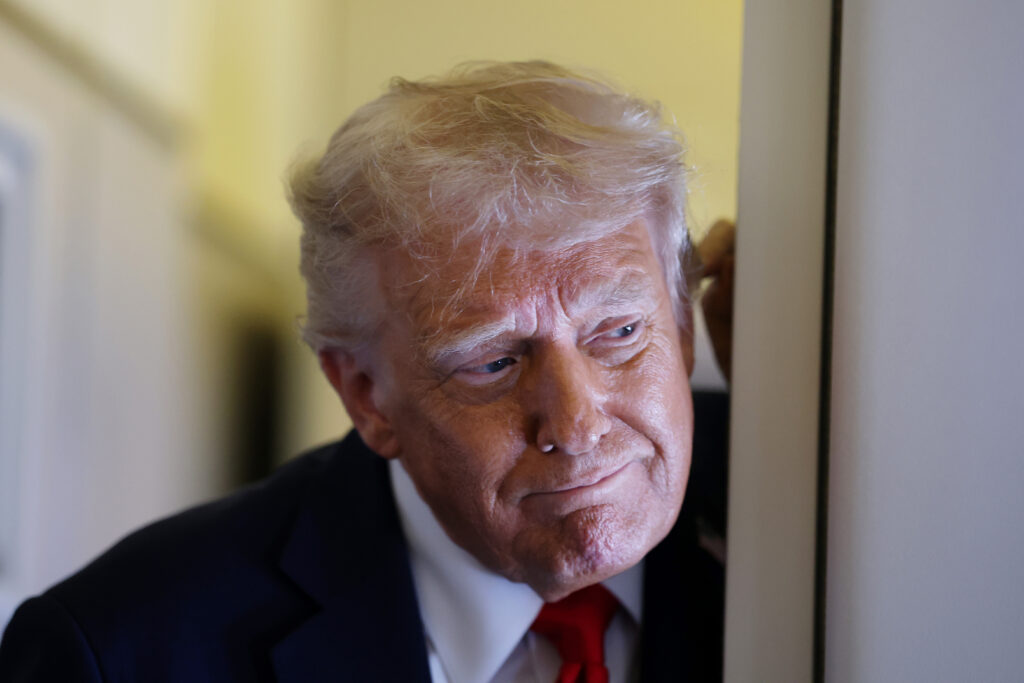
A federal judge in Florida Friday rejected President Donald Trump’s latest $15 billion defamation lawsuit against the New York Times, ruling that the complaint’s contents were “improper and impermissible.”
U.S. District Judge Steven Merryday, an appointee of former President George H.W. Bush, ruled that Trump’s lawsuit violated a federal procedural rule requiring a short and plain statement of why he deserves relief.
Trump’s 85-page suit, however, was “tedious and burdensome,” “often repetitive” and overly laudatory toward the president, Merryday wrote.
“This complaint stands unmistakably and inexcusably athwart the requirements of Rule 8,” Merryday’s order reads.
“As every lawyer knows (or is presumed to know), a complaint is not a public forum for vituperation and invective — not a protected platform to rage against an adversary,” the judge continued. “A complaint is not a megaphone for public relations or a podium for a passionate oration at a political rally or the functional equivalent of the Hyde Park Speakers’ Corner.”
In his lawsuit against the Times, which was his second lawsuit against a leading U.S. newspaper, the president accused the paper of defamation for articles questioning his success.
While striking the complaint, the judge gave Trump 28 days to amend his lawsuit, which also named four journalists and Penguin Random House as defendants. The amended complaint “must not exceed forty pages,” Merryday said.
It’s extremely rare for lawsuits to be dismissed based solely on Rule 8’s requirement for a “short and plain” complaint, especially for parties who are represented by lawyers. The requirement is most commonly cited against lawsuits filed by plaintiffs representing themselves.
Merryday, specifically, took issue with the complaint’s language, noting that in its first paragraph it touts that Trump won the 20204 election “in historic fashion” by “trouncing” his opponent, former Vice President Kamala Harris.
“The reader of the complaint must labor through allegations, such as ‘a new journalistic low for the hopelessly compromised and tarnished “Gray Lady,”’” Merryday wrote. “The reader must endure an allegation of ‘the desperate need to defame with a partisan spear rather than report with an authentic looking glass.’”
Earlier this year, the president also sued the Wall Street Journal for its coverage of his connections with convicted child sex trafficker Jeffrey Epstein.
Trump’s lawsuits came amid his wider effort to financially punish and exert control over outlets that cover his administration critically.
In tandem with the president’s overt threats against media organizations, the Trump administration has maneuvered behind the scenes to influence major broadcast companies and reshape the media landscape in his favor.
This story has been updated with additional details throughout.