DOJ drops charges against Chicago ICE protesters over prosecutorial misconduct
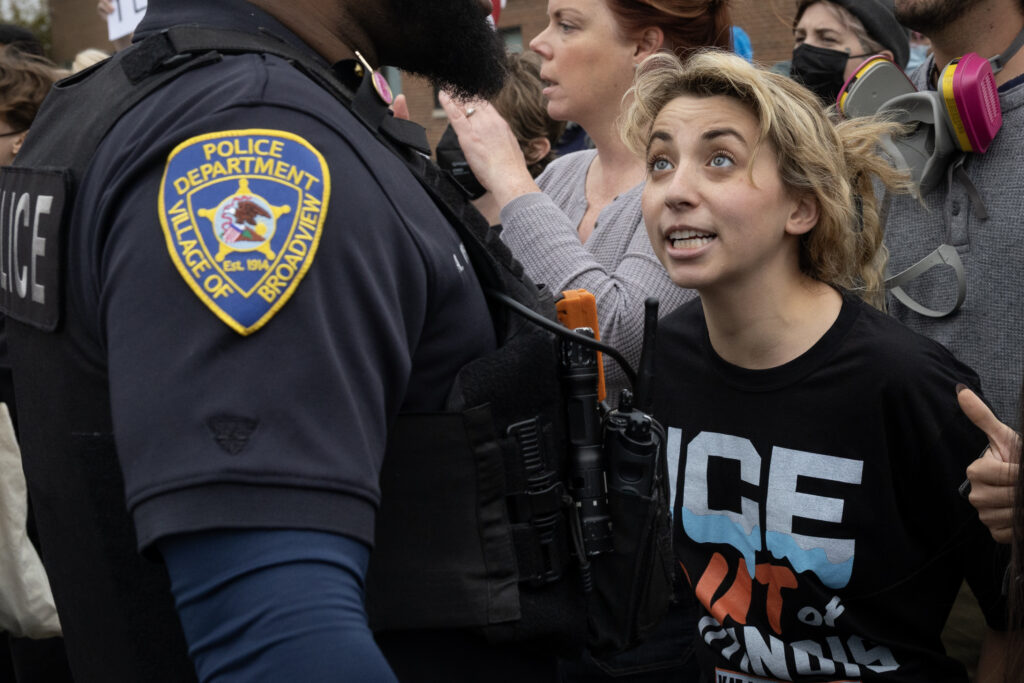
Federal prosecutors in Chicago dropped all misdemeanor charges against a group of people who protested President Donald Trump’s aggressive immigration raids in the Windy City last year outside an immigration detention facility.
While dismissing the charges Thursday, Andrew Boutros, the Department of Justice’s (DOJ) top prosecutor in the Chicago-based Northern District of Illinois, admitted that prosecutors handling the case had used improper tactics before a grand jury to obtain the indictment against the protesters.
The dismissal brings to a close a criminal case that was widely viewed as political and ensnared Democratic candidates for the U.S. House and Illinois Legislature, as well as other party actors.
Get updates straight to your inbox — for free
Join 350,000 readers who rely on our daily and weekly newsletters for the latest in voting, elections and democracy.
Boutros told U.S. District Judge April Perry that while attempting to secure an indictment, prosecutors had dismissed jurors who disagreed with the charges — a form of prosecutorial misconduct known as “vouching.”
Defense attorneys representing the protesters also alleged that officials in Boutros’ office communicated with members of the grand jury outside of court and also did not disclose to either the public or the defense that the grand jury initially rejected the charges.
The defense also alleged that Boutros’s office attempted to intentionally cover up the misconduct by making abnormal redactions to transcripts of the grand jury proceedings.
After reviewing the unredacted transcripts, Perry said she was “shocked” by what she saw.
“I have never seen the types of prosecutorial behavior before a grand jury that I saw in those transcripts,” the judge added.
While Boutros said he didn’t believe his staff members deliberately committed misconduct or intentionally attempted to mislead Perry, senior officials in the DOJ have reportedly pressured prosecutors to use such tactics to secure indictments against people demonstrating against Immigration and Customs Enforcement (ICE) operations across the country.
In its indictment, the DOJ claimed that the protesters conspired to impede a federal officer by being among a group of people who surrounded a government vehicle outside of an ICE facility last month in Broadview, a suburb of Chicago.
The indicted protesters — who have been dubbed “The Broadview Six” — included Kat Abughazaleh, who was a Democratic congressional candidate at the time; Andre Martin, a Democratic candidate for the Illinois Legislature; and other people involved in local Democratic politics.
In a press conference Thursday, Abughazaleh said she and the other defendants were only charged because “we were protesting this administration’s unlawful behavior and how it treats our communities, how it terrorizes us.”
“The administration does things like this because it thinks it can silence us, but it’s not going to work. We fought back, and we won,” she added.
Charges were dropped against two other protesters in March.
While dropping the charges, Boutros continued to disparage the defendants’ behavior as “unacceptable in a civilized society.” In doing so, he angered Perry.
“You are significantly undercutting your mea culpa here by standing behind the charges and continuing to vilify these particular defendants,” the judge said, adding that members of his office could face sanctions in the future.
On Friday, the defense asked Perry to order Boutros’s office to preserve its texts, emails and other communications related to the Broadview case, indicating that it likely plans to file a motion for sanctions against federal prosecutors.
Fallout from the case’s implosion has also spread onto Capitol Hill, where one of the federal prosecutors at the center of the botched prosecution, Sheri Mecklenburg, was later reassigned to work with Democrats on the Senate Judiciary Committee.
Through a spokesperson Friday, ranking member Sen. Dick Durbin (D-Ill.) said he shared Perry’s concerns and that Mecklenburg’s detail on the committee was terminated “because of the gravity of the charges in this case.”