Federal Judge Dismisses Trump’s Political Prosecutions of former FBI Chief Comey, NY AG James
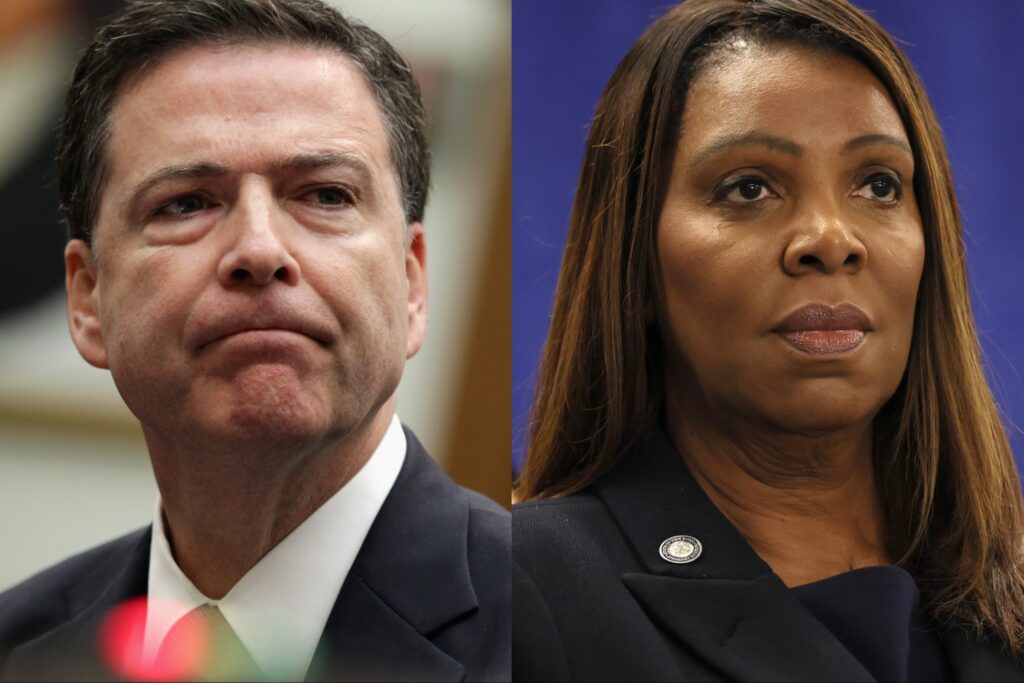
A federal judge Monday dismissed the Department of Justice’s (DOJ) cases against former FBI Director James Comey and New York Attorney General Letitia James, finding that the prosecutor President Donald Trump handpicked to bring charges against them had been unlawfully serving since September.
The dismissals from U.S. District Judge Cameron Currie, an appointee of former President Bill Clinton, dealt a major blow to Trump’s first attempts at refashioning the DOJ into his personal tool for vengeance against his perceived enemies.
Currie found that acting U.S. Attorney Lindsey Halligan could not have brought charges against Comey and James because Trump and Attorney General Pam Bondi circumvented vacancy laws to appoint her.
Get updates straight to your inbox — for free
Join 350,000 readers who rely on our daily and weekly newsletters for the latest in voting, elections and democracy.
“Ms. Halligan has been unlawfully serving in that role since September 22, 2025,” Currie wrote in simultaneous orders in the Comey and James cases. “I conclude that all actions flowing from Ms. Halligan’s defective appointment … constitute unlawful exercises of executive power and must be set aside.”
“This case presents the unique, if not unprecedented, situation where an unconstitutionally appointed prosecutor, exercising ‘power [she] did not lawfully possess,’ acted alone in conducting a grand jury proceeding and securing an indictment,” she added.
The judge dismissed the charges without prejudice, which could allow the DOJ to refile the same charges against James.
However, Currie’s decision likely marks the end of the DOJ’s case against Comey, since the statute of limitations for the alleged crime expired in September. The judge also said the DOJ could not invoke a law to refile charges against Comey within 6 months of the dismissal.
The dismissal without prejudice also allows the DOJ to appeal to the 4th Circuit Court of Appeals, although it is unclear whether it will do so.
“I am heartened by today’s victory and grateful for the prayers and support I have received from around the country,” James said on social media. “I remain fearless in the face of these baseless charges as I continue fighting for New Yorkers every single day.”
“I’m grateful the court ended the case against me, which was a prosecution based on malevolence and incompetence and a reflection of what the Department of Justice has become under Donald Trump,” Comey said in a statement.
“This case mattered to me personally, obviously, but it mattered most because a message has to be sent that the president of the United States cannot use the Department of Justice to target his political enemies,” Comey added.
The DOJ accused Comey, who drew Trump’s ire for heading the FBI when it looked into alleged links between his 2016 presidential campaign and Russia, of making false statements to a senator under oath and obstructing a congressional probe into the Russia investigation.
The department accused James, who won a multi-million dollar judgment against the Trump Organization in 2024, of bank fraud and making false statements to a financial institution over a home purchase in Norfolk, Virginia.
Comey and James both pleaded not guilty to the charges and alleged that the department was unconstitutionally prosecuting them on Trump’s orders as retaliation for public statements criticizing the president and their efforts to hold him accountable.
Currie’s ruling makes Halligan the fourth Trump-appointed acting U.S. attorney deemed to be serving unlawfully.
Had the cases not been dismissed due to Halligan’s unlawful appointment, they might have been tossed on other grounds. Comey and James filed separate motions to dismiss alleging that the charges stemmed directly from Trump’s personal animus against them and not actual wrongdoing.
Trump tapped Halligan to lead the Eastern District of Virginia (EDVA) as a temporary U.S. attorney after pressuring her predecessor, Erik Siebert, out of the role for raising concerns about the legal viability of bringing charges against Comey and James.
Before he resigned, Siebert told senior DOJ officials that his office was unable to find evidence that James knowingly committed mortgage fraud when she purchased the Virginia residence. He also said investigators could not gather evidence strong enough to prove Comey lied under oath while testifying before Congress.
In her order Monday, Currie found that after Siebert resigned, federal vacancy laws gave the exclusive authority of selecting a replacement U.S. attorney to judges in EDVA — not Trump and Bondi.
Halligan, who was an insurance lawyer before joining Trump’s legal team in 2022, had never prosecuted a criminal case before her appointment to the EDVA, one of the most prestigious federal districts in the country.
Halligan’s lack of prosecutorial experience became apparent when, just three days after her swearing in, she sought charges against Comey. Court proceedings revealed that Halligan made significant errors while presenting the indictment before the grand jury, including telling jurors that Comey would not have a Fifth Amendment right to not testify at trial.
In a stunning admission, the DOJ eventually disclosed that Halligan, for unclear reasons, didn’t present the final indictment used to charge Comey to the grand jury, meaning jurors didn’t actually review or vote on the charges. That suggested that Comey was never formally charged with a crime.
Over the years, Trump repeatedly vowed to seek retribution against Comey, who has become a prominent critic of the president, and James, whose office regularly challenges Trump administration policies.
Comey and James highlighted numerous of those statements in their selective and vindictive prosecution dismissal motions.
After Comey and James challenged Halligan’s appointment, Bondi attempted to salvage the indictments by appointing her as a “special attorney.”
Currie, however, said the attorney general could not retroactively legitimize Halligan’s actions.
“The Government has identified no authority allowing the Attorney General to reach back in time and rewrite the terms of a past appointment,” she wrote.
This story has been updated with additional details throughout.