Trump’s Top Aide Admits ‘Score Settling’ Driving DOJ’s Political Prosecutions
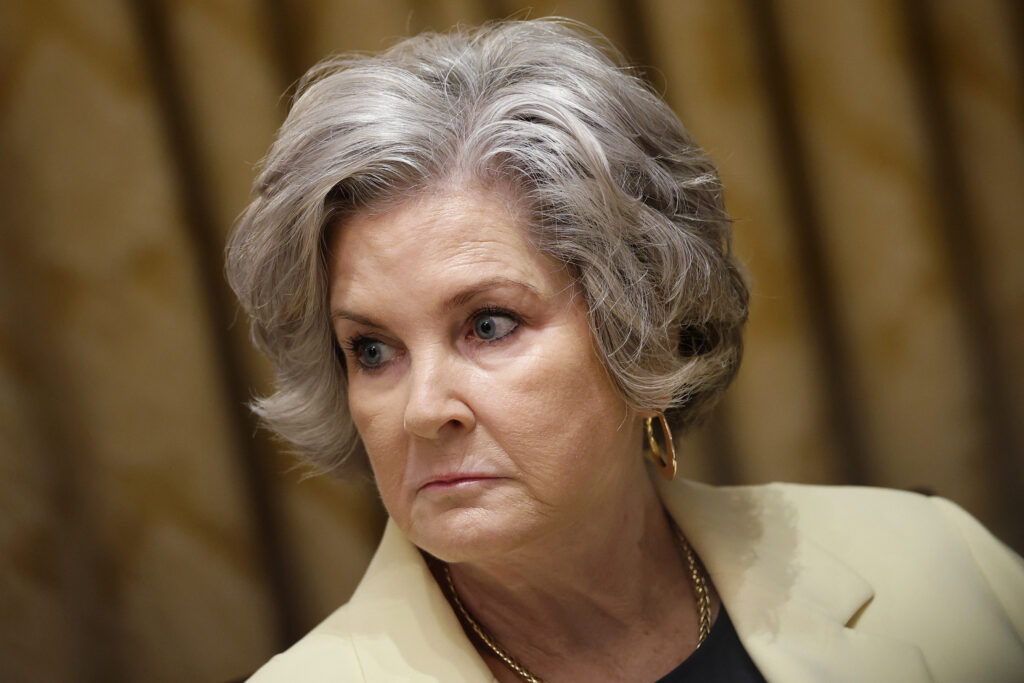
A top White House official and key figure in President Donald Trump’s 2024 presidential campaign has acknowledged that “score settling” lies behind many of the Department of Justice’s (DOJ) criminal prosecutions against Trump’s political enemies.
In interviews with Vanity Fair, White House chief of staff Susie Wiles admitted that some cases may “look like retribution” and implied that Trump is directing the department to take certain actions against his enemies should an opportunity present itself.
“I don’t think he wakes up thinking about retribution,” she said. “But when there’s an opportunity, he will go for it.”
Get updates straight to your inbox — for free
Join 350,000 readers who rely on our daily and weekly newsletters for the latest in voting, elections and democracy.
That contradicts the administration’s official narrative of the prosecutions. In public, Trump has maintained that he knows very little about the department’s cases against his enemies. Senior DOJ officials have also claimed their prosecutions are driven by the rule of law and not the whims of the president.
The stunning admission from Wiles, the chief architect of Trump’s 2024 presidential campaign, comes shortly after a federal judge dismissed the department’s cases against New York Attorney General Letitia James and former FBI Director James Comey — two of Trump’s leading foes.
In addition to offering a rare unguarded glimpse into Trump’s sprawling campaign of retribution, Wiles offered astonishingly blunt assessments of the president and his officials. Trump, she said, had an “alcoholic’s personality,” while Vice President JD Vance has “been a conspiracy theorist for a decade.”
Asked in March whether she advised Trump that he shouldn’t embark on “a retribution tour,” Wiles said she had, adding that she and the president made “a loose agreement” that the “score settling” against his enemies would end within the first 90 days of his second term.
In August, however, Wiles backtracked, claiming that she didn’t believe the president was on a revenge campaign but was attempting to seek accountability against those who pursued unfair cases against him.
“A governing principle for him is, ‘I don’t want what happened to me to happen to somebody else.’ And so people that have done bad things need to get out of the government,” Wiles said, though she admitted that at times Trump’s efforts look close to reprisal.
“In some cases, it may look like retribution,” she said. “And there may be an element of that from time to time. Who would blame him? Not me.”
One of those instances was the DOJ’s mortgage fraud case against Letitia James, which Wiles said “might be the one retribution.”
Asked if she advised the president against pursuing James, Wiles said no because James’ office successfully won a multi-million dollar judgment against the Trump Organization in 2024.
“She had a half a billion dollars of his money!” Wiles said.
A New York appeals court earlier this year threw out the civil fraud penalty against the Trump Organization but upheld the finding of fraud against the business.
Wiles acknowledged that the DOJ’s political prosecution of James Comey also looked like retribution and couldn’t offer any pushback on that view.
“I mean, people could think it does look vindictive,” she said. “I can’t tell you why you shouldn’t think that.”
Wiles attacked the Vanity Fair story on social media Tuesday as “a disingenuously framed hit piece on me and the finest President, White House staff, and Cabinet in history.”
“Significant context was disregarded and much of what I, and others, said about the team and the President was left out of the story,” she claimed. “I assume, after reading it, that this was done to paint an overwhelmingly chaotic and negative narrative about the President and our team.”
Senior Trump officials, including FBI Director Kash Patel and Office of Management and Budget Director Russell Vought, also defended Wiles on social media after the story was published.
The DOJ’s investigations and charges against Comey, James and other foes of the president were already widely seen as motivated by retribution. In September, Trump publicly ordered Attorney General Pam Bondi in a social media post to pursue cases against them.
Shortly after that order, Lindsey Halligan, a federal prosecutor handpicked by Trump, brought indictments against Comey and James.
In late November, however, a federal judge dismissed those cases on the grounds that Halligan was illegally appointed as an acting U.S. attorney.
Since its initial case against James was dismissed, the DOJ has so far failed to re-indict her. It also faces several serious obstacles in its attempt to seek charges against Comey again.
In future cases, defense attorneys representing Trump’s foes could use Wiles’ comments to bolster arguments that the prosecutions are selective and vindictive and must be dismissed.